

Understanding Prompt Elements
- Cinematography: Define the camera work and shot composition. Include framing, lens, movement, and pacing. (e.g., "handheld shot on, slow dolly‑in, eye‑level").
- Subject: Describe the subject or focal point. (e.g., "teen sprinter with braided hair and neon windbreaker").
- Action: Describe what the subject is doing, including motion beats. (e.g., "bursts from the starting line, breath visible, accelerates, glances left").
- Context: Detail the environment and background elements that support the story. (e.g., "foggy riverside track at dawn, stadium lights flickering on").
- Style: Specify the aesthetic, mood, and lighting. (e.g., "cinematic realism, golden-hour rim light, soft film-grain").
- Audio elements (optional): For models with sound generation, include dialogue, sound effects, and ambience sounds.(e.g., "calm female narrator - 'keep going, you got this'", ambient wind sound").
Examples
Medium close-up opening shot on the woman’s face. Smooth over-the-shoulder pivot revealing what she is looking at. Subtle depth-of-field shift from foreground to background during the reveal. A young woman standing in front of an abandoned gas station; pale face, trembling hands, wide eyes filled with dread. She raises her hands to her mouth in shock, breathing sharply. Camera rotates around her shoulder in one fluid motion to reveal the cause of her panic. A desolate gas station on a cold evening. A car fully engulfed in flames, thick black smoke rising sharply. Orange firelight reflecting off metal surfaces and casting harsh flickering shadows around her. Cinematic, tense, dramatic realism. High contrast between cold environment and warm fire glow. Eerie stillness around the woman vs. chaotic movement of the flames. SFX: crackling fire, distant metal pops, wind sweeping through the empty station.
Essential Prompting Tips
- Decide control vs. creativity: Detailed prompts give you consistency and repeatability, while simpler prompts invite the model to be creative. Use a detailed prompt when you need control, or leave space when you want discovery.
- Iterate to refine: Be prepared to iterate on your ideas. Each generation is like a new take and small adjustments can dramatically shift outcomes.
- Try different models: Video models have different strengths and styles. Experiment with multiple models to see which best fits your vision.
- Positive phrasing: Instead of "no crowds," write "peaceful solitude." Instead of "without glasses," write "clear, unobstructed eyes." Ask: "If this wasn't there, what would I see instead?"
Camera Movement Techniques
Camera movement is one of the most powerful tools for creating dynamic, engaging videos. Choose movements that match your story's energy and emotion.
- Dolly shot: Smooth movement toward or away from the subject.
- FPV drone shot: Dynamic drone perspective, weaving through obstacles at high speed.
- Crane shot: High-angle vertical movement for establishing scale.
- Slow pan: Horizontal rotation to reveal the environment.
- POV shot: First-person perspective, seeing through a character's eyes.
Examples
Low-altitude FPV drone flight with rapid directional changes - dipping through gaps between boulders, rising sharply over ridgelines, banking into tight orbits around the runner. Dynamic motion, emphasizing terrain and velocity. A lone trail runner in a red windbreaker, black shorts, and reflective trail shoes. Runner accelerates across uneven alpine rock terrain, leaping over cracks and jagged stones, navigating loose gravel with visible effort. A dramatic high-alpine ridge with angular rock formations, scattered wildflowers clinging to stone, and steep drop-offs revealing distant snow-tipped peaks. Early morning sun paints long shadows across rugged surfaces. High-energy outdoor commercial vibe; crisp contrast; icy blue-green alpine palette with warm golden rim light. Fast, visceral, terrain-focused motion.
Shot Composition & Framing
Composition determines how your subject appears in the frame and influences the viewer's emotional connection to the scene.
- Wide shot: Captures the full subject and their surroundings.
- Close-up: Focuses on the face or object to show emotion or detail.
- Low angle: Looking up at the subject, making them appear powerful.
Lens Types & Focus Control
Lens choice and focus settings dramatically affect the visual style and mood of your video. Use them to direct attention and create atmosphere.
- Shallow depth of field: Blurs the background to isolate the subject.
- Soft focus: Creates a dreamy, romantic, or nostalgic look.
- Macro lens: Captures tiny details with extreme magnification.
- Deep focus: Keeps everything from foreground to background sharp.
Adding Dialogue & Voice
For models with audio generation capabilities, you can include spoken dialogue to bring characters to life and enhance storytelling.
- Placement: Place dialogue in a block below your prose description to distinguish visuals from spoken lines.
- Conciseness: Keep lines concise and natural; limit exchanges to a handful of sentences.
- Multi-character: Label speakers consistently and use alternating turns to associate lines with the correct character.
- Rhythm & Timing: Match dialogue to clip length (e.g., 4s vs 8s); long speeches may break pacing or be cut.
- Language: If you need another language than English, write the dialogue in the desired language of the video and mention the language explicitly.
Sound Effects & Ambient Audio
Audio elements create immersion and atmosphere. Define both specific sound effects and the background soundscape to enhance realism.
- Sound effects (SFX): Describe sounds with clarity (e.g., SFX: thunder cracks in the distance).
- Ambient noise: Define the background soundscape (e.g., Ambient noise: the quiet hum of a starship bridge).
Examples
Handheld selfie at arm’s length, 24–26mm phone-wide; subject framed top-third with stall/dish in lower frame; continuous take with optional micro whip/tap-to-focus for B-roll hides; warm stall practicals as key, neon rim; natural “phone real” grade; (camera is the phone in the traveler’s hand at arm’s length, chest-to-eye level - that’s where the camera is). Traveler holding a shallow metal bowl of the local spicy street snack; casual tee, crossbody sling with reusable cup peeking out. She smiles to lens and raises bowl, tilts camera/bowl down briefly to hero the dish; leans back in, conspiratorial grin. Night market/street food lane in Bangkok; neon signs and hanging bulbs; steam plumes from woks; metal carts; plastic stools; handwritten menus; scooters inch past; customers queue; moist pavement reflecting colored lights; chili oil shimmering with red flakes, sliced chilies, sesame seeds, fresh herbs; vendor plating in background; movement adds depth. Dialogue: Traveler says: “I’m in Bangkok - they swear this is the spiciest snack.” Traveler says: “Look at that chili oil… it’s glowing.” (amused awe) Traveler says: “Locals say most people tap out after one bite.” (conspiratorial) Traveler says: “Let’s find out.” (grin, confident)
Time-Based Prompting
Direct complete, multi-shot sequences with precise pacing in a single generation. Assign actions to specific time segments to create full scenes with visual consistency.
Examples
[00:00–00:02] Storm Awakening Camera: ultra-wide aerial drift above a dark ocean as lightning flashes. Action: a colossal ancient statue rises from beneath the waves, water cascading off its shoulders. Style: cold, muted palette with bright electric highlights. Audio: SFX: thunder crack + deep ocean roar. Voice Over: “When the old gods return…” [00:02–00:04] Hero Close-Up Camera: dramatic close-up with slow push-in. Subject: determined warrior with wind-whipped hair, glowing runes across his skin. Action: he opens his eyes sharply, rune-light intensifying. Style: warm rim light vs. storm clouds; subtle particle drift. Audio: low bass swell. [00:04–00:06] Rising Threat Camera: sweeping crane shot revealing a giant shadow creature emerging from smoke. Action: creature steps forward, ground cracking beneath its weight. Style: fiery orange glow from below; swirling ash; high contrast. Audio: SFX: heavy footsteps + rumble. . Voice Over: “…only one can stand against them.” [00:06–00:08] Battle Impact Camera: rapid FPV-style charge → smash cut to slow-motion impact. Action: hero leaps with glowing blade, colliding mid-air with the creature’s strike; sparks and light explode outward. Style: dynamic motion streaks; epic scale. Audio: metallic clash + explosive bass hit. Voice Over (shout): “Now!” [00:08–00:10] Title Card Finale Camera: slow backward pull from a silhouette of hero on a cliff. Action: a massive golden phoenix erupts behind him, lighting up the sky. Style: majestic light bloom, warm epic palette. On-screen text: “ASCENSION - COMING SOON” Audio: choir swell + final cinematic boom.
Image-to-Video & Transitions
For unparalleled control, break the creative process into stages. Start with a specific image or define start and end points to guide the generation. This is essential for:
- UGC & Product videos: Ensure the product looks exactly right.
- Character consistency: Maintain specific facial features or clothing across shots.
- Specific starting point: Begin with a generated or uploaded image.
- Controlled movement: Define the exact start and end composition.
- Transformation: Morph between two distinct points of view using start and end frames.
Examples
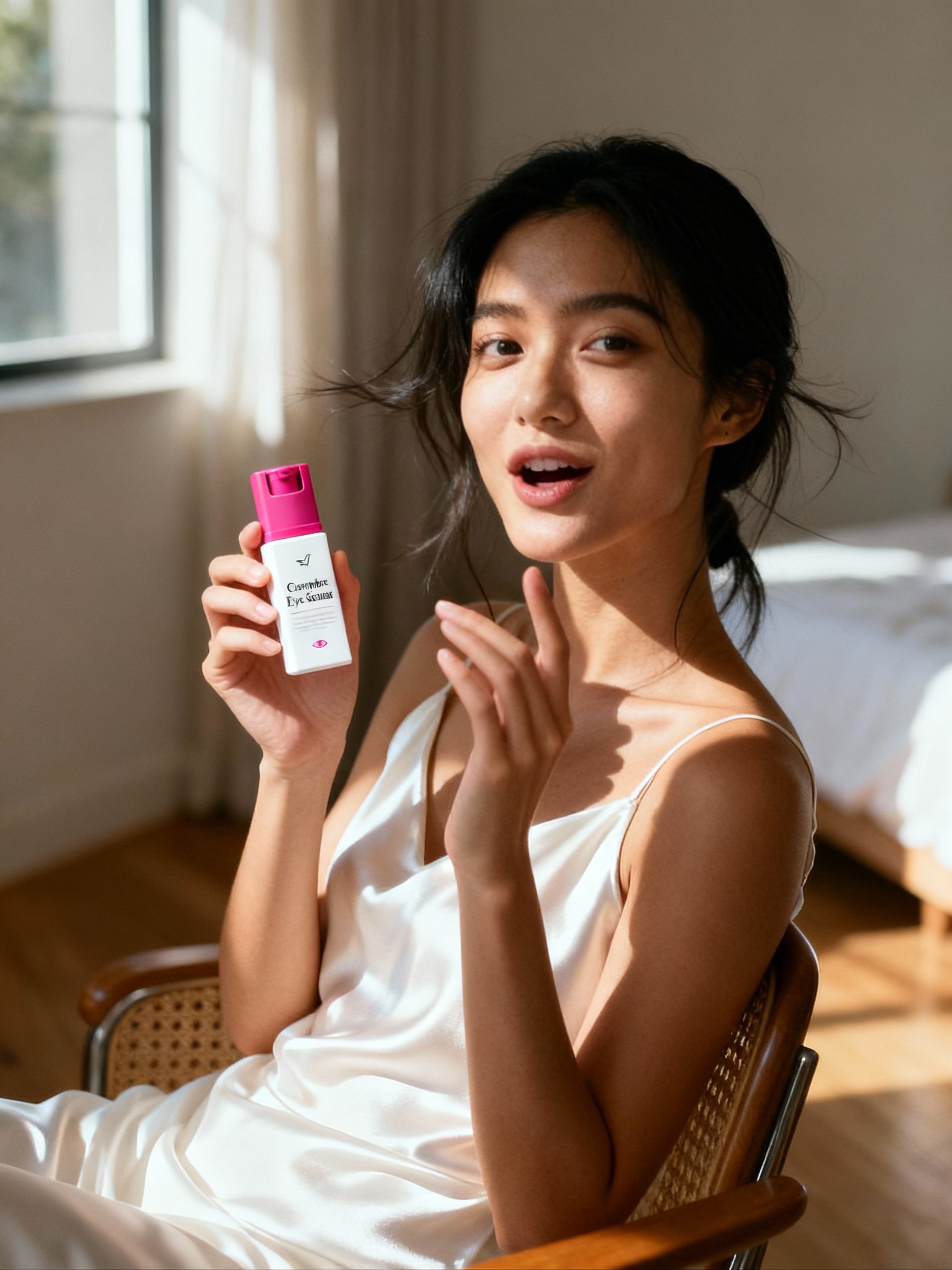
1. Generate UGC Image
2. Edit Image
3. Animate Video
Ready to start creating?
Try these prompting techniques in our AI video creator and turn your ideas into polished visuals.