
You can post every day, the audience keeps growing, and the revenue still feels scattered. One week brings a sponsorship inquiry, the next brings a few tips, then a platform payout lands later than expected and the numbers don't quite match what you thought you earned. That's usually the moment a creator stops looking for another content app and starts looking for financial infrastructure.
A creator monetization platform is the system that turns attention into money, then makes sure that money reaches you. The best ones don't just host content or display a donate button, they manage billing, split payments, payouts, tax checks, and revenue entitlements behind the scenes. That matters because monetization breaks down at the financial layer long before it breaks on the front end.
The category is already large and still growing. One 2025 estimate put the creator monetization platform market at $8.7 billion, with a projected climb to $32.4 billion by 2034 and a 14.8% CAGR over the period, while ad-based platforms held 38.2% and video content generated 42.5% of revenue. Those figures point to a simple reality, the money is still concentrated in video-first, ad-supported creator businesses, even as other revenue rails keep expanding. MarketIntelo's market estimate makes that concentration hard to ignore.
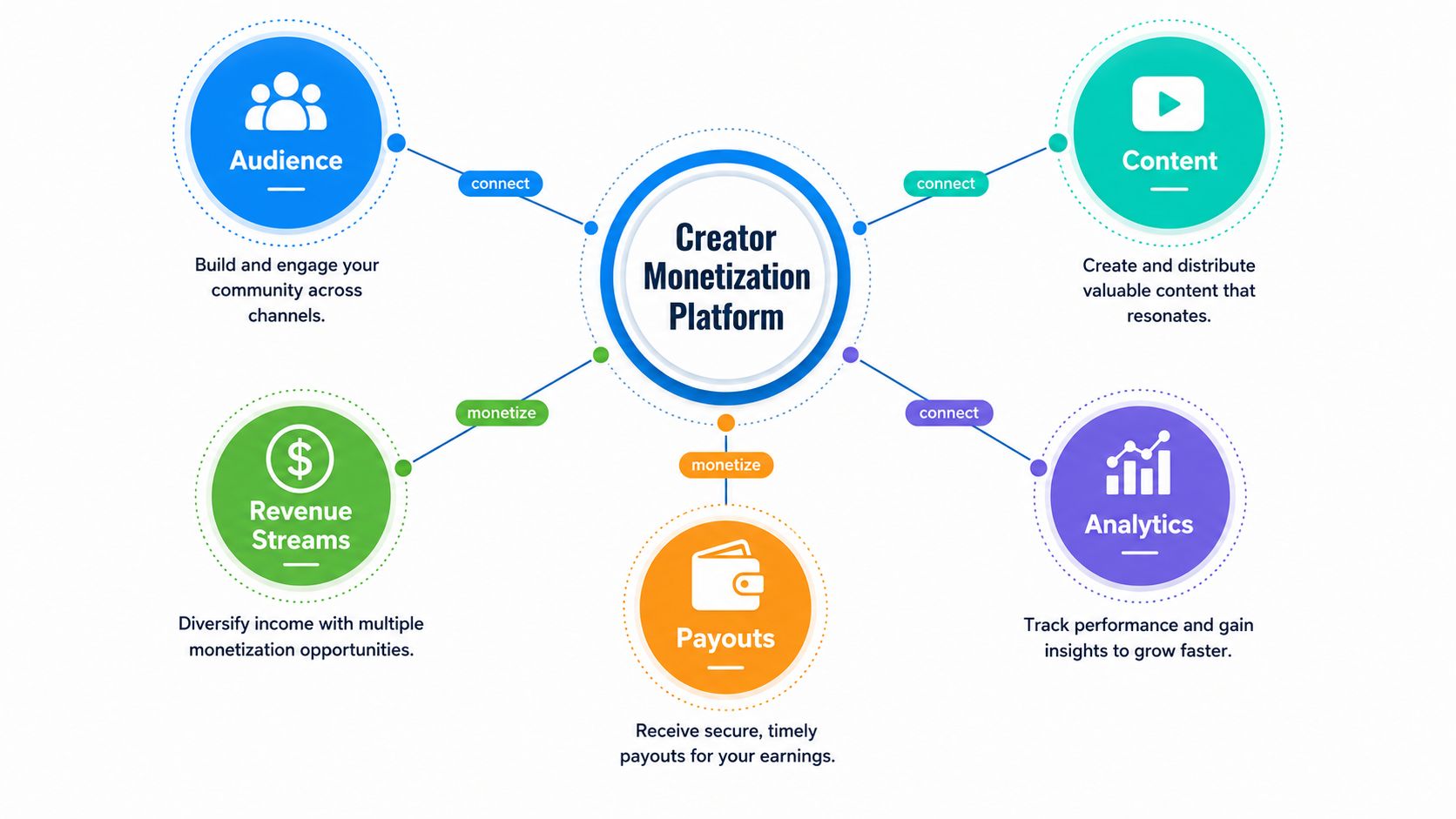
A useful way to think about the stack is simple. Audience brings attention, content gives people a reason to stay, revenue streams turn that attention into transactions, analytics tell you what's working, and payouts close the loop. If one of those pieces is weak, the whole system feels unreliable.
Practical rule: don't judge a monetization tool by the dashboard alone. Judge it by how cleanly it moves money from buyer to creator, because that's where missed payouts, failed subscriptions, and compliance issues show up first.
The growth in adjacent tooling reflects that shift. A practical example is AI lead gen for creators, which sits upstream of monetization by helping creators capture and convert attention before the revenue layer even comes into play. On the revenue side, a useful supporting workflow is content rewards, since creator businesses often need repeatable incentives that keep publishing velocity high.
What a Creator Monetization Platform Actually Is
Most creators think they need a better bio page, a cleaner storefront, or another place to post exclusive content. What they usually need is a system that can recognize entitlement, collect payment, and release funds correctly every time. That's the core job of a creator monetization platform, and it's why polished design can be misleading.
The front end is not the business
The visible layer is easy to understand. Fans subscribe, tip, buy digital goods, access posts, or pay for a membership, and the platform makes that feel smooth. Underneath, though, the platform is acting like a payments-and-entitlements layer, routing revenue through the same core machinery every time, including billing, an earnings ledger, split payments, and a payout pipeline with identity and tax verification. The platform architecture overview describes this stack clearly.
That distinction matters because creators often blame the wrong thing when money goes missing. A sleek UI doesn't help if ledger state is wrong, payout reconciliation is broken, or tax verification stalls a transfer. If those controls are weak, the creator feels it as delayed funds or support tickets, not as an engineering issue.
A mature platform should answer a few blunt questions. Can it track who paid for what? Can it separate platform fees from creator earnings? Can it move money across regions without manual cleanup? If not, it's a content tool with payment features, not a reliable monetization system.
Why the category is growing fast
The scale of the category tells you this isn't a niche problem anymore. A 2026 industry roundup estimated the global creator economy at roughly $200 billion in 2025, with a projected 22.7% CAGR that could push it beyond $800 billion by the early 2030s. It also reported that 48% of creators run everything themselves, 88% of community builders monetize with memberships, and 53% sell courses. Circle's creator economy statistics show how broad the monetization mix has become.
That's why infrastructure matters so much. A solo creator can't afford a system that needs constant hand-holding, and a small team can't afford one that collapses under cross-border payments, refunds, or tax checks. The best tools reduce operational drag so the creator can focus on content and offer design.
If you're comparing tools, ask whether the platform behaves like financial infrastructure first. If the answer is no, you'll probably outgrow it faster than you expect.
Revenue Models That Top Platforms Support
A lot of platform guides list monetization models like they're interchangeable. They're not. Each one depends on a different kind of audience behavior, and each one creates a different kind of operational burden.
The models and where they fit
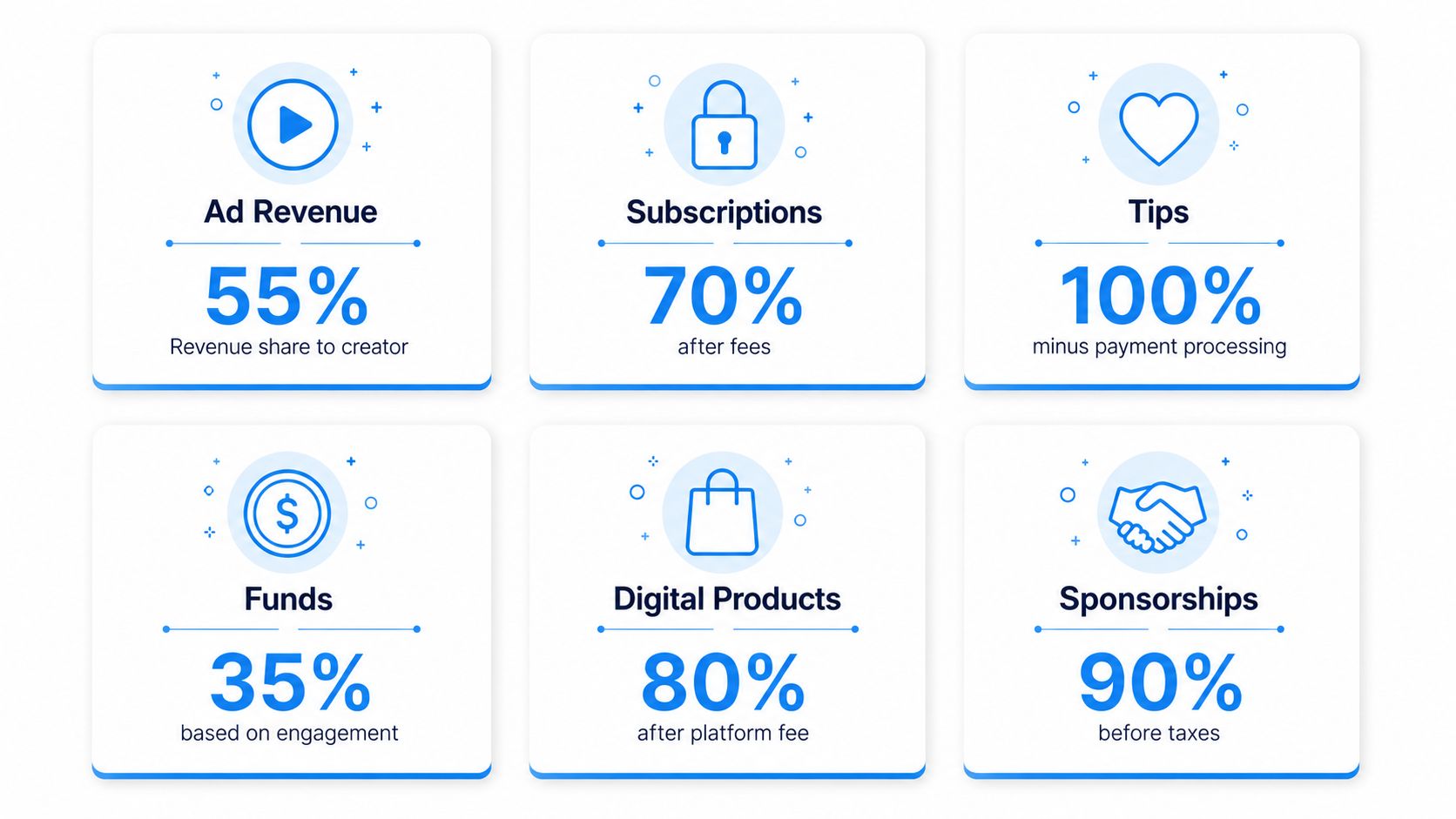
Here's the cleanest way to think about the common revenue rails creators use:
- Ad revenue sharing works best when views are steady and the platform is doing discovery for you. It scales with reach, but the creator has little control over timing or distribution.
- Paid subscriptions fit creators with a loyal audience that wants ongoing access. This is the most familiar recurring model, and it pairs well with newsletters, communities, and behind-the-scenes content.
- Tips and live gifting work as a supplementary stream. Fans use them to show support in the moment, but they're rarely dependable enough to anchor a business.
- Creator funds are usually engagement-linked and platform-driven. They can help early, but they're not a long-term operating model you control.
- Brand deal marketplaces make sense when you can package attention for sponsors. They're strongest when your audience is clear, your niche is legible, and your output is consistent.
- UGC-style advertising is more production-oriented. You're not always monetizing your own audience, you're selling content that helps a brand convert.
The broader creator economy data makes the diversification obvious. The same 2026 roundup said 88% of community builders monetize with memberships and 53% sell courses, which is a strong sign that revenue has moved well beyond ads alone. Circle's statistics page is a useful reminder that recurring and product-based income are now mainstream.
Which combinations hold up better
Short-form creators usually get the most stable setup when they combine models instead of leaning on one. Ads and brand deals can sit on top of a membership or digital product layer. Tips work better as upside than as a base. UGC-style work often pairs well with a service offer or a sponsored content pipeline because the creator is already producing on deadline.
The key trade-off is control. Ad revenue can look easy, but it's sensitive to platform distribution. Subscriptions feel more predictable, but they require retention. Brand deals can pay well, but they depend on how clearly a brand understands your audience.
A good monetization mix isn't the one with the most options. It's the one that still pays when one channel slows down.
A useful comparison point for YouTube Shorts creators is how to monetize YouTube Shorts, because short-form revenue usually works best when it is layered rather than singular. That same logic applies across TikTok and Instagram as well, where attention is fast and audience loyalty has to be converted into something owned.
Key Features and Metrics That Separate Good Platforms From Great Ones
A good-looking platform can still be a bad place to get paid. The difference shows up in the financial machinery, not the color palette. If the system can't keep a clean ledger, route split payments correctly, and verify identity and tax details without friction, the front end doesn't matter much.
The stack that has to work
The most important features are usually invisible. You want a correct earnings ledger, split-payment processing, identity and tax verification, and a payout pipeline that can handle multi-currency settlement without breaking basic reporting. Those are the layers that determine whether income is trustworthy or just superficially visible.
That's also why payout speed and reconciliation deserve more attention than most creators give them. If a platform says money is “on the way” but you can't trace what was paid, what was reversed, and what fees were taken, you don't have clarity, you have a guess. The platform architecture reference frames this correctly as a financial system problem.
For short-form creators, the workflow features matter too, but only after the financial base is sound. One-click cross-posting, unified revenue dashboards, automated scheduling, and integrations with AI video tools help you publish more consistently. They're useful because consistency helps visibility, but they don't fix a broken payment stack.
Metrics worth checking every month
The metrics that matter are the ones that expose friction early. Track subscription churn rate, average revenue per user, payout speed, failed-payment rate, and brand-deal fill rate. If one of those starts drifting in the wrong direction, the problem is usually structural, not cosmetic.
[Simple test: if you can't explain where revenue came from, what fees were taken, and when the payout will settle, the platform isn't mature enough for serious business use.
A useful companion metric guide is this engagement metrics resource, since engagement still feeds monetization, especially when you're trying to sell memberships or brand inventory. But engagement alone is not the end goal. The point is to connect audience activity to money you can collect and reconcile.
When you compare tools, don't let the demo end at publishing. Ask for payout behavior, reporting precision, and support around exceptions. That's where good platforms separate themselves from flashy ones.
How to Choose the Right Platform for Your Creator Business
The wrong platform choice rarely feels wrong on day one. It starts with a little payout delay, a confusing fee line item, or one missed transfer, then becomes an operational habit you keep working around. The better decision framework starts with the parts most guides avoid, especially payout friction and platform-risk diversification.
Judge the payment rails first
Creators who sell across borders need to know which payout rails work in major markets, how quickly money settles, and how the platform handles local payment methods, refunds, and tax obligations. That's the hidden layer that often decides whether a low-ticket offer is worth selling at all. A narrow payment stack can erase margins fast when you're handling small transactions.
This is why a creator monetization platform should be evaluated like financial software. If it struggles with regional payouts or makes compliance feel manual, the problem will show up when you scale, not before. The SSRN paper on global payout friction argues that settlement mechanics often matter more than the content model itself, especially for creators selling direct-to-fan offers.
Don't bet the business on one channel
The second blind spot is concentration risk. A lot of creators still build around one platform, one source of reach, or one revenue rail, then discover how fragile that setup is when algorithm reach shifts or ad demand softens. The smarter move is to build a stack that can absorb a bad month without breaking the business.
A practical decision rule helps here:
- If one platform drives most of your income, add an owned channel. Email capture, memberships, or digital products reduce dependence on feed algorithms.
- If your audience buys small offers, test payment friction early. Low-ticket products are where settlement and fee drag hurt most.
- If you rely on brand deals, build a second income source. Sponsored revenue can be strong, but it's rarely stable enough on its own.
- If you already own your audience, strengthen your workflow. Better publishing systems protect the revenue you already have.
If more than one stream carries the same risk, you don't have diversification. You have repetition.
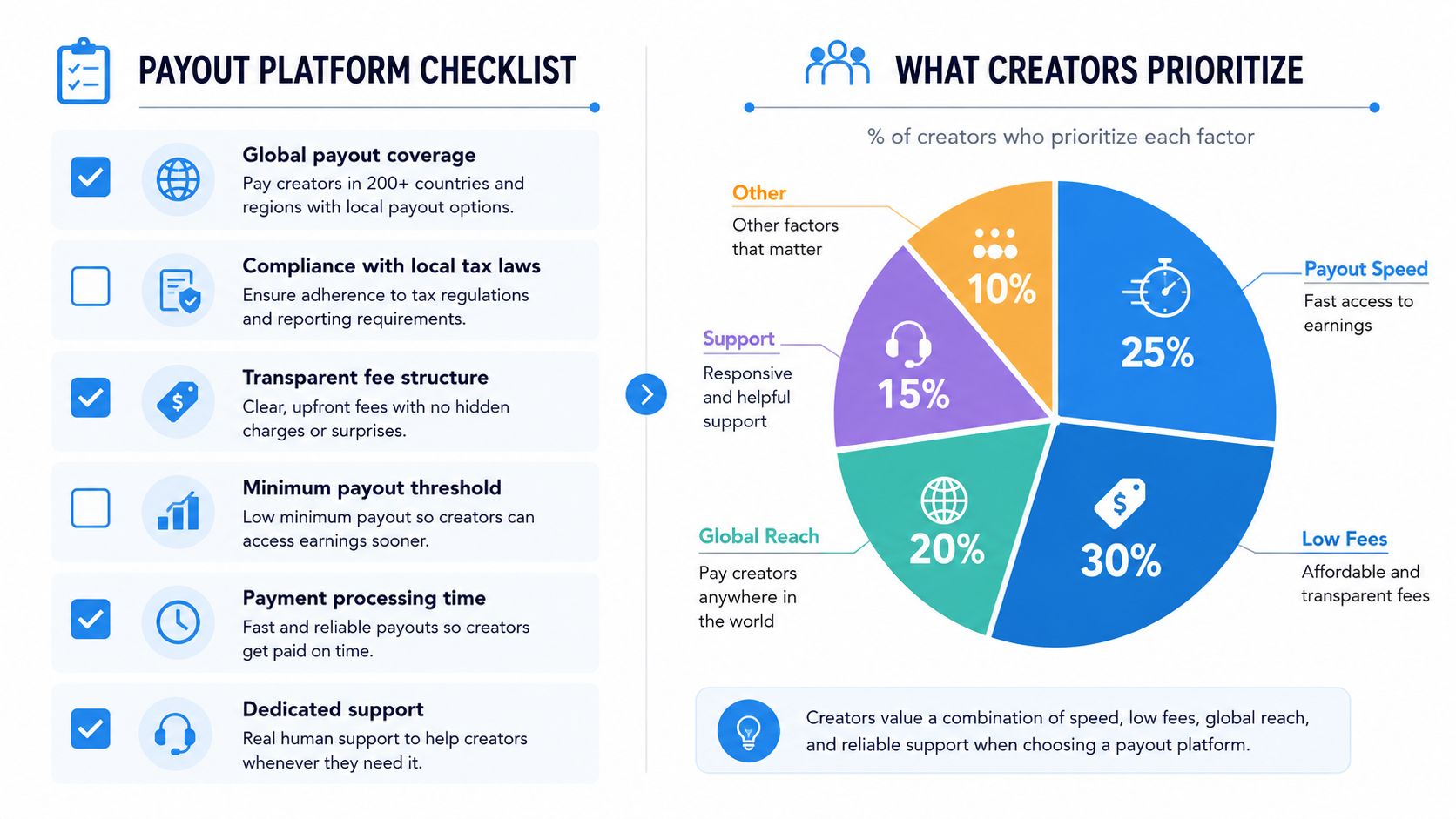
The best fit is usually the platform that scores well on payout reliability, revenue model fit, integration depth, and diversification support. If a tool helps you earn in only one way, it may still be useful early on, but it won't be the right long-term base for a business that depends on multiple rails.
Workflows That Accelerate Monetization for Short-Form Creators
Short-form creators don't lose money because they lack ideas. They lose money because production is too slow, publishing is inconsistent, and monetization gets postponed until after momentum cools off. The most practical fix is a workflow that moves from idea to post to payout without too many manual stops.
Build the content machine first
The fastest creators usually work from reusable templates instead of starting from scratch. That means prompt cloning, faceless video formats, and repeatable editing patterns that can be reused across topics without reshoots. One example is Aicut, which lets creators generate short-form videos from templates such as Cheating Fruits, AI Skeleton Stories, Motion Control, and AI Influencers, while also supporting models like Sora 2, Veo 3.1, Grok Imagine, Kling, and Nano Banana.
That kind of tooling matters because consistency beats occasional brilliance in monetized short-form channels. If you can publish on a predictable cadence, your inventory for ads, sponsorships, tips, and affiliate placement becomes easier to plan. The goal isn't just to make more videos, it's to make more usable video.
Connect production to distribution and revenue
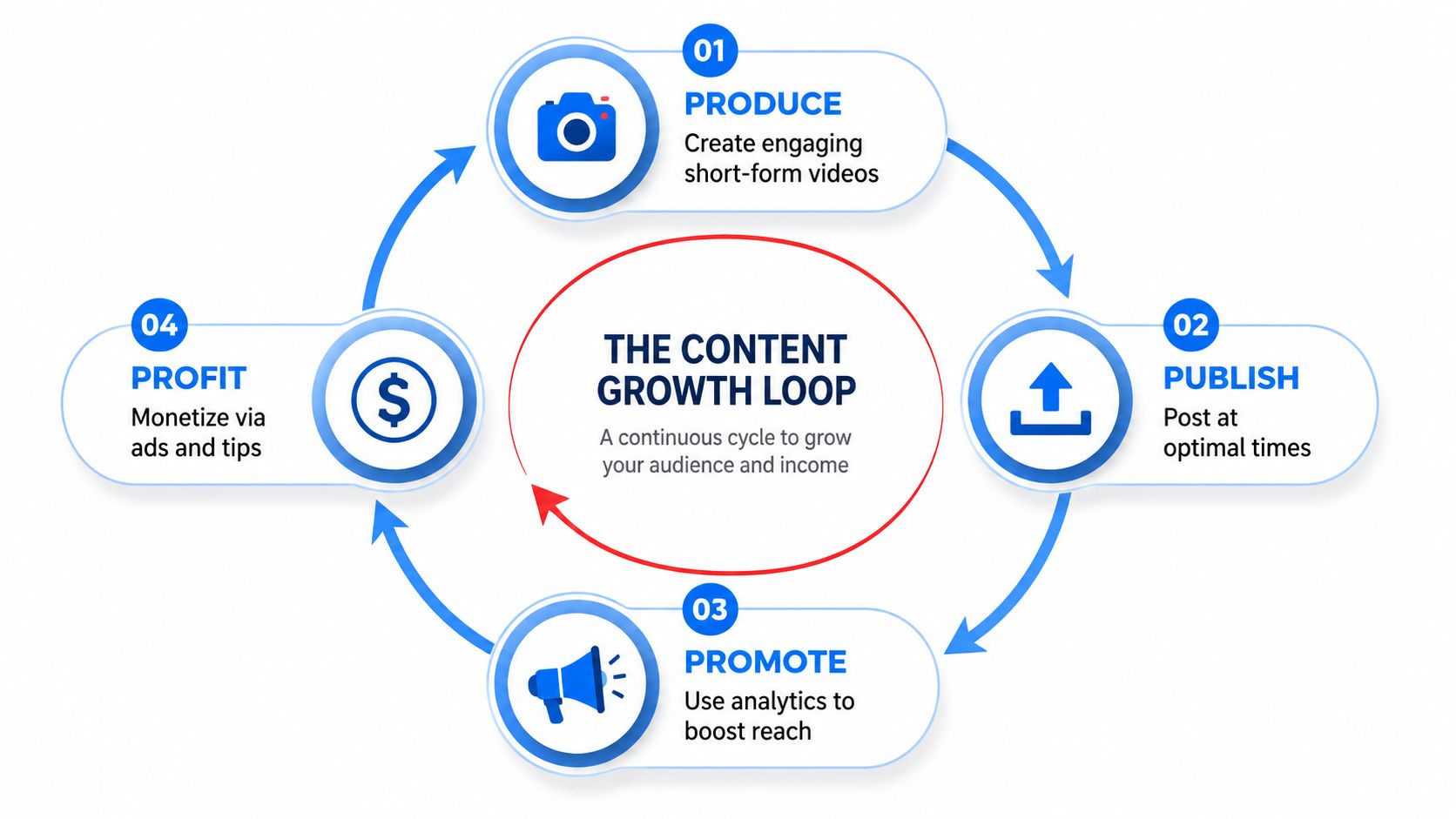
A tight workflow looks like this. Build the video in your production tool, add voiceover if needed, schedule the publish time, then route the audience to the monetization platform that holds your subscriptions, products, or direct offers. Once the loop is in place, content creation stops being a separate chore and starts behaving like a revenue engine.
For creators who want to diversify income through affiliate offers, this SaaS affiliate programs roundup is a practical place to look for product-fit ideas. The important part is not the list itself, it's matching the offer to the audience behavior already visible in your content.
A workable weekly rhythm is straightforward:
- Batch production on one day, so you're not making creative decisions every morning.
- Schedule across platforms, so distribution doesn't depend on manual posting.
- Review analytics once a week, then double down on formats that attract both reach and revenue.
- Route buyers to owned revenue, so a viral post doesn't disappear after the feed cycle ends.
Speed matters because distribution windows are short. If your content arrives late, the offer often arrives too late as well.
The strongest workflows treat publishing as the front end of monetization, not a separate marketing task. That shift is what lets a short-form creator scale without hiring a big team.
Real-World Use Cases and Best Practices
The right stack depends on what kind of creator business you're running. A faceless channel, a personality-led TikTok account, and a brand producing AI UGC are all monetizing attention, but they're not solving the same problem. The mix should follow the business model, not the other way around.
Three useful patterns
A faceless YouTube Shorts creator usually benefits from volume, a subscription layer, and productized revenue. The content engine can be built with template-driven video production, then monetized through memberships, digital products, or direct offers. This creator needs tight payout reporting and a clean ownership channel because the audience is being built fast, then converted quickly.
A TikTok creator often does better with tips, platform-based monetization, and brand deals. That mix works when the content is reactive, the audience is highly engaged, and the creator can move quickly on trends. The weak spot is dependency, so an email list or membership backstop matters more than people think.
An e-commerce brand using AI-generated UGC-style ads has a different goal. It isn't building a creator identity as much as it's producing conversion-ready creative at scale, which means the monetization platform may sit behind the ads rather than in front of them. In that setup, the workflow, not the audience relationship, is the main lever.
If you're planning outreach around any of these models, an outreach-ready influencer playbook can help with partner discovery and campaign structure. That's especially useful when you're trying to turn creator output into paid inventory or sponsored placements.
What holds across all three
A few best practices stay consistent no matter the creator type. Diversify your top three revenue streams, because concentration risk is a business risk. Track payout speed alongside gross revenue, because a big number that settles badly isn't a good number. Treat the monetization platform like infrastructure, because it needs maintenance, monitoring, and periodic replacement just like any other core business system.
Best practice: if a single platform is carrying the majority of your income, start building the second stream before you need it.
The mistake most creators make is waiting until the platform feels “big enough” to diversify. By then, the dependency is already baked in. Better to build the second rail early, even if it's small at first.
Your Next Steps
Choosing a creator monetization platform isn't a one-time purchase, it's an operating decision you keep revisiting as your audience and offer stack change. The creators who do best don't just post more, they build systems that make revenue more reliable. They also make sure the platform they choose can handle payments cleanly enough that money doesn't get stuck between earned and received.
Start with three moves. First, audit where your revenue really comes from and identify the single platform or offer that puts you at the most risk. Second, pick a monetization platform that can handle payout reliability, compliance, and the integrations your workflow already depends on. Third, set up a weekly production and publishing rhythm so your content engine doesn't depend on last-minute effort.
If you're still managing video creation, posting, and monetization by hand, that's the first bottleneck to remove. Aicut gives short-form creators a way to generate, edit, schedule, and publish video faster, which makes it easier to connect content output to a real monetization stack instead of treating them as separate jobs. Visit Aicut to see how a faster content workflow can support a more resilient creator business.