Getting YouTube sponsors is more than just having a lot of subscribers. It's about building a professional channel, creating a killer media kit that shows off your value, and actively reaching out to brands that actually fit your audience. The whole process starts with defining your niche, digging into your analytics, and writing pitches that don't sound like a robot wrote them.
Building a Sponsor-Ready YouTube Channel
Before you even think about outreach, your YouTube channel has to look like a smart investment. Brands aren't just paying for an ad spot; they're partnering with you and your platform. Think of your channel as your digital storefront. Is it clean? Organized? Does it immediately tell visitors what you're all about?
This groundwork is what separates creators who get the occasional one-off deal from those who build long-term, profitable brand relationships. And it's not just about the sub count. I've seen smaller channels with super-engaged, niche audiences be way more valuable to a sponsor than a massive channel with millions of passive viewers.
Define Your Niche and Audience
First things first: you need absolute clarity on who you are and who you're talking to. A channel about "vintage film camera restoration" is a no-brainer for a camera gear company. A general "tech reviews" channel? Much less so. A tight niche tells a sponsor their money is going to the right place.
This is where your YouTube Analytics become your best friend. Dive in and get to know your viewers.
- Age and Gender: Are you talking to college students or C-suite executives?
- Geography: Where in the world are your viewers? This is huge for brands targeting specific regions.
- Watch Time: A high average watch time is proof that your audience is hooked, and that’s a massive selling point.
The trust you've built with your audience is your most valuable asset. A brand isn't just buying a 60-second ad; they're borrowing the credibility you've earned. Protect it.
To really nail this, you need a solid brand identity. If you need a hand with that, this is a great resource on how to create a brand your audience and sponsors will love.
This simple flow chart breaks down the essentials for getting your channel ready.
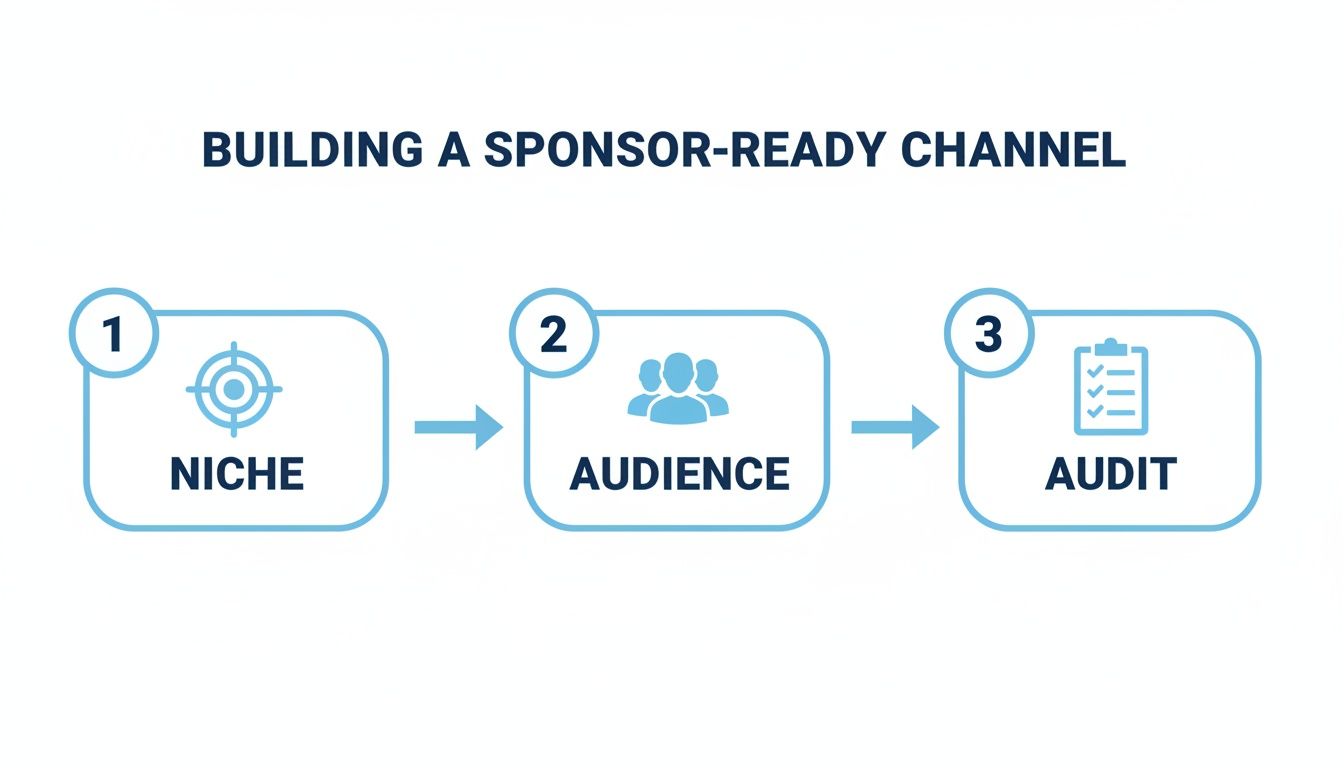
As you can see, locking down your niche and understanding who's watching are the absolute first steps. Only then can you give your channel an honest look-over to see if it's truly ready for sponsors.
Audit Your Channel's Professionalism
Once your niche is dialed in, it’s time for a quality control check. Look at your channel through a brand's eyes. Your branding—from the channel banner down to your video thumbnails—needs to look consistent and polished. Crisp audio and clean video are simply non-negotiable these days.
This is the kind of effort that pays dividends, bringing in not just loyal viewers but lucrative partnerships, too. And if you're exploring all your income options, we've put together a full guide on https://www.aicut.pro/blog/how-to-make-money-on-youtube-a-comprehensive-guide.
Building a Media Kit That Actually Gets a "Yes"
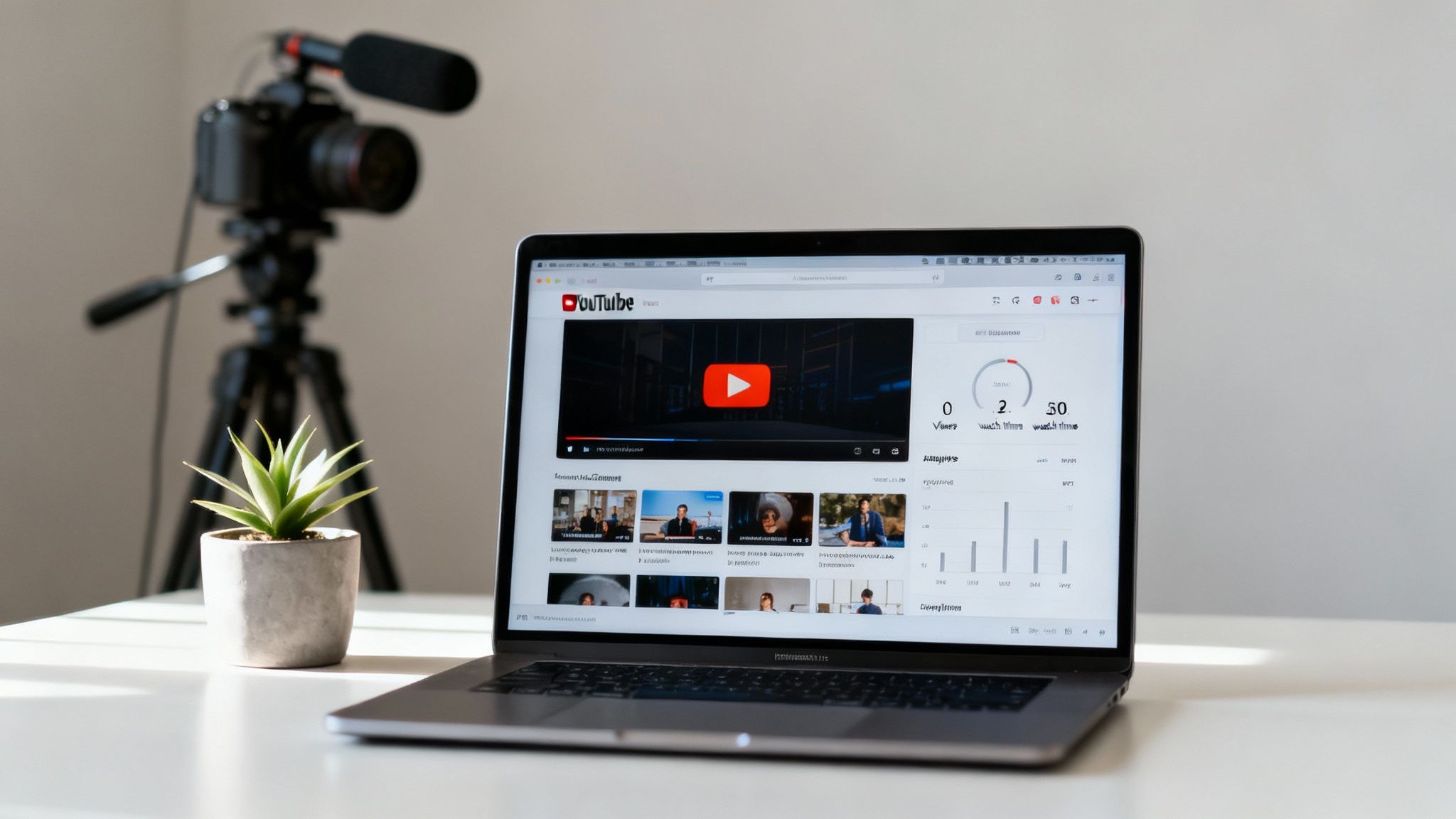
Think of your media kit as your professional resume for brands. It's often the first thing a potential sponsor sees, so it has to make a killer first impression. This isn't just a boring document with a bunch of numbers; it's your chance to tell the story of your channel, your audience, and why working with you is a no-brainer.
A well-crafted media kit is a massive time-saver for busy brand managers. It gives them everything they need to know at a glance, answering their biggest questions before they even have to ask. It helps you skip the endless email back-and-forth and gets right to the good stuff.
The Anatomy of a Winning Media Kit
Your media kit should be clean, professional, and easy to skim. A one or two-page PDF is perfect. You don't need fancy design skills, either—tools like Canva have fantastic templates that make it simple to create something that looks slick and professional.
Here are the must-have pieces of the puzzle:
- Your Bio and Channel Vibe: Start with a short intro. Who are you? What's your channel all about? Let your personality shine through and clearly state your mission.
- The Metrics That Matter: Sure, include your subscriber count, but the real magic is in the engagement stats. Brands want to see your average views per video, average watch time, and click-through rate (CTR). These numbers prove your audience is actually paying attention.
- Your Audience Snapshot: Dive into your YouTube Analytics and pull out the key demographic data. You'll want to include age ranges, gender split, and the top countries where your viewers are located. This shows a brand you have their ideal customer watching your videos.
- What You're Offering: Clearly lay out the types of sponsorships you’re open to. This could be anything from a fully dedicated review video to a quick 30-60 second mid-roll mention or a package of YouTube Shorts.
Pro-tip: Showing that you can create authentic, user-generated style content is a huge selling point right now. To get a leg up, check out this guide on mastering AI UGC product videos to add another powerful offering to your services.
Go Beyond the Data to Prove Your Worth
Numbers are great, but trust is what seals the deal. You need to include social proof to show that you're not just a channel with views, but a creator with real influence. This is especially true for smaller channels where a tight-knit, engaged community is your greatest asset.
Brands will pay top dollar for creators who have earned their audience's trust. That connection is your superpower, even if you don't have a million subscribers.
Here’s how to build that trust almost instantly in your media kit:
- Show Off Past Wins: If you’ve worked with brands before, showcase their logos. Even better, add a one-line description of the campaign and a direct link to the video.
- Borrow Their Credibility: Have you received positive feedback from a past partner? Pop a quote or two in as a testimonial. A glowing review about your professionalism or results speaks volumes.
- Let Your Audience Do the Talking: Find comments from viewers saying they bought a product you recommended and loved it. Screenshot them! There is no better proof that your recommendations actually lead to sales.
Setting Your Sponsorship Rates with Confidence
Let's talk about one of the trickiest parts of getting sponsored: figuring out how much to charge. It's so easy to second-guess yourself and end up undervaluing your work. I've seen countless creators do it. But you can stop leaving money on the table by moving from guesswork to a solid, data-backed strategy.
Your pricing strategy really boils down to three core pillars: your average video views, your audience engagement rate, and the niche you're in. It's a simple fact that a specialized personal finance channel can command much higher rates than a general entertainment channel, even with the exact same viewership. Niche matters. A lot.
Understanding Common Pricing Models
Before you can set a price, you need to understand the language brands speak. Most deals fall into a few standard models. Knowing how each works gives you the flexibility and confidence to negotiate a deal that actually makes sense for you.
To help you get a handle on this, here's a breakdown of the most common pricing structures you'll encounter.
YouTube Sponsorship Pricing Models Compared
| Pricing Model | How It Works | Best For | Potential Drawback |
|---|---|---|---|
| Flat Fee | You and the sponsor agree on a fixed price for a specific set of deliverables (e.g., one 60-second integration). | Creators who want predictable income and clear expectations. It's simple and easy to manage. | If the video unexpectedly goes viral, you won't earn more from the extra views. |
| CPM (Cost Per Mille) | You're paid a set rate for every 1,000 views the video gets within a certain timeframe (usually the first 30 days). | Channels with consistent, high viewership. Brands love it because they pay directly for performance. | An underperforming video means a smaller paycheck, which adds a layer of unpredictability. |
| Affiliate Partnership | Instead of an upfront payment, you earn a commission on sales made through your unique link or discount code. | Creators with a highly engaged audience that trusts their recommendations. Great for long-term income. | There's no guaranteed upfront payment, so it's a higher-risk model if your audience doesn't convert. |
Each model has its place, and you'll find that many experienced creators actually combine them to get the best of both worlds.
A savvy approach is to negotiate a hybrid deal. For example, ask for a lower base flat fee plus a 10% affiliate commission. This gives you guaranteed income upfront while still letting you share in the campaign's success.
Calculating Your Baseline Rate
Okay, let's get to the numbers. A simple CPM-based formula is the best way to find a solid starting point for your rate. Industry CPMs for YouTube sponsorships can swing anywhere from $10 to $50, with things like niche, audience demographics, and engagement heavily influencing where you land.
Let’s run through a quick example. Say your videos consistently get around 20,000 views and you decide on a conservative $25 CPM.
Here’s the math:
20,000 views / 1,000 = 20
20 x $25 CPM = $500
Boom. Your baseline rate for a standard integration is $500. This isn't a final, set-in-stone number, but it's a confident, data-backed figure to open negotiations with.
Sponsorship payments are all over the map, but having data gives you a huge advantage. Looking at 2025 market guides, smaller channels can realistically earn $50–$300 per video. Mid-tier creators with a solid following often see deals ranging from $1,250 to over $6,250 per integration. Of course, this all depends on the specific deliverables. If you want to dive deeper, you can learn more about how sponsor payments break down from industry reports.
Create Tiered Sponsorship Packages
One final tip that has worked wonders for me: never just offer a single price. Instead, present brands with a few tiered packages. This simple shift makes you incredibly easy to work with and dramatically increases your chances of closing a deal, even if a brand has a smaller budget than you hoped.
Think of it like this:
- Bronze Tier: A simple 30-second mention with a link in the description.
- Silver Tier: A more involved 60-90 second dedicated segment within one of your regular videos.
- Gold Tier: The premium option—a fully dedicated review video, maybe plus a couple of YouTube Shorts to promote it.
Finding and Pitching the Right Brands
Okay, your channel is looking sharp and your media kit is ready to go. Now for the fun part—the actual hunt for sponsors. This is where so many creators go wrong. They focus on the pitch, but forget the most important rule: a brilliant pitch to the wrong brand is a total waste of everyone's time.
The goal here isn't to blast out a hundred emails and hope something sticks. It's to build a curated list of dream partners who are a natural fit for your audience.
You really have two ways to go about this, and honestly, the most successful creators I know use a blend of both.
- Inbound Opportunities: This is where you use sponsorship marketplaces to connect with brands that are already looking for creators like you.
- Outbound Outreach: This is the proactive approach. You identify companies you love and reach out to them directly.
Getting Started With Sponsorship Marketplaces
Think of platforms like Aspire, FameBit (which is now YouTube BrandConnect), and Upfluence as the middlemen. They're a fantastic way to get your feet wet and land those first few deals. It takes a lot of the pressure off since you're browsing brands that are actively searching for partnerships.
Here's a quick peek at what a platform like Aspire looks like from the creator's side.
As you can see, the dashboard makes it pretty simple to browse campaigns, see exactly what the brand wants, and apply right then and there. While these platforms are great for discovery, just know that they often take a cut of your earnings and the competition can be pretty fierce.
The Real Power of Cold Outreach
Marketplaces are convenient, for sure. But the most rewarding and often most lucrative partnerships come from rolling up your sleeves and doing direct outreach. This approach puts you firmly in the driver's seat. It lets you pitch amazing brands that might not even have a public influencer program, giving you a chance to show them what they're missing.
First things first, make a list of 20-30 brands you genuinely use and admire. Whose products would actually help or interest your audience? Think about what you already use, what companies you see sponsoring creators in your niche, or brands you notice advertising heavily online. If they're spending on ads, they have a marketing budget.
Once you have your target list, it's time to do a little detective work. Head over to LinkedIn and search for titles like "Influencer Marketing Manager," "Brand Manager," or "Partnerships Lead" at those companies. Getting your email into the right person's inbox is half the battle.
Your pitch has one single job: to make the brand manager’s life easier. Prove you've done your homework, that you get their goals, and that you have a specific, creative idea ready to roll.
Crafting a Pitch That Actually Gets a Reply
Nothing screams "delete me" like a generic, copy-and-paste email. Personalization is everything. A winning pitch isn't about you and how great your channel is; it's about what you can do for them.
Here’s a simple, effective structure I've seen work time and time again:
- A Subject Line They Can't Ignore: Be specific and a little intriguing. "Collaboration Idea for [Brand Name] x [Your Channel Name]" is infinitely better than a vague "Sponsorship Inquiry."
- The Hook: Open with a genuine compliment. Did they just run an amazing campaign? Do you absolutely love one of their products? Show them you're a real fan, not just a creator looking for a check.
- The Value Prop: This is your "why." Briefly introduce your channel, but more importantly, introduce your audience. You need to connect the dots for them—spell out why your viewers are their ideal customers. This is the perfect spot to drop a key statistic or two from your media kit.
- The Idea: Don't just say you can promote their product. Pitch a specific video concept. For example, instead of "I can make a video about your boots," try "I'd love to feature your new hiking boots in my upcoming video, 'Testing the Best Gear for a 3-Day Mountain Trek.'" See the difference?
- The Call to Action: End with a clear, easy next step. Simply ask if they'd be open to seeing your media kit or hopping on a quick call to chat more about the idea.
The timing couldn't be better. The market for creator partnerships is absolutely exploding. In the first half of 2025 alone, English-language YouTube channels published around 65,700 sponsored videos. That’s a 54% jump from the year before, and those videos racked up an incredible 19.1 billion views. This shows that brands are pouring money into this space, especially when it comes to working with mid-tier creators. You can dive into more of the data in the full report.
Negotiating Your Contract and Closing the Deal
Getting that enthusiastic "yes" from a brand feels amazing, but hold on—it's not the finish line. The real work starts now. This next phase, the negotiation, is where a casual email exchange turns into a professional, legally-sound partnership that protects everyone involved. Think of it as building the foundation for a smooth collaboration.
A handshake deal over email is a nice start, but you absolutely need a formal contract. This document is your best friend. It spells out every single detail, preventing any future headaches or "he said, she said" arguments about deliverables, payment, or how they can use your content. It’s your safety net.
Key Terms You Must Define
Before you even think about signing, you need crystal clarity on a few core parts of the deal. These are the classic friction points, so getting them down in writing is non-negotiable.
Make sure your contract explicitly details:
- Deliverables: Get super specific. Are you making one 60-second integration, a fully dedicated video, or a bundle that includes three YouTube Shorts? Vague terms like "a mention" are a recipe for disaster.
- Content Approval Process: How many rounds of review does the brand get? Do they need to see the script, a rough cut, or just the final video before it goes live? Define a clear timeline for their feedback to keep your production schedule from grinding to a halt.
- Payment Schedule: Nail this down. Are you getting 50% upfront and 50% upon publication, or will they pay you net-30 days after the video is published? I always, always push for at least a partial payment upfront.
- Usage Rights: This is a big one, so pay close attention. How long can the brand use your content? Can they repurpose it and run it as a paid ad on Instagram or TikTok? Granting a brand perpetual, worldwide usage rights is incredibly valuable, and your rate should absolutely reflect that.
Standing Your Ground in Negotiations
Don't be surprised or offended if a brand comes back with a counteroffer—it’s just part of the game. A common tactic is a lowball offer, which is basically their way of testing the waters to see if you know what you're worth.
When this happens, resist the urge to immediately slash your price. Instead, respond professionally by reminding them of the value you deliver. Point back to your media kit stats, highlight the unique trust you've built with your audience, and politely explain why your rate is a fair reflection of the work involved.
If a brand says they "don't have the budget," don't immediately cut your fee in half. A much better response is to offer to adjust the scope of the project. You could say, "I understand. To meet that budget, we could adjust the deliverable to a 30-second integration instead of 60 seconds."
This simple shift in framing does two things: it maintains your value and shows you’re flexible. You're changing the conversation from being about your worth to being about the scope of work.
Remember, a good partnership has to work for both sides. Finalizing a deal where you feel respected and fairly paid is the only way to kick off a collaboration that leads to great content and, hopefully, more work down the road.
A Few Common Questions About YouTube Sponsorships
Diving into sponsorships for the first time can feel a little overwhelming. There are a lot of moving parts, and it's totally normal to have questions about where to even begin.
Let's walk through some of the most common things creators ask me when they're trying to figure out brand deals. Getting these sorted out will give you a much clearer path forward.
How Many Subscribers Do I Actually Need?
This is the big one, and it's surrounded by myths. The honest answer? There is no magic subscriber number.
Sure, a massive subscriber count looks impressive, but brands have gotten much smarter. They've realized that engagement and a well-defined niche are way more valuable than a vanity metric.
I've seen creators with 1,000 to 10,000 subscribers land consistent deals. Their secret is a tight-knit community that hangs on their every word. A small channel with a 25% engagement rate is often a much better bet for a sponsor than a massive channel with a 1% engagement rate where most viewers are passive.
Don't chase a subscriber number. Chase a connection. A brand isn't paying for your subscriber count; they're paying for the trust you've earned with your audience.
Should I Use Marketplaces or Pitch Directly?
Why not both? The best strategy is to tackle this from two angles, especially when you're starting out. Each has its own pros and cons.
Sponsorship Marketplaces: Think of platforms like Aspire or BrandConnect as training wheels. They're great for getting your feet wet because they're full of brands actively looking for creators. The downside? They usually take a cut of your fee, and you're up against a lot of other creators on the platform.
Direct Pitching: This is where you graduate to the big leagues. Cold outreach is definitely more work—you have to find the brands, track down the right person to email, and write a killer pitch. But the upside is huge. You build a direct relationship, maintain total control over the deal, and keep 100% of the money.
My advice is to start on marketplaces to get some experience and build a portfolio. Once you feel more comfortable, start dedicating more of your time to direct pitching. That's where the best long-term partnerships are made.
What Is the Biggest Pitching Mistake?
Sending a generic, copy-and-paste email. Hands down. It's the fastest way to get your pitch deleted. Brand managers are buried in these emails every single day, and they can spot a lazy, impersonal template from a mile away.
To even have a chance, your pitch needs to prove you've done your homework. It has to clearly show three things:
- You actually know and like their brand (mention something specific!).
- You know exactly why your audience is the right fit for their product.
- You have a creative idea for the collaboration that isn't just "I'll mention you."
As your channel and sponsorship income grow, it's also smart to think about the business side of things. Setting up a formal business structure can offer legal protection and financial perks. You can learn more about how to incorporate your YouTube business in Canada to see if it's the right move for you.
Ready to create stunning videos for your channel or your sponsors without spending hours editing? Aicut gives you the tools to produce photorealistic AI clips, animated characters, and authentic UGC-style reviews in minutes. Join over 500,000 creators using our viral templates to accelerate growth and monetization at https://www.aicut.pro.