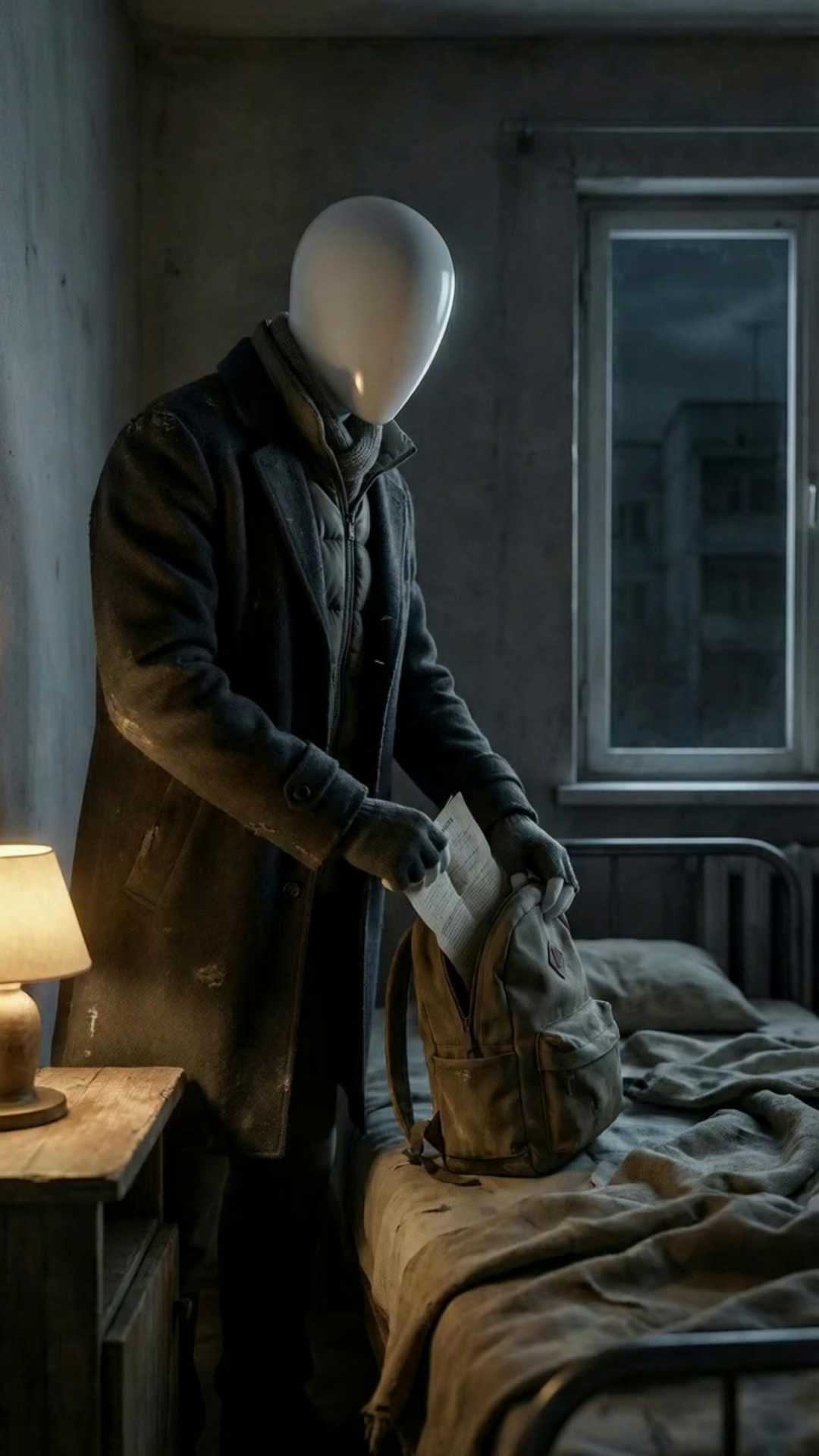
If your documentary shorts keep losing viewers in the first 10 seconds, the problem is usually not the topic, it is the presentation. Faceless 3D mannequin videos work because they turn abstract stories into visual rhythm, without forcing you to film actors, scout locations, or rely on overused stock footage. If you want to understand how to make 3d mannequin documentary videos that feel cinematic and keep people watching, the key is simple, the posture does the acting.
Why Faceless White Mannequins Carry a True Story Better Than Stock Footage
Stock footage often looks polished, but it also looks generic. A hand on a laptop, a skyline at sunset, a person walking through a hallway, these clips can support a narrative, but they rarely become the narrative. 3D mannequin documentary videos give you something better, a controlled visual language that can represent real people, pressure, distance, tension, and isolation without distracting facial expressions.
That is why these videos perform well on YouTube Shorts, TikTok, and Instagram Reels. The mannequin becomes a stand-in for the subject, while the narration carries the facts. Viewers do not get pulled out of the story by inconsistent actors, awkward lip sync, or mismatched b-roll.
The format also gives you speed. Once you learn how to make 3d mannequin documentary videos, you can produce more shorts around the same story structure, then test different hooks, pacing styles, and thumbnails. Tools like aicut help creators do this faster with AI video generation, motion control, viral prompt cloning, and direct social publishing.
The Reference, One Border-Crossing Documentary and 21 Million Views
The reason this style grabbed attention in the first place is that it can make a real-world story feel both minimal and dramatic. A border-crossing documentary with millions of views worked because it combined a serious topic, restrained visuals, and a calm voice. The audience was not asked to admire the graphics, they were asked to follow the journey.
That is the core lesson. A 3D mannequin documentary is not about creating a cute aesthetic. It is about reducing visual noise so the story hits harder.
When you build this format correctly, the viewer understands three things immediately:
- This is a real story, not a skit.
- The visuals are symbolic, not random.
- The pacing is intentional.
If you are using aicut, you can test this style quickly with AI video generation and campaign automation, then publish the winning version directly to TikTok, YouTube, or Instagram.
The Hook Rule, One or Two Sentences, Straight In
The first mistake most creators make is over-explaining the premise. Documentary shorts do not need a warm-up. They need a sharp entry point.
Your hook should do one job, create tension or curiosity immediately. Keep it to one or two sentences and avoid opening with background that the viewer has not earned yet.
Good hook patterns
- “He crossed three borders with no passport, and nobody noticed until it was too late.”
- “This factory looked empty, but the real story was happening underground.”
- “She disappeared for six months, then one photo changed everything.”
Weak hook patterns
- “In this video, we are going to look at an interesting story.”
- “Today we will talk about a man who had a very difficult life.”
- “Before we begin, here is some context.”
If your title promises a mystery, the hook should deliver the tension right away. That is one of the most important rules in how to make 3d mannequin documentary videos that retain viewers.
Write the Narration First, Because Every Picture Follows It
The narration is the spine of the video. Do not start by collecting images. Start by writing a tight script that can stand alone as audio.
A strong documentary script usually has four parts:
- Hook
- Setup
- Escalation
- Payoff
A simple script structure
- Hook: what happened?
- Setup: who is involved and why it matters.
- Escalation: what went wrong or what made the story complicated.
- Payoff: what the viewer learns at the end.
When you write first, every visual choice becomes easier. You know when you need a wide shot, when you need a close-up of a mannequin posture, and when you need a slow reveal.
This is where aicut can save time. Its viral prompt cloning helps you reuse successful narrative structures, while AI image stories can support the visual flow if you are building a series around one documentary style.
Practical script length tip
For a 45 to 60 second short, aim for roughly 110 to 160 spoken words. For a 2 to 4 minute documentary short, you can go longer, but every sentence still needs a purpose. If a line does not move the story forward, cut it.
Posture Does the Acting, Staging Figures That Have No Faces
This is the part most people underestimate. When your figures have no faces, the body becomes the performance.
A mannequin leaning forward can signal urgency. A figure turned away can suggest secrecy or loss. A group standing in a line can communicate authority, conformity, or waiting. You are directing shape, spacing, and orientation, not facial emotion.
Use posture to communicate meaning
- Upright and centered, for control or confidence
- Slouched or bent, for exhaustion or defeat
- Separated figures, for conflict or distance
- Clustered figures, for pressure or urgency
- One isolated figure, for vulnerability or focus
Simple composition rules
- Keep the main figure larger in frame when the narration is emotional.
- Use negative space to show loneliness or uncertainty.
- Change camera angle when the story changes tone.
- Avoid clutter behind the figure, because the silhouette should read instantly.
If you use aicut for this workflow, motion control helps you keep posture changes deliberate instead of random. That matters a lot in a format where you have no facial expression to lean on.
Pacing, One Image Per Few Seconds, and What That Does to Your Script Length
Many creators over-animate these videos. The result feels busy, not cinematic. In documentary shorts, pacing should support comprehension.
A good default is one image or shot change every few seconds, depending on the density of the narration. If a line contains a new fact, location, or emotional beat, give it a new visual. If the sentence continues the same idea, hold the frame longer.
Pacing guidelines that work
- Faster pacing for suspense or discovery
- Slower pacing for emotional or reflective sections
- New visual every 2 to 4 seconds for high-retention shorts
- Longer holds when a visual is strong and the narration is stable
What pacing does to your script
If your script is too long for the visual rhythm, viewers feel drift. If it is too short, the video feels thin. Match your word count to the number of visual changes you can realistically support.
A simple test, read your script aloud and mark every place a new visual should appear. If the video would need 40 shots but you only have 20 good ones, rewrite the script or shorten it.
Picking a Topic That Survives Being Told in Four Minutes
Not every story belongs in this format. The best topics are clear, visual, and built around a transformation, conflict, or strange fact.
Good topic types
- Survival stories
- Unusual historical events
- Human-interest investigations
- Travel or border stories
- Business failures or comeback stories
- Missing-person style narratives, if handled responsibly
Bad topic types
- Topics that require too much legal nuance
- Stories that depend on visual spectacle you cannot simulate
- Narratives with no clear central conflict
- Complex timelines that need a full long-form documentary
The question to ask is simple. Can this story be understood in one sitting, with a beginning, a middle, and an end? If yes, it is a strong candidate.
Voice and Score, Flat Delivery, and Letting the Music Do the Lifting
One reason these documentaries work is that the voice is often calm, even flat. That does not mean boring. It means controlled. The voice should feel like a reporter, witness, or archivist, not a hype host.
Voice guidelines
- Use a steady tone
- Pause before important facts
- Avoid overacting
- Keep the delivery clean and readable
Music does a lot of the emotional lifting. A low, sparse score can make a simple posture shot feel heavy or suspenseful. A subtle rise in the music can signal escalation before the narration says it directly.
Sound design tips
- Use music that supports the mood, not the visuals alone
- Avoid tracks with too much melody, they can fight the narration
- Keep sound effects minimal and purposeful
- Let silence appear when the story needs it
If you are producing often, aicut can help you move from concept to finished short faster, especially when you need AI video generation and direct social publishing across multiple platforms.
True Stories About Real People, What to Check Before You Narrate One
This format can touch sensitive material, so accuracy matters.
Before you narrate a real story, check:
- Names and dates
- Geographic details
- Whether a claim is verified by more than one source
- Whether the story is public, documented, and safe to summarize
- Whether you are presenting speculation as fact
If you are simplifying a real event, do not invent key details just because the visuals look good. The point of a documentary style is credibility.
A practical workflow for fact-checking
- Write a rough outline.
- Collect at least two reliable sources.
- Mark anything uncertain.
- Rewrite lines that overstate what is known.
- Keep the narration clear about what is verified.
That discipline helps your content stay sustainable. Shorts can be fast, but the story still has to hold up.
Where These Videos Fall Apart, Faces, Clutter and a Hook That Explains Itself
Most weak 3D mannequin documentaries fail in the same few places.
1. Faces are missing, so everything else is too busy
If the scene is cluttered, the mannequin gets lost. Simplicity is not a limitation, it is the style.
2. The hook tells the whole story too early
If the opening explains everything, there is no reason to stay. The hook should create tension, not summarize the ending.
3. The visuals are decorative instead of narrative
Every frame should tell you something about the story. If it does not add meaning, it is probably filler.
4. The narration is written like a blog post
Short-form documentaries need spoken language. That means shorter sentences, cleaner transitions, and no academic padding.
5. There is no repeatable system
A one-off video is nice. A system is better. If you want consistency, build templates for hooks, beats, posture moves, and pacing.
This is another reason creators turn to aicut. With viral prompt cloning, AI influencer videos, and campaign automation, you can turn one successful structure into a repeatable content engine.
How to Make 3D Mannequin Documentary Videos, A Simple Production Workflow
Here is a repeatable workflow you can follow.
Step 1, Choose a story with tension
Pick something that can be explained in a few beats. A clear conflict always helps.
Step 2, Write the hook first
Start with the most curious or dramatic part. Do not bury it.
Step 3, Draft the narration before visuals
Your script should read clearly on its own.
Step 4, Map visuals to beats
Assign one visual idea to each major sentence or phrase.
Step 5, Build posture-based scenes
Use the mannequin body to show emotion, status, movement, or distance.
Step 6, Add pacing and sound
Use restrained motion and supportive music.
Step 7, Review for clarity
Ask, can a viewer understand the story without rewinding?
Step 8, Publish and test
Use direct social publishing to push the video to TikTok, YouTube Shorts, or Instagram Reels, then compare retention.
TL;DR, What Actually Matters
- The strongest 3D mannequin documentaries start with a sharp hook and a tight narration.
- Posture, spacing, and camera angle do the emotional work when faces are absent.
- Simplicity beats clutter, every shot should support the story.
- Pacing should match the script, not fight it.
- A repeatable workflow makes this format much easier to scale with aicut.
FAQ
How long should a 3D mannequin documentary video be?
For Shorts, 30 to 60 seconds often works best. For deeper stories, 2 to 4 minutes is still manageable if the pacing stays tight.
Do I need realistic characters for this format?
No. The power of this style is in symbolic storytelling. Clean mannequin staging often works better than over-detailed realism because the audience focuses on the narrative.
What kind of stories perform best?
Stories with conflict, mystery, transformation, or high stakes tend to perform well. The format is especially strong for survival, investigation, travel, and human-interest topics.
Can I make these videos faster with AI?
Yes. Many creators use aicut for AI video generation, viral prompt cloning, motion control, and campaign automation so they can produce and publish faster without rebuilding everything from scratch.
Should the narration sound dramatic?
It should sound controlled, not theatrical. A calm delivery often makes the story feel more believable and more cinematic.
If you want a faster way to turn this format into a repeatable content system, try aicut for 3D mannequin documentary-style video creation. It is a practical way to test hooks, build short-form documentary visuals, and publish directly to TikTok, YouTube, or Instagram with less friction.