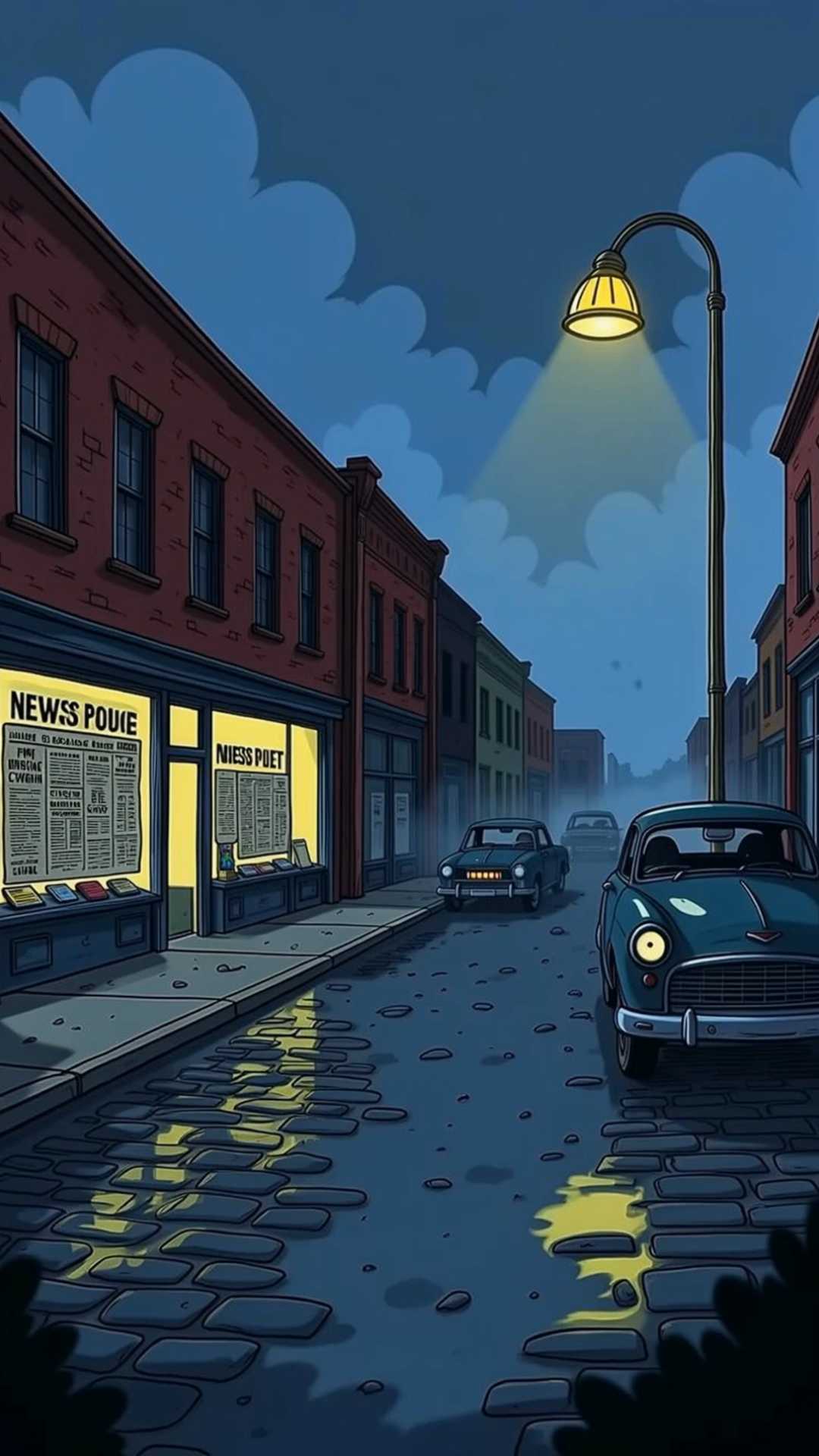
If you keep posting true crime clips that look generic, your audience feels it immediately. Stock footage, obvious B-roll, and stiff narration make even a great case feel flat. If you are trying to learn how to make AI true crime videos, the real advantage is not more footage, it is a stronger visual style that creates dread without cheap shock.
Why a Hand-Painted Cartoon Look Beats Stock Footage for True Crime
True crime is emotional before it is informational. Viewers want mystery, atmosphere, and a sense that something is about to be revealed. A hand-painted or cartoon-inspired look works because it gives you distance from reality while still letting the story feel vivid.
That matters for three reasons:
- It reduces the need for literal reenactment.
- It keeps the visuals consistent even when the story changes scene by scene.
- It gives you a recognizable format that can scale across multiple cases.
Stock footage often breaks immersion because the viewer can tell the visuals were not made for the story. A stylized AI approach lets you design for tension from the first frame. That is one reason creators using aicut can build a repeatable short-form format around creepy cartoon storytelling instead of chasing random clips.
If your goal is monetization, the style also helps you look more intentional. Brands, platform algorithms, and audiences all respond better when the content feels packaged, not pieced together.
The Reference: One Cartoon True-Crime Clip and 7.3 Million Views
A useful reference point for this format is a cartoon-style true crime clip that reached millions of views. The lesson is not that you need a viral miracle. The lesson is that a simple visual language, paired with a sharp narration arc, can outperform more complicated edits.
What made that type of clip work?
- The opening image created curiosity immediately.
- The narration moved fast, with no wasted setup.
- Every visual supported the same mood.
- The story revealed just enough, then pulled back.
That is the core of how to make AI true crime videos that perform. You are not trying to recreate a documentary. You are building a short, high-retention mystery.
With a tool like aicut, you can use AI video generation, motion control, and viral prompt cloning to reproduce a similar tone across multiple uploads without rebuilding everything from scratch each time.
Pick a Case That Can Be Told in Four Minutes Without Cheating
A common mistake is choosing a story that is too large for short-form video. If the case needs 20 minutes to make sense, it will feel rushed in four. Pick a subject that has a clean spine.
Good candidates usually have:
- one central event,
- a few key characters,
- a clear timeline,
- a twist, contradiction, or unresolved question.
Avoid stories that require constant legal caveats or deep forensic explanation. The best short-form cases are the ones where the viewer can follow the stakes without a chart.
A simple filter:
Strong case picks
- a mysterious disappearance,
- a strange last-known-location timeline,
- a suspicious confession,
- an eerie unsolved incident,
- a notorious local legend with documented details.
Weak case picks
- cases with dozens of overlapping suspects,
- stories that need technical forensic background,
- topics still unfolding in the news,
- anything that requires guesswork to stay interesting.
If you are building content for TikTok, YouTube Shorts, or Instagram Reels, the case should fit a 45 to 90 second version first, then a 2 to 4 minute version second. That way your script stays clean.
Write the Narration First, Because One Image Is Drawn Every Few Seconds
When you are figuring out how to make AI true crime videos, start with the narration. Do not start with prompts, image styles, or scene ideas. The narration is the engine.
Write for spoken rhythm, not essay structure.
A simple narration framework
- Hook the viewer with a strange detail.
- State the setting and stakes.
- Move through events in order.
- Reveal the unsettling turn.
- End with a question, contradiction, or chilling fact.
Each line should be short enough to match a visual beat. In this format, one image is often held only a few seconds. If the script is too dense, the visuals will feel behind the story.
Try this rule:
- one sentence for setup,
- one sentence for the reveal,
- one sentence for the emotional beat.
If you want speed, aicut can help you move from script to video with AI image stories and direct social publishing, so you are not manually exporting every version for each platform.
The Cold Open: Lead With the Detail, Not a Promise About the Detail
Many creators waste the opening by saying things like, “This is one of the most disturbing cases ever.” That is a promise, not a hook. The viewer wants the detail itself.
Instead, open with a concrete object, action, or contradiction.
Better cold open examples
- “The last message was sent after midnight, but the phone was already in the water.”
- “The house was locked from the inside, except for one broken window.”
- “The witness remembered the red coat first, not the face.”
These openings create immediate questions. They also fit the visual style of a creepy cartoon or hand-painted scene much better than a generic title card.
A good cold open should make the viewer think, “Wait, what happened there?” not “Okay, I know this is going to be dramatic.”
Pacing Dread, Short Sentences, Withheld Information, No Jump Scares
True crime is not horror editing. You do not need jump scares, glitch effects, or loud stings every 10 seconds. Dread comes from restraint.
Use these pacing tools
- short sentences during key reveals,
- slightly longer sentences during transitions,
- pauses before the most important facts,
- visual stillness when the narration becomes heavier.
What to withhold
Do not explain everything immediately. Let the audience sit with uncertainty. For example:
- mention the odd detail first,
- delay the meaning by a few lines,
- reveal the implication only after the viewer has leaned in.
This is especially effective in AI-generated cartoon footage because the illustration style already feels slightly detached. That distance lets the narration carry more weight.
With aicut, you can pair viral prompt cloning with motion control so your successful pacing style becomes repeatable. That matters if you plan to post consistently instead of treating every video like a one-off experiment.
What the Drawing Should Never Show
One of the biggest mistakes in this niche is visual overreach. If the image becomes too literal, too graphic, or too sensational, the story stops feeling eerie and starts feeling exploitative.
Avoid showing:
- graphic injury,
- explicit violence,
- real victim likenesses without care,
- reenactments that feel like speculation presented as fact,
- details that are only there to shock.
Instead, show atmosphere and implication:
- empty hallways,
- a dim kitchen light,
- a parked car at night,
- a dropped object,
- a silhouette at the edge of frame.
The strongest true crime visuals often show what is missing, not what was done. That leaves room for imagination, which is where dread lives.
Fact, Folklore or Rumour: Say Which You Are Telling, and Where to Stop on Real Victims
If you are covering a real case, be clear about what is established and what is speculative. This is important both ethically and strategically.
Keep the script honest by labeling the story type
- Verified fact: documented events, public records, confirmed statements.
- Folklore or legend: local myths, tall tales, urban legends.
- Rumour or disputed claim: only if you clearly say it is unverified.
If a case involves real victims, keep the focus on the event and the timeline, not on sensationalizing personal tragedy. You can still create suspense without crossing that line.
A practical approach:
- lead with confirmed facts,
- mention uncertainty plainly,
- avoid naming or depicting non-essential private details,
- never imply guilt without evidence.
This approach protects your channel and makes your content easier to defend if it is reviewed by viewers or moderators.
Platform Rules for Disturbing Content, and Staying Monetizable
If you want these videos to grow, they also need to stay usable on major platforms. That means thinking about moderation, age-appropriateness, and monetization from the start.
Safer production choices
- keep violence implied rather than explicit,
- avoid graphic audio,
- use stylized visuals instead of realistic reenactments,
- steer clear of graphic thumbnails,
- focus on mystery and storytelling over gore.
You should also think about where the video sits in the funnel. A short, creepy clip can drive discovery, but a strong channel format and consistent posting schedule help convert viewers into followers and buyers.
This is where aicut becomes especially useful, since it combines AI video generation, campaign automation, multi-model access, and direct social publishing for TikTok, YouTube, and Instagram. If you are testing multiple case formats, that workflow saves time fast.
Where These Videos Fall Apart, Overwriting, Over-Narrating, Over-Explaining
Even good ideas fail when the execution gets heavy-handed.
Overwriting
Too many words make the video feel crowded. If every line tries to be profound, nothing lands.
Over-narrating
Not every image needs a sentence. Let some shots breathe. Silence can do more than filler.
Over-explaining
If you spell out every emotional beat, the viewer does not get to participate. Leave room for curiosity.
Over-editing
Too many transitions, effects, and overlays can make the story feel less serious. Keep the pacing intentional.
A better rule is simple: every element should either raise tension, clarify the timeline, or deepen the mood. If it does none of those, cut it.
Step-by-Step Workflow for Making AI True Crime Videos
Here is a practical workflow you can use right away.
1. Choose a case with a clean timeline
Pick a story that fits a short structure.
2. Write a narration-first script
Keep sentences short and visual.
3. Break the script into scenes
Assign one visual idea to each beat.
4. Generate a consistent visual style
Use a hand-painted, cartoon, or eerie illustrated look.
5. Add motion carefully
Use subtle movement, not chaotic animation.
6. Publish to the right platform
Tailor the length and intro for Shorts, Reels, or TikTok.
7. Test and clone what works
When a format performs, reuse the structure with new cases.
If you want a faster setup, aicut can help you package this process into a more repeatable content engine. You can explore plans on the site and choose the workflow that fits how often you post.
Key Takeaways
- The best answer to how to make AI true crime videos is to start with narration, then build visuals around dread.
- A hand-painted or cartoon look often performs better than stock footage because it feels more original and controlled.
- Short, factual, suspenseful scripts work better than over-explained summaries.
- Avoid graphic visuals, especially when covering real victims or active cases.
- Consistency matters, so tools like aicut can help you scale the format across multiple posts.
FAQ
How long should an AI true crime video be?
For short-form platforms, aim for 45 to 90 seconds if you want quick testing. For deeper storytelling, 2 to 4 minutes can work if the case is simple and the narration stays tight.
Can I monetize AI true crime videos?
Yes, but you need to avoid graphic or exploitative content. Keep the visuals stylized, make the storytelling original, and follow platform rules closely.
Do I need advanced editing skills?
Not necessarily. A repeatable format matters more than advanced editing. With AI video generation, prompt cloning, and direct publishing, you can focus on story quality instead of manual production.
What style works best?
A creepy cartoon, hand-painted look, or illustrated noir style often performs well because it creates atmosphere without requiring graphic realism.
Conclusion
Learning how to make AI true crime videos is really about balancing three things, story, style, and restraint. If you choose a case that fits a short format, write a narration-first script, and use a stylized visual approach, you can create videos that feel eerie without feeling excessive.
If you want a faster path from idea to post, try aicut for AI video generation, motion control, viral prompt cloning, and direct social publishing. Explore the creepy cartoon story workflow, check the available plans, and start turning your next true crime concept into a format you can actually scale.