It feels like everywhere you look these days, there's something new about AI. And when it comes to making content, especially for social media and marketing, AI is really shaking things up. We're seeing a big jump in apps that use AI to help create content that looks like it came straight from regular users – the kind of stuff that feels real and honest. This whole area, often called AI UGC, is changing how brands and creators make things, making it faster, cheaper, and sometimes even more creative. Let's take a closer look at what this means and how it's all unfolding.
Key Takeaways
- AI is becoming a major force in user-generated content (UGC), with new apps making it easier to create realistic-looking content that mimics human creators.
- AI video generators are streamlining the production process, allowing for quicker creation, personalization, and consistent branding across campaigns.
- AI avatars offer a way to create authentic-feeling video content at scale, acting like virtual presenters or satisfied customers without the costs and complexities of human influencers.
- Brands like Reebok and Coca-Cola are already experimenting with AI UGC, blurring the lines between traditional user content and AI-generated material.
- While AI UGC offers many benefits, maintaining authenticity and transparency with consumers remains a key challenge to build and keep trust.
The Dawn Of AI-Powered User-Generated Content
Understanding AI UGC: A New Era of Content
It feels like just yesterday that user-generated content, or UGC, was all about grainy phone videos and slightly blurry photos shared by actual customers. Brands loved it because it felt real, you know? Like a friend recommending something. But now, things are getting a serious tech upgrade. We're talking about AI UGC, where artificial intelligence helps create content that looks like it came from a regular person, but with a lot more polish and speed. It's like having a super-efficient assistant who understands exactly what makes content feel authentic, even though it's not a human behind the camera.
This shift means brands can get more content, faster, and tailor it to different groups without breaking the bank. Think about it: instead of coordinating with dozens of real people, an AI can generate a whole bunch of variations that still feel genuine. It’s a big change from the old way of doing things.
The line between what a real person makes and what an AI creates is getting blurrier by the day. This isn't just a small tweak; it's a whole new chapter for how we think about online content.
AI's Role in Revolutionizing Content Creation
So, how is AI actually changing the game? Well, it's doing a lot more than just helping out. In many ways, it's starting to take the lead in content production. Tools are popping up that can handle tasks that used to take ages. We're talking about things like editing, adding effects, and even coming up with initial ideas or scripts. This frees up human creators to focus on the bigger picture, the strategy, and the really creative sparks, rather than getting bogged down in the nitty-gritty of production.
Plus, AI is amazing at making lots of different versions of content. Need a video for TikTok, another for Instagram Reels, and maybe a slightly different one for Facebook? AI can whip those up, tweaking them for each platform and audience. It’s about making content creation more efficient and, honestly, a lot more scalable than ever before.
The Growing Trend of AI UGC Apps
We're seeing more and more apps designed specifically for AI UGC. These aren't just general AI tools; they're built with this specific type of content in mind. For brands looking to create slick product videos that still have that user-generated feel, tools like https://www.aicut.pro/create/ai-ugc-product-video are becoming really popular. They make it possible to produce professional-looking videos quickly and without needing a whole film crew. It’s a big deal for marketing teams who need to keep up with the constant demand for fresh content.
Here’s a quick look at what these apps often help with:
- Speeding up production: What used to take days can now take hours, or even minutes.
- Cost reduction: Less need for expensive equipment, locations, and large teams.
- Content variety: Easily generate multiple versions for A/B testing or different platforms.
- Personalization: Tailor content to specific audience segments.
It’s still early days for some of these AI UGC apps, but the pace of development is wild. Pretty soon, telling the difference between content made by a person and content made with AI might be nearly impossible. That’s how big of a change we’re talking about.
Transforming Content Creation with AI Video Generators
It feels like just yesterday we were painstakingly editing videos clip by clip, right? Well, things have changed. AI video generators are here, and they're seriously shaking things up. These tools are making it way easier for anyone to whip up professional-looking videos without needing a film degree or a Hollywood budget. It's like having a personal video production team at your fingertips.
Streamlining Video Production with AI
Think about all the time you used to spend just cutting and pasting footage, adding music, or trying to get the text to look right. AI video generators take a lot of that grunt work off your plate. They can automate tasks like editing, adding effects, and even suggesting music that fits the mood. This means you can focus more on the creative side of things, like the story you want to tell, instead of getting bogged down in the technical stuff. For creating product videos that really grab attention, tools like https://www.aicut.pro/create/ai-ugc-product-video are becoming the go-to. They make it simple to turn your ideas into polished videos quickly.
Enhancing Creativity Through AI Tools
AI isn't just about making things faster; it's also about opening up new creative doors. These generators often come with a bunch of templates, styles, and themes you can play with. Plus, some can even analyze your project and suggest visuals or music that might work well. It's like having a creative assistant that can offer ideas you might not have thought of yourself. This can lead to some really unique and engaging content that stands out.
Ensuring Consistency in Brand Messaging
For businesses, keeping a consistent brand voice and look across all their content is super important. AI video generators help with this big time. You can set up brand guidelines, like specific colors, fonts, and logos, and the AI can apply them automatically to all the videos you create. This means every video, whether it's for a social media ad or a website explainer, will feel like it comes from the same brand. It builds recognition and trust with your audience, which is always a good thing.
AI Avatars: The Future of Authentic-Looking Content
What Are AI Avatars in UGC Marketing?
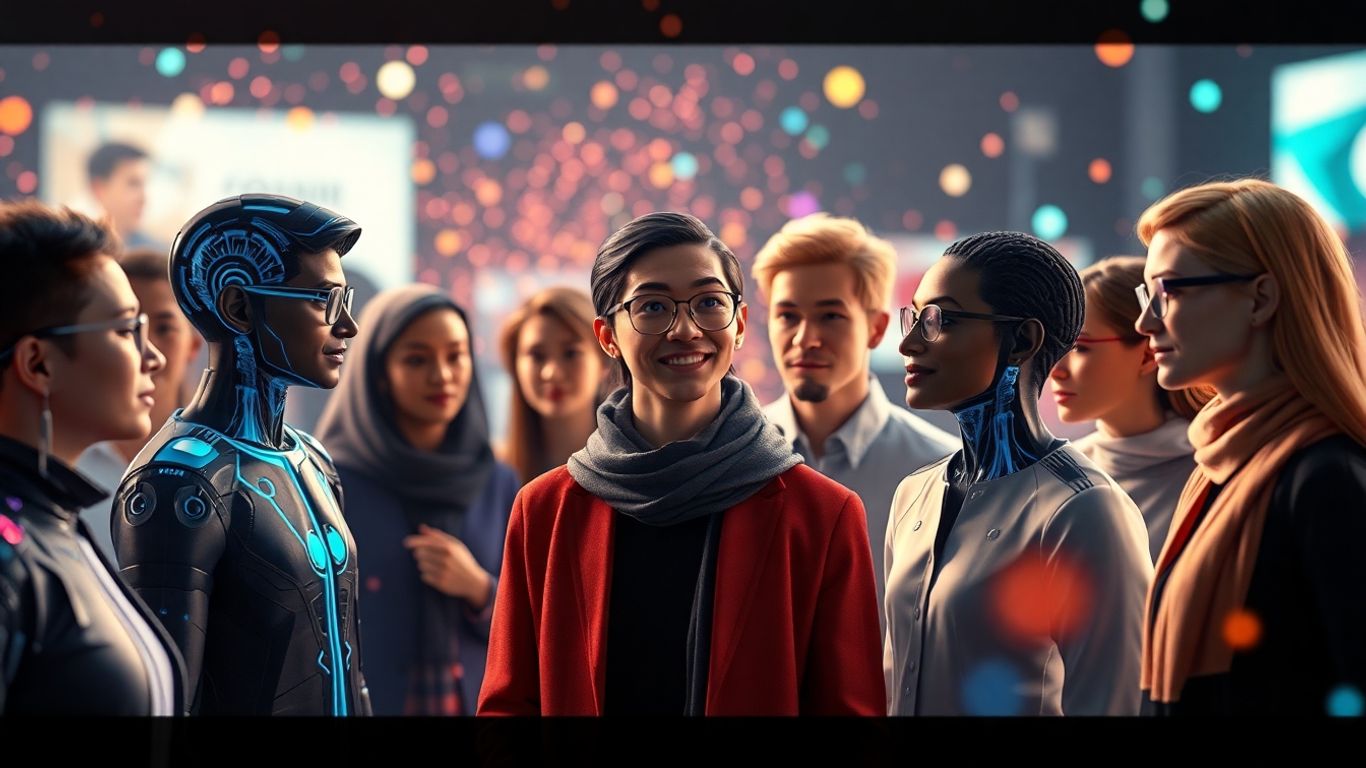
So, what exactly are these AI avatars we keep hearing about? Think of them as super-realistic digital characters, powered by some pretty advanced AI. They're designed to look and sound just like real people, making them perfect for creating that user-generated content (UGC) vibe without all the usual headaches. It's like combining smart voice tech, fancy visual AI that handles facial expressions, and well-written scripts. The result? A talking head that can convincingly act like a customer raving about your product or an influencer giving it a shout-out. You can even have your own brand avatar or pick different ones for different ads. Tools like https://www.aicut.pro/create/ai-ugc-product-video make this process surprisingly simple. You just give them a script, pick a persona – maybe a young parent or a tech enthusiast – choose a voice, and the AI handles the rest, animating everything from lips to gestures to make it feel genuine. If writing scripts isn't your thing, some tools can even whip one up just from a product URL.
The Role of AI Avatars in Building Trust
One of the biggest draws of UGC is its perceived authenticity, and AI avatars are stepping up to fill that role. Imagine an avatar acting as a "satisfied customer" sharing a story about using your new skincare product. These avatars can mimic relatable gestures and speech, which studies show can boost trust significantly compared to plain text reviews. For businesses selling complex software or services, AI avatars can create explainer videos that break down complicated features. It's like having a virtual expert walk through your app's dashboard in a simple, easy-to-understand way, making the content feel more approachable and trustworthy.
AI Avatars vs. Human Creators: A Comparative Analysis
When you stack AI avatars up against human creators for UGC, there are some clear pros and cons to consider:
- Cost: AI avatars are generally much cheaper. You're looking at pennies per video with the right tools, and there are no influencer fees or expensive production shoots. Human creators, on the other hand, can command significant fees, and production costs can add up quickly.
- Speed: Need a video fast? AI avatars can generate them in minutes from a script. Human creators take longer, with days needed for shoots and editing.
- Authenticity: This is where it gets interesting. AI avatars are getting scarily good at mimicking real expressions and voices, making them feel highly authentic. However, real humans bring a level of spontaneous emotion and genuine connection that's still hard for AI to replicate perfectly. There's always a slight risk of AI content feeling a bit too polished or scripted if not done right.
- Scalability: Need to produce a ton of content? AI avatars win here. You can create unlimited videos, even in different languages, without worrying about scheduling or availability. Human creators are limited by their own time and capacity.
While AI avatars can't fully replace the unique spark of human creativity and genuine connection, they offer a powerful way to scale content production, maintain brand consistency, and reach audiences more efficiently. They're not about replacing humans, but about augmenting what's possible in content creation.
Here's a quick look at how they stack up:
| Factor | AI Avatar Pros | AI Avatar Cons | Human Creator Pros | Human Creator Cons |
|---|---|---|---|---|
| Cost | Low (pennies per video) | Initial tool subscription | Authentic feel, genuine connections | Medium to high (fees, production costs) |
| Time | Fast (minutes from script) | Learning curve for effective scripting | Emotional depth, spontaneity | Slower (days for shoots, edits) |
| Authenticity | High (realistic expressions, voices) | Can feel slightly scripted | Highest (real emotions, stories) | Risk of inauthenticity if scripted |
| Scalability | Very high (unlimited videos, multi-language dubs) | Limited emotional nuance compared to humans | Limited by availability and capacity | Limited (one creator at a time) |
| Control | Complete (tweak script, voice, look) | Potential for uncanny valley if over-edited | Partial (guide but not dictate) | Partial (creators may go off-script) |
Real-World Applications of AI UGC Apps
It's not just theory anymore; brands are actually using AI to create content that feels like it came straight from their customers. This is changing how we think about user-generated content, making it faster and more flexible.
Reebok's Interactive AI Sneaker Designs
Reebok jumped into the AI UGC game with something called "Reebok Impact." Basically, people could upload their own photos, and then an AI would take those images and design unique digital sneakers. It’s pretty cool because users get to be part of the design process, and the AI does the heavy lifting. The final designs could be shared online or even bought as digital files for use in places like Roblox. This shows how AI can turn user input into something totally new and shareable.
Coca-Cola's 'Create Real Magic' Campaign
Coca-Cola also played around with this idea with their "Create Real Magic" campaign. They gave people an AI tool that let them use Coca-Cola's branding in their own creative designs. It blurred the lines between what's official and what's user-made. People could then share these creations on social media, making them part of a bigger, interactive brand experience. It’s a smart way to get people involved without needing them to be graphic designers.
Leveraging AI for Scalable Content Marketing
This is where things get really interesting for businesses. AI can help create content that looks like it was made by real users, but much faster and cheaper. Think about needing lots of different videos for different social media platforms or target groups. Instead of hiring tons of people or waiting ages for content, AI can generate variations quickly. This ability to scale content production is a huge deal for marketing. For generating AI UGC videos that look and sound authentic, tools like https://www.aicut.pro/create/ai-ugc-product-video are becoming the go-to option. They help make content that feels real, but can be produced in large quantities without the usual headaches.
The shift towards AI-assisted content creation means brands can now produce a high volume of personalized, authentic-looking material. This doesn't replace human creativity entirely but rather augments it, allowing for more strategic focus while AI handles the repetitive production tasks.
The Impact of AI UGC on Search Engine Optimization
Search engine optimization is always changing, and lately, AI-powered user-generated content (UGC) avatars are making some waves. It’s not just about stuffing keywords anymore; it’s about creating content that search engines and people actually like. Think of it as giving your brand a digital spokesperson that can talk about your products or services in a way that feels real, even though it's AI. This approach blends the trust people have in UGC with the efficiency of AI, and it’s starting to change how businesses get found online.
How AI UGC Avatars Influence Search Rankings
So, how do these AI avatars actually help you rank higher? Well, search engines like Google look for a few key things: relevance, freshness, and engagement. AI UGC avatars can hit all of these. They can create content that directly answers specific questions people are searching for, like how-to guides or product explanations. This ability to create targeted, informative content is a big deal for SEO. Plus, you can generate new videos quickly, keeping your content fresh, which search engines love. When people watch these videos, click on them, and spend time on your page, that tells the search engine your content is good, pushing you up in the results.
Algorithmic Adaptations to AI-Generated Content
Search engine algorithms are getting smarter all the time. They're learning to recognize different types of content, including AI-generated material. The trick is to make AI content that doesn't feel like generic AI content. This means focusing on scripts that sound natural and provide real value. Algorithms are also getting better at understanding video content. By using AI avatars, you can create a lot of video content that's optimized for search. This includes things like good titles, descriptions, and even transcripts, which help search engines index your videos properly. It's about working with the algorithms, not against them.
Integrating AI Avatars with Emerging Technologies
AI UGC avatars aren't just for standard search results anymore. They're starting to pop up in other areas too. Think about voice search – people ask questions naturally, and AI avatars can provide answers in a conversational way. They can also be used to create content for things like augmented reality experiences or personalized recommendations. For example, imagine an AI avatar showing you how a piece of furniture would look in your room. The best tools, like https://www.aicut.pro/create/ai-ugc-product-video, are making it easier to create these kinds of videos that can be used across different platforms and technologies. This integration means your AI UGC content can reach people in more places, further boosting your online presence.
Here's a quick look at how AI UGC can help:
- Targeted Content Creation: Generate videos that directly answer specific search queries.
- Content Freshness: Quickly produce new videos to keep your site updated.
- Improved Engagement: Create visually appealing content that keeps users on your page longer.
- Mobile Optimization: Videos are generally well-suited for mobile viewing, which is key for modern SEO.
- Structured Data: Properly tagged videos can appear with rich snippets in search results.
The goal is to create AI-generated content that feels authentic and helpful. When search engines see that users are engaging with your content, it signals that you're providing a good experience, which is what they want to rank highly. It's a win-win situation if done right.
Challenges and Considerations for AI-Generated UGC

While AI-powered user-generated content (UGC) apps are opening up exciting new avenues for content creation, it's not all smooth sailing. There are definitely some hurdles to jump over and things to keep in mind as this technology becomes more common.
Maintaining Authenticity in AI Content
This is probably the biggest one. People trust UGC because it feels real, like it's coming from a regular person, not a marketing department. When content looks too polished or, worse, obviously artificial, it can really turn people off. The goal is to make AI-generated content feel as genuine as possible, even though it's made by a machine. It's a tricky balance. You want the efficiency and scale that AI offers, but you don't want to lose that personal touch that makes UGC so effective. Think about how you can tweak AI outputs to sound less like a script and more like a real conversation. For video, tools like AI UGC Product Video can help create realistic-looking content, but it still needs a human touch in the scripting and review process to avoid sounding robotic.
Transparency and Consumer Trust
Following on from authenticity, being upfront about using AI is super important. If people feel like they're being tricked into thinking AI content is from a real person, trust can go out the window pretty fast. It’s not about shouting from the rooftops that every piece of content is AI-generated, but having clear disclosures, maybe a small tag on videos or a statement on your website, can go a long way. This shows you're not trying to pull a fast one and that you're using the tech responsibly. Building trust is key, and transparency is a big part of that.
Ethical Implications of AI-Driven Content
Beyond just trust, there are broader ethical questions. For instance, AI avatars shouldn't make claims about products or experiences that a real person would have to verify. An AI avatar saying it's used a product for years, when it hasn't, is misleading. It’s important to ensure that the content, even if AI-generated, is truthful and doesn't misrepresent the product or service. Also, consider the data used to train these AI models. Are there biases in the data that might show up in the generated content? It’s something to be aware of and actively work to mitigate. We need to make sure AI is used in a way that's fair and doesn't perpetuate harmful stereotypes. It's about using these powerful tools for good, not just for churning out content.
The Future is Here, and It's AI-Powered
So, what does all this mean for content creation? It's pretty clear that AI isn't just a passing fad; it's changing the game. We're seeing AI tools make it easier and faster for anyone to create cool videos and images that look like they came straight from a real person. Brands are already jumping on board, using AI to make content that feels authentic but can be produced on a massive scale. While we still need to think about keeping things real and not letting AI feel too robotic, the trend is undeniable. Get ready, because the way we make and consume content is about to get a whole lot more interesting, thanks to AI.
Frequently Asked Questions
What exactly is AI-generated User-Generated Content (UGC)?
AI-generated UGC is content that looks like it was made by real users, but it's actually created with the help of artificial intelligence. Think of it like AI helping to make videos or pictures that feel personal and come from everyday people, but much faster and easier.
How do AI video generators work?
These tools use smart computer programs to create videos. You can often give them text or images, and the AI will turn them into a video, sometimes even adding voices or music. It's like having a super-fast video editor that can make professional-looking clips without you needing special skills.
What are AI avatars and how are they used in marketing?
AI avatars are like digital characters that look and sound very real, powered by AI. In marketing, they can be used to create videos that seem like they're from satisfied customers or influencers, sharing opinions about products. This makes content feel authentic and can be done quickly and cheaply.
Can AI-generated content be as authentic as content from real people?
That's a big question! While AI can make content look very real, some people worry it might not feel as genuine as something a real person made. The best approach is often to mix AI content with real user content and be open about using AI.
Are there any famous brands using AI for UGC?
Yes, brands like Reebok and Coca-Cola have experimented with AI for content. Reebok let users design sneakers with AI help, and Coca-Cola had a campaign where people could use AI tools to create designs with the brand's elements. It shows how AI can be part of creative marketing.
What are the main benefits of using AI for content creation?
AI can make creating content much faster and cheaper. It allows brands to make a lot more content, try out different styles easily, and even personalize videos for different audiences. This helps save time and resources for more creative tasks.