
You post, you wait, and then nothing happens. A few views, maybe a like, then the clip dies. Meanwhile someone else uploads a simple talking fruit, a creepy story with captions, or a fast reaction edit and gets all the attention.
That gap usually isn't luck. It's format selection, hook design, and speed. Video is already crowded. In 2026, 91% of businesses use video as a marketing tool, and 82% of businesses that publish video upload to YouTube, according to video marketing statistics from Digital Applied. So just “making videos” isn't the edge anymore. Packaging is.
That's why this guide stays practical. You're getting 10 viral video ideas you can produce today, including hook angles, mini script structures, faceless execution tips, and Aicut-friendly template ideas. If you've been stuck posting random clips and hoping one lands, this is a better system. You can also pair these ideas with broader social media growth hacks 2026 if you want to tighten your full distribution plan.
One more thing before the list. Viral doesn't mean one universal outcome. Sometimes you want reach. Sometimes you want clicks. Sometimes you want sales. The best short-form creators know the difference and build the idea around the result they want.
1. AI Skeleton Stories

Skeleton story videos work because the format is weird enough to stop the scroll and simple enough to repeat daily. You don't need complex animation. A static skeleton, subtle movement, captions, background ambience, and a story with escalating stakes are enough.
This format is strong for Reddit confessions, relationship betrayals, paranormal stories, workplace drama, and moral dilemmas. The mistake most creators make is picking stories that peak too early. If the biggest twist is in the first line, viewers leave.
Production kit
Use a three-beat script:
- Hook: “My sister asked me to watch her kid for one night. Then the police showed up.”
- Middle: Add one new complication every few seconds.
- Payoff: Reveal the hidden truth, then end on a judgment prompt.
A simple voiceover structure works well:
- Line 1: state the problem fast
- Line 2: add a detail that makes it stranger
- Line 3: raise the stakes
- Line 4: reveal the turn
- Line 5: ask the audience who was wrong
Practical rule: If the story can't create a second question after the opening line, it probably won't hold retention.
Faceless tips and template angle
Keep the skeleton recognizable across episodes. Same character, same lighting style, same caption treatment. That consistency makes the series feel familiar even when the story changes.
Use sound design hard here. Door creaks, rain loops, distant footsteps, and low drone music do more work than fancy visuals. If you want a faster setup, Aicut's AI skeleton video tutorial is the kind of workflow to model.
Headline hooks to test:
- “I found out why my neighbor only moved at night”
- “My boyfriend had one rule for our apartment. Never open the closet”
- “The wedding photographer caught something nobody else saw”
2. Cheating Fruits (Product Comparison Humor)
Cheating Fruits is absurd, and that's why it travels. A banana in a race with an apple is mildly funny. A banana secretly pulling out roller skates halfway through the race is shareable.
This idea works best when the characters are easy to read at a glance. Bright colors, big facial expressions, and one ridiculous unfair advantage. Don't overbuild the world. One conflict, one cheat, one payoff.
The joke structure that usually lands
The formula is simple:
- Setup: two or three characters enter a fair challenge
- Expectation: viewers think they know who should win
- Cheat: one character breaks the logic of the game
- Reaction: another character calls it out or gets punished unfairly
- Ending: either instant defeat or a twist cheat from someone else
Good hooks:
- “Apple said this race would be fair”
- “Orange brought one illegal item”
- “Nobody noticed what Banana hid under the track”
Faceless production notes
This is one of the best viral video ideas for creators who want speed over realism. You're not trying to fool anyone. You're trying to create visual clarity and comic timing.
Keep each scene short. If a joke needs too much explanation, it's dead. Add subtitles even if there's voiceover, because the visual rhythm matters.
A repeatable Aicut angle is building a recurring cast and swapping only the challenge. Fruit race. Fruit talent show. Fruit courtroom. Fruit cooking battle. If you want the exact style path, use Aicut's Cheating Fruits step-by-step guide.
Short comedy survives on surprise, not polish.
3. AI Influencer UGC
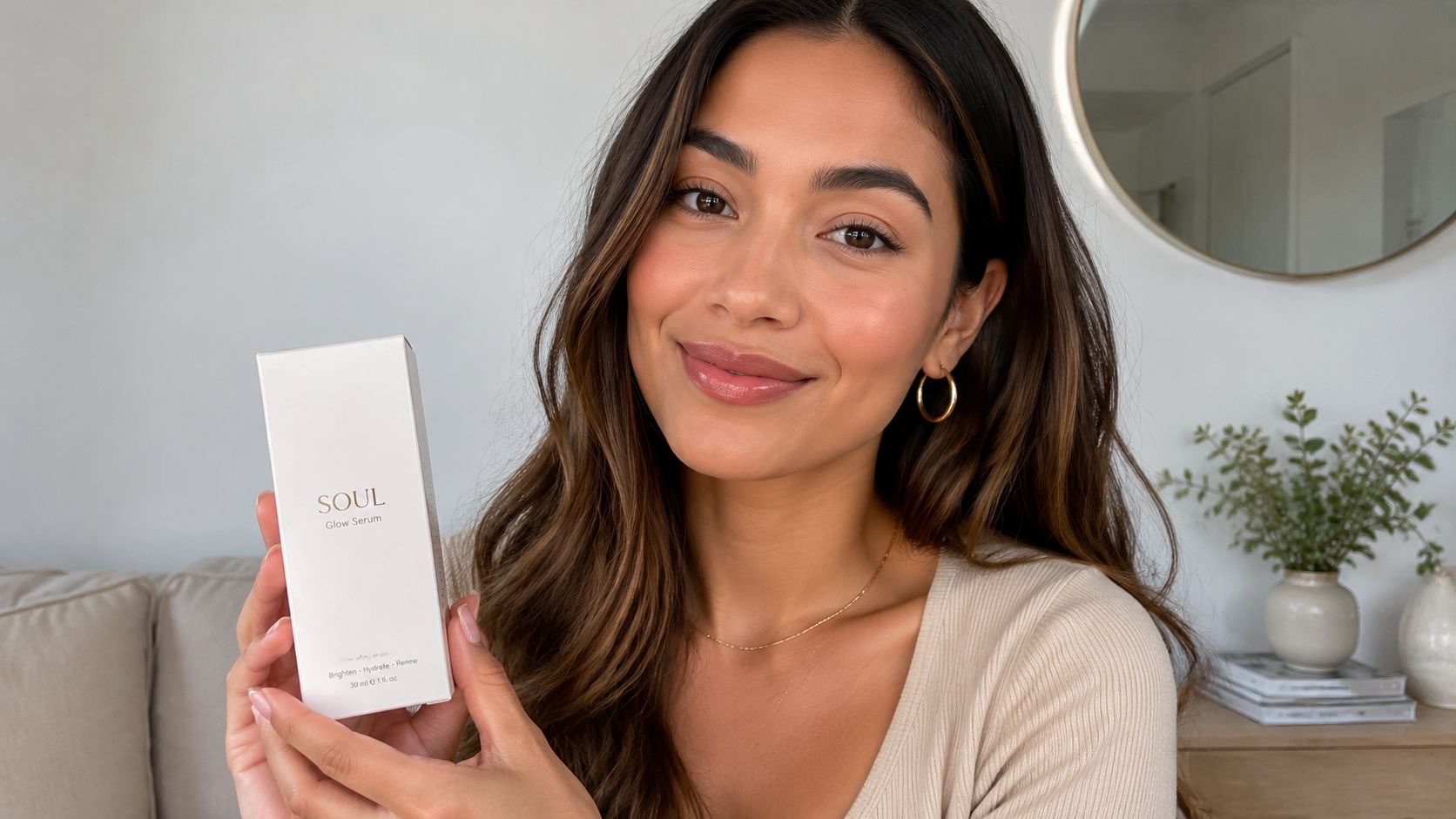
AI influencer UGC sits in a different lane from entertainment virality. Here, the goal is usually clicks, add-to-cart intent, or conversion. That changes what “viral” should mean for you. A broad joke clip and a product demo are not judged the same way.
This format matters more now because businesses using AI-driven video marketing report an 82% increase in ROI versus traditional video creation, and AI-generated product demonstration videos are associated with a 40% lift in conversion rates, according to video marketing data from SellersCommerce. The practical takeaway is simple. If you're making AI UGC, don't chase random reach. Build for response.
A better UGC script
The script should sound like a person talking to a friend, not a brand talking to the market.
Try this:
- Hook: “I didn't expect this to fix the most annoying part of my routine”
- Problem: state the frustration in one line
- Demo: show the product in use right away
- Proof: explain what changed
- CTA: tell viewers who it's for
If the product needs trust, blend in disclaimers, realistic pacing, and one drawback. Perfection kills believability.
Faceless execution
You can use avatar presenters, AI-generated hands-only demos, over-the-shoulder product shots, or voiceover plus screen text. The strongest versions feel native to the platform and niche. Beauty needs different pacing than tech accessories. Pet products need different language than skincare.
More than 55% of consumers reportedly prefer personalized AI-generated videos over generic videos in the same SellersCommerce report. So make variants by audience segment, not one master ad for everyone.
For setup ideas, study Aicut's AI influencer creation workflow. Good hooks include:
- “Three days in, this is what I think”
- “I bought this because I was tired of wasting time”
- “If you deal with frizz, this is the part you need to see”
4. Motion Control / Kinetic Typography Stories
Some stories don't need characters at all. They need movement. Kinetic typography turns plain narration into a visual sequence by animating key words, emphasizing contrast, and moving the eye exactly where you want it.
This is strong for motivational clips, business breakdowns, mini explainers, opinion pieces, and quote-driven storytelling. It also works well when your raw material is mostly text, such as a lesson, a thread, or a short script pulled from a podcast snippet.
How to make text feel alive
Animate for meaning, not decoration. If the line says “I lost everything in one email,” the word “everything” should carry visual weight. If the line says “then the second message arrived,” bring that line in with a slight delay so the pacing matches the turn.
A reliable sequence:
- start with one short line on screen
- cut to a stronger second line with size change
- use color for only one key phrase
- add background motion that supports the voice, not competes with it
Bad kinetic typography tries to show off. Good kinetic typography makes the script easier to understand.
Headline hooks and faceless setup
Good hooks:
- “The mistake that made me rethink my whole business”
- “One sentence changed how I price my work”
- “Many quit right before this moment”
Use a clean font, strong contrast, and enough margin that captions don't feel cramped on mobile. If you're posting on TikTok or Reels, test the framing with UI overlays in mind so the bottom caption area doesn't hide the key line.
This format is especially good when you want authority without being on camera. It's one of the easiest viral video ideas to turn into a series because the visual system can stay the same while the topic changes.
5. Before & After Transformation (AI-Powered Visual Edits)

Before-and-after videos win when the “before” is painful and the “after” is instantly legible. Room makeovers, product glow-ups, workflow cleanups, style upgrades, and visual redesigns all fit. The danger is making the transformation look fake or dishonest.
This format works best when the change solves one obvious problem. “Messy desk to clean desk for remote work” is clearer than “general lifestyle transformation.” Specificity improves both click-through and comments.
The most effective reveal pattern
Use this order:
- show the ugly or frustrating starting point
- name the problem in plain language
- flash one or two process moments
- hold the reveal for a beat
- return briefly to a side-by-side comparison
A few hooks:
- “This room felt impossible to fix”
- “I changed three things and the whole setup worked”
- “Before you buy new furniture, watch this”
Show one believable transformation, not five unbelievable ones.
What works and what doesn't
What works is realism. Imperfect lighting. A slight pause before the reveal. One honest limitation. What fails is overedited fantasy that looks detached from reality.
If you're using AI swaps for rooms, outfits, product packaging, or environments, be explicit when the visuals are AI-generated. That keeps trust intact, especially for affiliate or brand content. This idea can perform for both creators and businesses, but only if the change feels useful, not deceptive.
6. Shocking Statistics / Educational Hook Content
A creator opens with, “You're being poisoned by your kitchen sponge,” then never names the study, the sample size, or what viewers should do with the claim. The video gets attention and loses credibility in the same 15 seconds.
This format works when the number is real, the takeaway is clear, and the viewer can use it immediately. The strongest version is not trivia. It is a short lesson built around one surprising fact, one plain-English explanation, and one practical next step.
PackaPop's guide to YouTube video ideas makes a useful point here. Good educational content starts with a topic people already feel curious or confused about, then answers that curiosity with more clarity than competing videos. That is the production filter. If the fact is surprising but changes nothing, skip it.
How to make this format worth producing
Pick a statistic that passes three checks:
- It comes from a source you can show on screen
- It changes how the viewer sees a problem
- It leads to one clear action
Then build the short in this order:
- hook with the fact
- explain why it matters in one sentence
- give one concrete example
- end with one action, warning, or checklist item
Keep it tight. One number is usually enough.
Production kit
Headline hooks
- “This stat changes how you should post”
- “One number explains why your videos stall”
- “A surprising data point more creators should study”
- “This research explains the drop-off”
30-second script template
- “Here's the stat.”
- “Here's why it matters.”
- “Here's what it looks like in real life.”
- “Here's what to do next.”
Faceless execution
- put the number full-screen in the first second
- animate one keyword at a time, not the whole sentence
- show the source name in small text on screen
- use charts, screenshots, screen recordings, or icon motion instead of a talking head
Aicut template direction Use a kinetic text or news-style explainer template with bold first-frame text, fast caption pacing, and room for a source screenshot. This format depends on readability more than visual spectacle.
What separates strong educational hooks from weak ones
Strong versions explain the consequence. Weak versions stop at the surprise.
A better opening is “One posting pattern hurts retention because viewers already know the payoff.” That gives the audience a reason to keep watching. A weak opening is “This shocking stat will blow your mind.” It says nothing and sounds borrowed.
Trade-off matters here. Dense facts can raise watch quality but lower completion if the script feels academic. Broad claims can improve retention but attract skeptical comments if the proof is thin. The fix is simple. Use one fact, one explanation, one recommendation. If the topic needs more than that, turn it into a series instead of cramming it into one short.
7. Trending Audio + Lip-Sync / Text-Over Mashups
A sound spikes on TikTok or Reels in the morning. By evening, feeds are full of copies. The videos that still break through do one thing well. They attach that sound to a specific audience, frustration, or joke fast enough that the right viewer feels seen before the punchline lands.
That is the job of this format. The audio gets initial familiarity. Your angle gets the share.
The strongest versions pair a recognizable sound with a niche-specific interpretation:
- client frustration: “when they ask for ‘one quick change' after approval”
- industry inside joke: “media buyers hearing ‘can we just make it organic?’”
- emotional mismatch: dramatic audio over a tiny, painfully relatable problem
- object point of view: the invoice, the laptop, the skincare bottle, or the abandoned cart becomes the narrator
Timing matters more here than in most short formats. Put the setup text on screen before the audio's recognizable beat, not after it. Viewers need one second to understand the premise. If they get the joke late, the trend has already passed them by.
Production kit
Build this like a repeatable system, not a one-off post.
Create four cuts from the same idea:
- one broad version for reach
- one niche version for stronger shares
- one exaggerated version for comedy pages
- one cleaner version you can repost across platforms or use for brand work
Headline hook options
- “POV: you work in [niche] and hear this line”
- “This audio fits one type of client too well”
- “Every [role] has lived this exact moment”
- “The product's inner monologue during checkout”
15-second script template
- Show the setup text before the beat.
- Match the first lyric or sound cue to the reaction.
- Add one visual escalation halfway through.
- End with a final line of text that sharpens the joke or reveals the niche.
Faceless execution Use caption-led acting. Screen recordings, cursor movement, product close-ups, stock clips, AI characters, chat screenshots, and quick punch-in zooms can carry the whole idea without a talking head. For lip-sync, animated avatars and simple cutout characters work better than stiff photoreal faces. If the mouth movement looks off, switch to text-over and let the audio carry the emotion.
Aicut template direction Use a meme, subtitle, or reaction-style template with large first-frame text and beat-matched cuts. Pick layouts that leave room for setup text at the top and a payoff caption at the bottom. This format wins on timing and clarity, not editing complexity.
The trade-off is speed versus saturation. Fast posting gives you a better chance to catch the trend while it is still rising. Rushed execution usually produces generic text that blends into every other version. The fix is simple. Save trending sounds early, write three niche angles immediately, then produce the strongest one first. If the first post moves, release the other variants while the sound is still hot.
8. AI-Generated Gameplay / Sims Stories
Gameplay storytelling works because it gives you built-in staging. Characters can fight, flirt, panic, betray each other, or ruin dinner, and the game world makes all of it easy to visualize.
The strongest versions feel like soap operas compressed into short-form episodes. One character wants something. Another blocks it. A secret changes the scene. Then the episode ends before the emotional dust settles.
Story engine for repeatable episodes
Use recurring archetypes:
- the liar
- the jealous best friend
- the clueless partner
- the rich villain
- the outsider with a secret
Then rotate settings. House party. Wedding. Date night. Family dinner. Vacation. School reunion. Workplace disaster.
Hooks that fit:
- “She invited her ex to the wedding for one reason”
- “He thought the baby shower was a prank”
- “Nobody told the new roommate what lived downstairs”
The world can be fake. The emotion can't.
Faceless advantage
You don't need actors, sets, makeup, or shooting days. That makes this one of the most scalable viral video ideas if you're publishing in volume. Keep the visuals readable, the text direct, and the character roles consistent so followers can immediately understand who's who.
This format also adapts well across comedy, horror, and melodrama. If one niche stalls, the same engine can be reskinned in a different genre.
9. Trending Niche Shorts (Underrated Topics with High Intent)
Broad content gets broad competition. Niche content gets better alignment. If you're trying to build something durable, underrated topics often beat mainstream trends.
This works especially well when viewers are actively looking for answers. Weird software workflows, hobby micro-tips, career advice for narrow roles, local business systems, specialty tools, and uncommon health or productivity routines all create strong intent. You don't need everyone to care. You need the right people to care a lot.
Where to find better ideas
Look for:
- recurring questions in Reddit communities
- autocomplete suggestions on YouTube
- patterns in comments under competitor videos
- support questions from customers or clients
- trend spikes around one subtopic instead of a whole category
An important takeaway from recent creator guidance is that strong ideas increasingly come from adapting trends to a specific niche, not blindly copying generic templates. That distinction is central in Short Genius's discussion of best video ideas.
Example angles
A few short-form examples:
- “The keyboard shortcut accountants use all day”
- “Why fountain pen ink keeps feathering on cheap paper”
- “The interview mistake junior designers repeat”
- “One reporting view every agency account manager should check”
This is less glamorous than trend-chasing, but it's often more useful. For business-focused creators, niche virality usually converts better because the audience arrived with intent.
10. Rapid Voiceover + B-Roll Compilations (News/React Format)
A story breaks at 9:00. By 9:30, five creators have already posted recycled clips with no real take. The version that wins usually does one thing better. It explains why the moment matters, fast.
That is why this format works. Speed helps, but framing does the heavy lifting. The voiceover is the product. The B-roll proves the point, resets attention, and keeps the edit moving.
Use a tight structure:
- strong opening take in the first sentence
- 1 to 2 lines of context
- one example that viewers can recognize instantly
- your interpretation or reaction
- a closing line that gives the audience a reason to comment
Write the script before you collect footage. That step saves time and improves pacing. I usually script in 5 short blocks, then match each block to one visual type: screen recording, headline screenshot, product page, stock clip, meme reaction, or simple text card. If a clip looks good but does not support a line, cut it.
This section is also one of the easiest to turn into a repeatable production kit for faceless creators. Start with headline hooks like:
- “Everyone is reacting to the clip, but this is the part that matters”
- “This update looks small. It changes more than people realize”
- “The original post was not the true story. The reaction was”
A simple script template:
- Hook: “People are missing the core reason this blew up.”
- Context: “Here's what happened in one sentence.”
- Proof: “Watch this part closely.”
- Take: “Here's why it's important:”
- Close: “Agree or am I reading this wrong?”
For faceless execution, use captions aggressively, zoom into the proof point, and change the visual every 1 to 2 seconds. Screenshots, browser scrolls, waveform motion, and kinetic text are enough if the commentary is sharp. Aicut works well here for fast subtitle styling and reusable news/react templates, especially if you want a consistent look across daily posts.
Be careful with footage. Licensed stock, self-recorded screen captures, product pages, original graphics, and permitted screenshots are safer than reposting random clips and hoping they survive moderation. Fast publishing matters. Getting the rights wrong can kill the whole series.
10 Viral Video Ideas: Side-by-Side Comparison
| Format | Implementation Complexity 🔄 | Resource Requirements ⚡ | Expected Outcomes 📊 ⭐ | Ideal Use Cases 💡 | Key Advantages |
|---|---|---|---|---|---|
| AI Skeleton Stories | Low, template-driven animations and TTS | Low, simple rigs, TTS, SFX | High retention and engagement; ⭐⭐⭐⭐ | Reddit stories, faceless YouTube, TikTok shorts | Scalable, low-cost, strong watch-through |
| Cheating Fruits (Humor) | Medium, comedic timing and simple animation | Medium, character rigs, SFX, quick edits | High shareability and rewatch potential; ⭐⭐⭐ | TikTok/Reels, family-friendly humor, meme content | Universal humor, easy series variations |
| AI Influencer UGC | Medium–High, avatar creation and persona tuning | High, avatar design, voice cloning, integrations | Strong conversions and consistent output; ⭐⭐⭐⭐ | E‑commerce ads, scalable UGC, product launches | Consistent branding, eliminates talent management |
| Motion Control / Kinetic Typography | Medium–High, precise timing and design | Medium, animation tools, high-quality VO | Exceptional clarity and retention; ⭐⭐⭐⭐ | Educational explainers, motivational content, LinkedIn | Professional look, accessible to deaf/hard-of-hearing |
| Before & After Transformations | Medium, AI compositing and polish | Medium, AI edit tools, assets, product samples | High engagement and conversion potential; ⭐⭐⭐⭐ | Beauty, fitness, product demos, affiliate marketing | Satisfying reveals, easy A/B testing without reshoots |
| Shocking Statistics / Educational Hooks | Medium, research + storytelling + visuals | Medium, sourcing, VO, supporting visuals/graphs | High initial engagement and shareability; ⭐⭐⭐⭐ | Thought leadership, science, psychology, B2B insights | Builds authority, drives discussion and shares |
| Trending Audio + Lip-Sync Mashups | Low, quick edits timed to audio trends | Low, trending audio, captions, short cuts | Fast reach and trend-driven virality; ⭐⭐⭐ | TikTok/Reels, trend-chasing growth strategies | Algorithmic boost, rapid turnaround |
| AI-Generated Gameplay / Sims Stories | Medium, scene prompting and episodic writing | Medium, game engines/AI tools, scripts, SFX | Strong serial retention for episodic drama; ⭐⭐⭐⭐ | Narrative/soap-opera channels, faceless storytelling | Unlimited scenarios, highly scalable series format |
| Trending Niche Shorts (High Intent) | Medium, niche research and precise scripting | Low–Medium, expertise, screen recordings, simple edits | High-intent traffic and monetization; ⭐⭐⭐⭐ | YouTube growth, affiliate channels, expert positioning | Low competition, loyal audience, better CPMs |
| Rapid Voiceover + B‑Roll Compilations | Low–Medium, fast-paced editing and VO | Medium, licensed B‑roll, VO talent, editing | Quick topical reach and engagement; ⭐⭐⭐ | News/commentary, reaction channels, hot takes | Fast production using existing footage, topical relevance |
From Idea to Viral: Your Next Step
You open your editor, test three ideas, and stall because each one needs a different workflow, different assets, and a different style of edit. That is how creators lose a week. The better move is to choose one repeatable format and treat it like a series you can ship on command.
Pick the format that fits the way you already work. Strong on storytelling and pacing? Start with AI Skeleton Stories or AI-generated gameplay drama. Better at product positioning and visual proof? Use AI Influencer UGC or before-and-after transformation edits. Fast at reacting to trends, opinions, or niche news? Build around text-over mashups or rapid voiceover compilations.
The right choice is usually the one you can produce three times this week with consistent quality.
That means building a small production kit before you post anything. For one format, draft 5 to 10 hooks, write a short script structure, decide whether the video will be faceless, and choose one Aicut template you can reuse without redesigning every scene. This article covered the formats. The main advantage comes from packaging each one with a repeatable hook, script pattern, visual style, and editing setup so you can test faster.
Use a simple workflow:
- choose one format from the list
- build one production kit for it, including hooks, script beats, visuals, and template choice
- make three videos from that same system
- change only one variable each time, such as the first line, pacing, or caption style
- review retention, rewatches, saves, and comments
- remake the strongest version with a sharper opening and cleaner payoff
This is the part many creators skip. They change the idea, the edit style, the headline, and the niche all at once, then learn nothing from the result. Keep the format stable long enough to see patterns.
If you use Aicut, the practical gain is speed. You can reuse prompts, swap characters, keep a faceless workflow, and move from concept to publish-ready draft without rebuilding every asset from scratch. That matters when you are testing hooks, not chasing perfection.
Viral reach usually comes from repetition with better packaging. Choose a format from this list, build the production kit once, and publish enough versions to find the signal.