Are you spending hours creating a single video, only for it to get a short burst of attention before disappearing into the algorithm's abyss? For faceless creators and brands, the pressure to produce a constant stream of high-quality content across multiple platforms is immense. The secret isn't working harder; it's working smarter. This guide reveals 10 powerful content repurposing strategies specifically designed to help you transform one core piece of content into a dozen, maximizing your reach, engagement, and growth without burning out.
We'll dive into actionable, platform-specific tactics that turn your existing assets into a perpetual content machine. Instead of starting from scratch every time, you'll learn how to systematically break down, adapt, and distribute your work for maximum impact. This approach is a game-changer for solo creators and social media managers who need to maintain a consistent presence without a massive team or budget.
This listicle is your blueprint for efficiency. We will cover practical workflows, from turning long-form YouTube videos into viral TikToks and Reels to adapting blog posts into engaging video scripts. You will get specific, step-by-step instructions on how to atomize campaign angles, serialize story arcs across platforms, and even turn simple images into compelling animations. For a deeper dive into making your content work harder for you, explore these additional content repurposing strategies that complement the tactics we cover here.
By the end of this article, you will have a clear, repeatable system to multiply your output, dominate multiple platforms, and build a stronger brand presence with a fraction of the effort. Let's get started.
1. Multi-Platform Video Adaptation
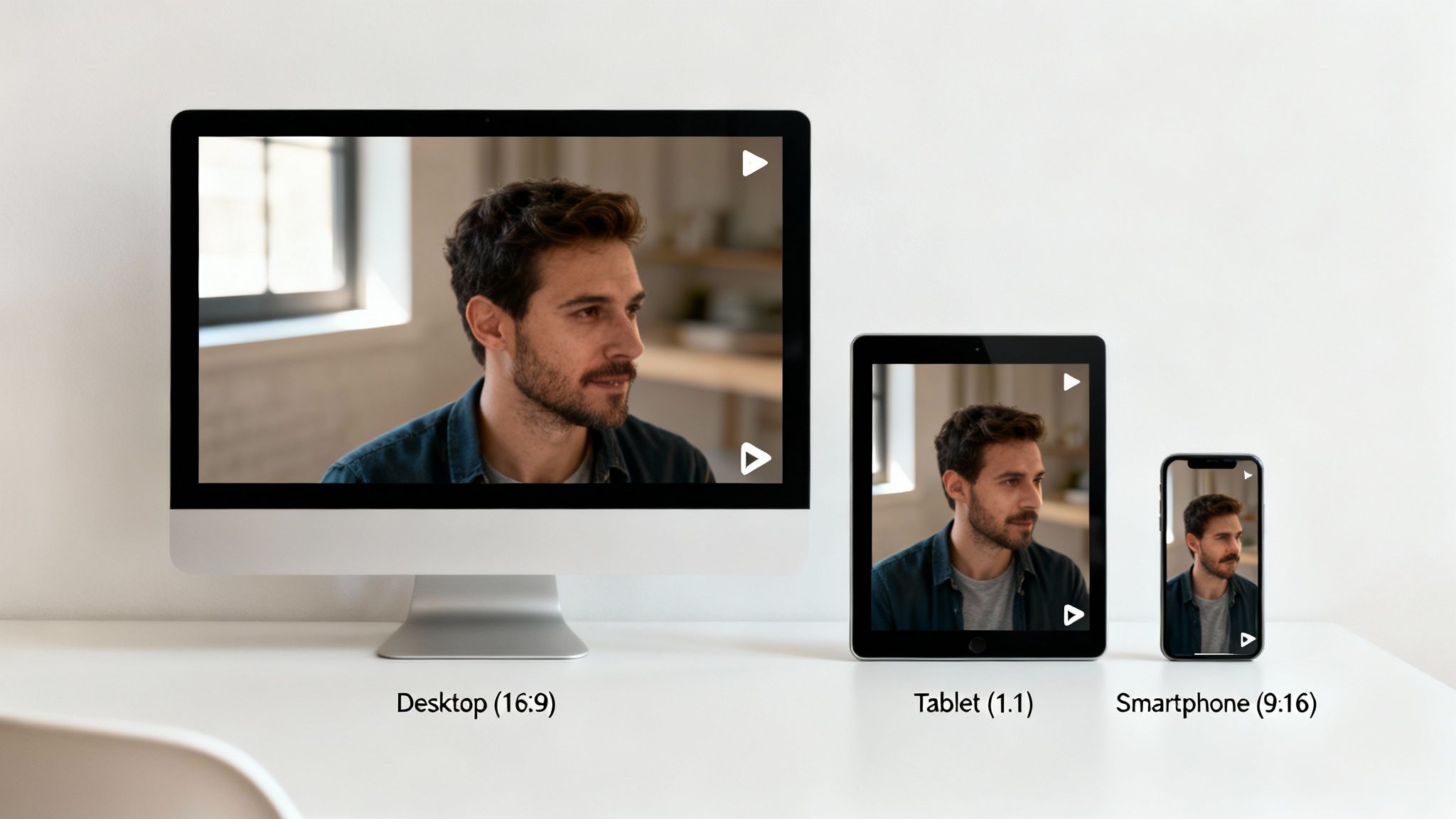
Multi-platform video adaptation is one of the most efficient content repurposing strategies available today. The core concept is simple: create a single, high-value "hero" video and then systematically reformat it for the unique specifications of various social media platforms. Instead of starting from scratch for each channel, you maintain the core message while tailoring the delivery for optimal performance on YouTube Shorts, TikTok, Instagram Reels, and even Pinterest.
This strategy goes beyond simply cropping a video. It involves adjusting aspect ratios, trimming duration, adding platform-native text or captions, and creating custom thumbnails. By doing this, you ensure your content feels native to each platform, which is a critical factor in how algorithms rank and distribute it to new audiences.
How to Implement This Strategy
The goal is to create maximum impact with minimum rework. For a faceless creator or brand, this means turning one long-form tutorial or product review into a week's worth of short-form content.
- From YouTube to TikTok/Reels: Take a 10-minute YouTube video and identify 3-5 key takeaways or "aha" moments. Edit each into a standalone 15-30 second vertical video. Add bold, attention-grabbing captions, as many users watch with the sound off.
- From Shorts to Pinterest: Convert your YouTube Shorts into Idea Pins on Pinterest. You can use a key static frame from the video as a cover image and overlay it with a compelling title like "3 Hacks for X." This turns your video asset into a visually discoverable pin.
Actionable Tips for Success
To get the most out of this approach, focus on platform-specific nuances. Marketing educator Neil Patel excels at this, turning deep-dive marketing videos into bite-sized, actionable clips for every platform.
- Prioritize Vertical Video: Always shoot or edit with a 9:16 vertical aspect ratio in mind, as this format dominates TikTok, Reels, and Shorts.
- Automate Formatting: Use tools with multi-platform templates to automatically generate different aspect ratios and caption styles, saving hours of manual editing.
- Test and Analyze: Post your adapted clips and monitor performance for 3-5 days. Identify which platform drives the most engagement for a particular style and double down on what works.
2. Long-Form to Short-Form Decomposition
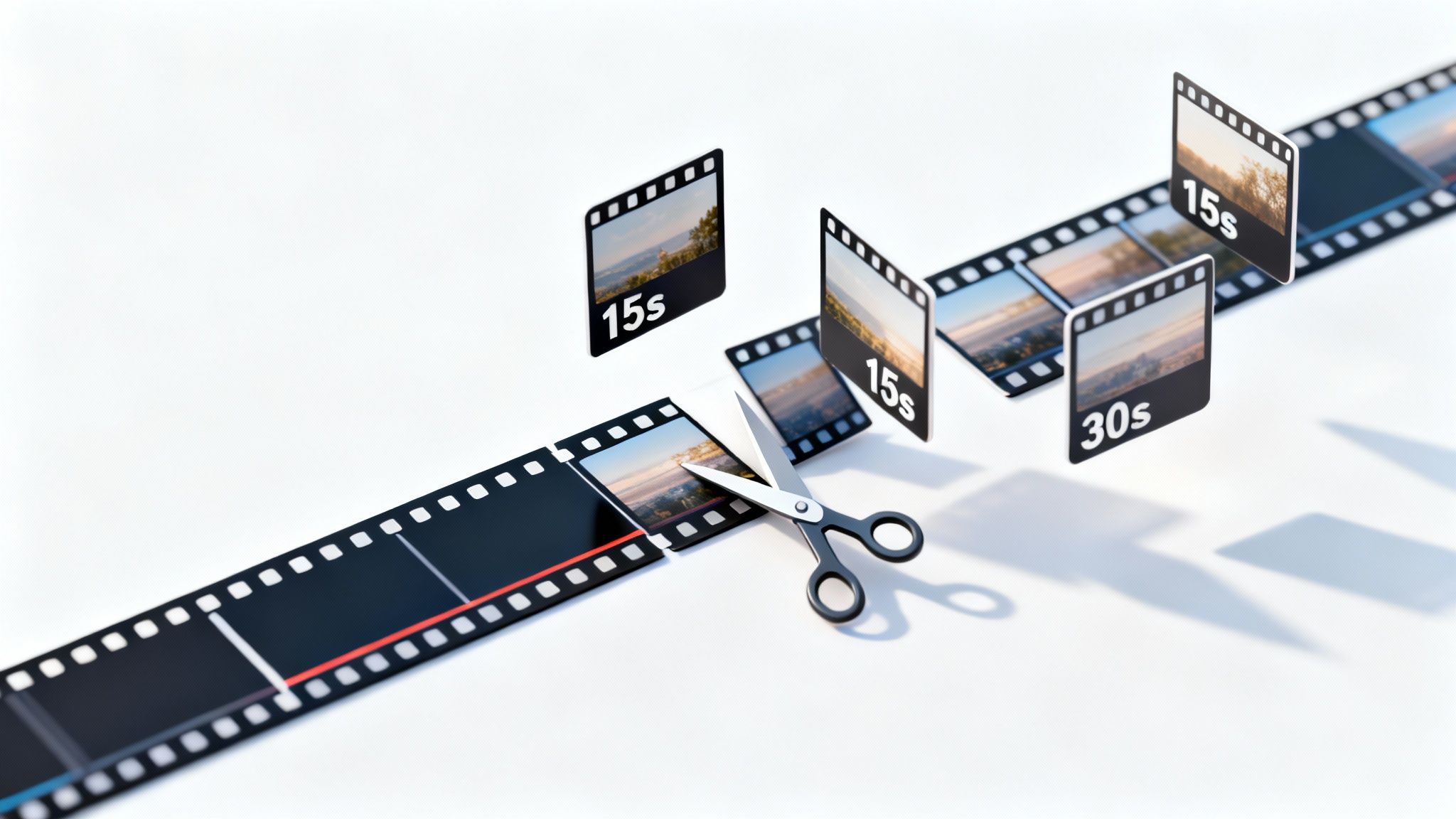
Long-form to short-form decomposition is a cornerstone of modern content repurposing strategies. This technique involves taking a substantial piece of content, like a YouTube tutorial or a podcast, and strategically breaking it down into smaller, high-impact clips. By extracting the most engaging moments, you can generate a large volume of standalone content optimized for short-form platforms like TikTok, Reels, and YouTube Shorts.
This approach leverages the inherent value of your long-form content, ensuring your core message reaches audiences with shorter attention spans. Instead of creating new content from scratch, you systematically mine your existing assets for viral moments, key takeaways, and compelling narratives, multiplying your output with minimal effort.
How to Implement This Strategy
The goal is to turn a single long-form video into a month's worth of short-form posts. For a faceless creator, this means breaking down a detailed product review or a narrated story into multiple shareable clips.
- From Podcast to Reels: Extract 10 powerful quotes or insights from a 60-minute podcast interview. Turn each one into a 15-second motivational Reel by pairing the audio with engaging B-roll footage and animated captions.
- From Tutorial to TikToks: Deconstruct a 30-minute YouTube tutorial into six separate 3-minute TikTok videos. Each clip can focus on a single technique or step, creating a mini-series that keeps viewers coming back for more.
Actionable Tips for Success
To master this strategy, focus on making each clip feel like it was created specifically for the short-form platform. Content pioneers like GaryVee have famously built their brands by repurposing every piece of long-form content into dozens of smaller assets.
- Add Unique Hooks: Start each short clip with a different hook or question to grab attention immediately. This makes each piece feel like standalone content rather than an obvious excerpt.
- Automate Clip Extraction: Use AI-powered tools to analyze your videos and automatically identify the most engaging moments, saving you from manually scrubbing through hours of footage. This is a core part of effective content clipping, which you can explore in more detail. Learn more about content clipping strategies on aicut.pro.
- Batch Your Creation: Dedicate time to extract 20-30 clips from a single long-form video. This creates a content library you can schedule across platforms for an entire month, ensuring consistent posting.
3. Format-Specific Template Adaptation
Format-specific template adaptation is a powerful content repurposing strategy where you take a single core message and re-execute it across multiple trending content formats. Rather than just changing a video's aspect ratio, you completely restructure its presentation to align with platform-specific audience expectations. The same product benefit can be showcased as a UGC-style review, an animated character tutorial, or a Reddit narration video.
This approach acknowledges that different formats resonate with different audience segments and algorithms. By adapting your core concept into various native styles, such as a POV selfie format or a text-story format, you dramatically increase the chances of a single idea going viral. It allows a faceless brand to test which presentation style delivers the highest engagement without altering the fundamental value proposition.
How to Implement This Strategy
The objective is to discover which format best communicates your message to a target audience. For an e-commerce brand, this means turning a single product feature into several distinct ad creatives to see which converts best.
- Product Feature Showcase: Present a key product benefit in multiple ways. Create a UGC-style testimonial video, then an AI avatar explaining the feature in a POV format, and finally a quick text-story video showing a problem-solution narrative.
- Educational Concept Adaptation: Take a financial tip and adapt it. Produce a Reddit narration-style video telling a success story, then an animated character tutorial breaking down the steps, and finally a person-to-camera testimonial sharing results.
Actionable Tips for Success
To maximize the effectiveness of these content repurposing strategies, focus on rapid, data-driven testing. Tools like Aicut are popularizing this by offering viral niche templates that make it easy to generate multiple format variations from a single script.
- Test Multiple Formats: Simultaneously create 3-4 different formats for one core idea. Post them and analyze which one drives the highest click-through rate, watch time, and conversions.
- Maintain Message Consistency: Ensure the core value proposition remains identical across all formats. The only variable you are testing is the presentation style.
- Stagger Your Posts: Avoid posting all variations at once on the same platform, which can lead to audience cannibalization. Schedule them a day or two apart to get clean performance data for each format.
4. User-Generated Content (UGC) Script Library Repurposing
Creating a library of proven User-Generated Content (UGC) scripts and endlessly regenerating them with AI is a game-changing strategy for modern brands. The core concept involves identifying your highest-performing testimonial or review scripts and using AI tools to create dozens of variations with different AI avatars, backgrounds, and product angles. This approach multiplies your creative assets without the logistical challenges of reshooting with new creators.
This strategy allows a faceless brand or e-commerce store to produce a seemingly endless stream of authentic-feeling product ads from a single winning formula. By leveraging algorithmic variations of a proven script structure, you can rapidly test what resonates with different audience segments, maximizing your ad spend and preventing creative fatigue.
How to Implement This Strategy
The goal is to scale the production of high-converting, authentic-style ads by automating the creative process. Instead of one ad, you now have a library of assets to test and deploy across platforms like TikTok and Instagram.
- From One Winning Ad to Thirty Variations: Take the script from your best-performing UGC ad for a beauty product. Use an AI tool to generate 30 new video versions, each featuring a different AI avatar that reflects your target demographics.
- From B2B Testimonial to Multi-Scenario Campaign: Adapt a successful B2B SaaS testimonial script by regenerating it with AI avatars in various professional backgrounds, such as a home office, a coffee shop, or a collaborative workspace. This makes the testimonial feel relevant to different user personas.
Actionable Tips for Success
To maximize the impact of this content repurposing strategy, focus on systematic testing and variation. Companies like Aicut are popularizing this by automating the creation of AI avatar product reviews, allowing brands to scale their ad creative production efficiently.
- Start with Proven Winners: Begin by identifying the top 2-3 highest-converting UGC scripts from your past campaigns to ensure you're building on a solid foundation.
- Vary Demographics and Settings: Systematically change avatar demographics (age, gender, ethnicity) and background settings to match specific audience segments you are targeting.
- Batch and A/B Test: Generate 20+ variations at once and launch them simultaneously in 3-4 different ad sets to quickly identify the best-performing combinations of avatar, background, and script delivery.
5. Reddit/Social Commentary Narration Repurposing
Reddit and social commentary narration is a powerful content repurposing strategy that transforms existing online discussions into captivating video content. The core concept involves finding viral Reddit posts, Twitter threads, or TikTok comment sections and converting them into narrated stories. This approach leverages pre-existing, emotionally charged content, eliminating the need for original scriptwriting while tapping into proven audience interest.
This strategy works by using AI text-to-speech or human narration combined with on-screen text and simple visuals. The result is a highly engaging, low-effort video format perfectly suited for platforms like YouTube, TikTok, and Shorts. For faceless creators, it provides an endless wellspring of content that resonates deeply with viewers who enjoy relatable human stories and social discourse.
How to Implement This Strategy
The goal is to efficiently turn public domain conversations into a consistent stream of video content. This strategy excels for faceless channels focused on storytelling, advice, or entertainment niches.
- From Reddit to YouTube: Find a compelling post from a subreddit like r/AmItheAsshole or r/MaliciousCompliance. Narrate the post and top comments to create a 10-minute video. Use simple background gameplay or stock footage with on-screen text to keep viewers engaged.
- From Twitter to TikTok/Shorts: Turn a viral Twitter thread into a multi-part series of 60-second vertical videos. Each video can cover 2-3 tweets, using animated text-story formats to build suspense and encourage viewers to follow for the next part.
Actionable Tips for Success
To maximize engagement, focus on curation and production efficiency. Channels like 'Reddit Stories' and 'Storybooth' have built massive audiences by mastering this format, proving its viability.
- Curate Systematically: Identify 5-10 subreddits relevant to your niche and scan them daily for top-performing posts. Look for high upvote counts and a large number of comments, as this signals strong audience interest.
- Batch Your Production: Record narrations for 15-20 different posts in a single session. This massively improves workflow efficiency and ensures you have a backlog of content ready to be edited and scheduled. You can learn more about turning Reddit posts into AI videos to streamline this process.
- Credit and Engage: Always credit the original author and subreddit in your video description or on-screen. Encourage viewers to comment with their own opinions, which drives engagement and signals to the algorithm that your content is sparking conversation.
6. Image-to-Animation and Photo Animation Repurposing
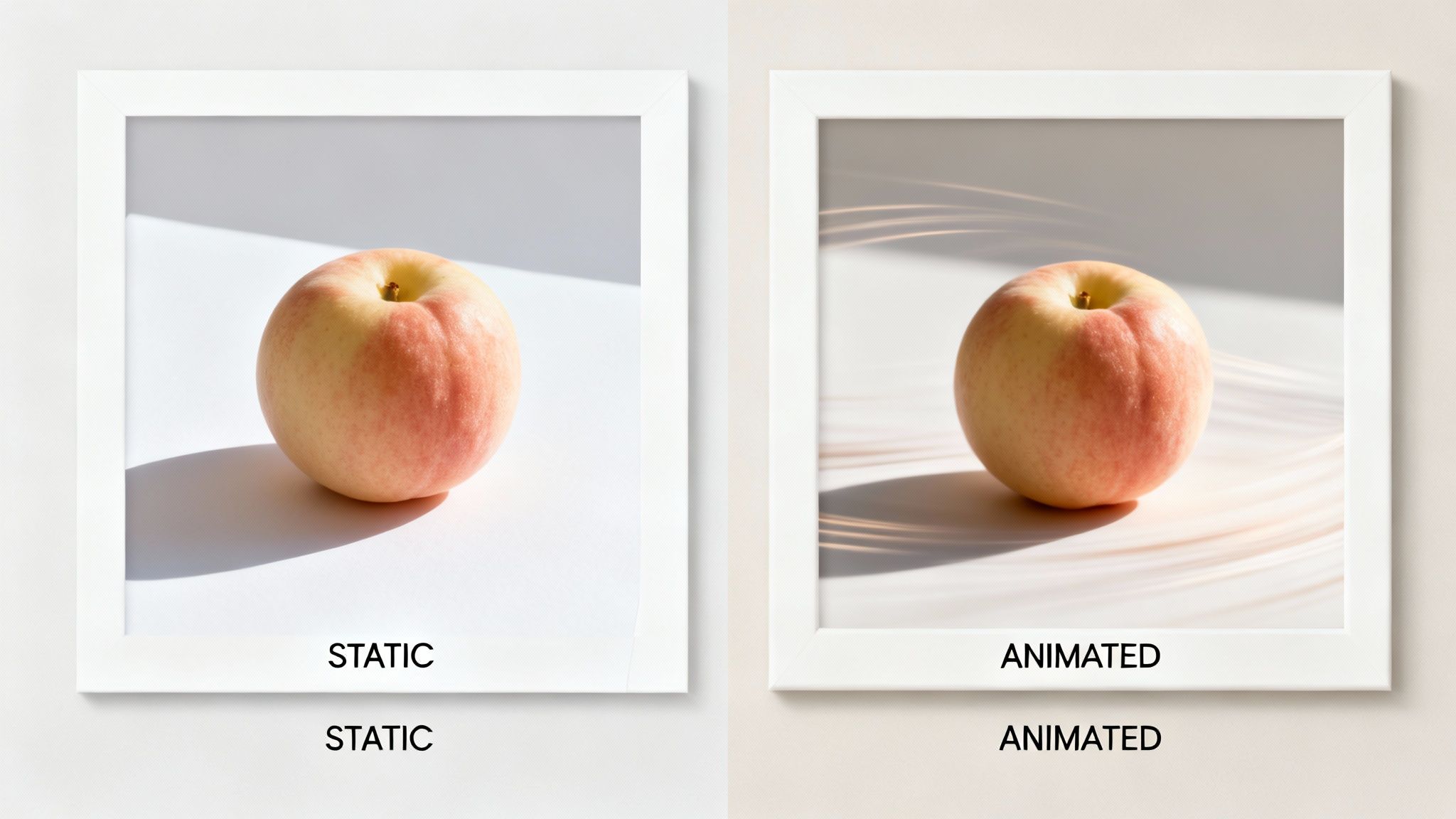
Image-to-animation repurposing transforms static visuals into dynamic video content. This powerful strategy breathes new life into existing assets like product photos, infographics, or user-generated content (UGC) by converting them into engaging animations using AI tools. Instead of letting high-quality images sit unused in a folder, you can extend their lifespan and capture audience attention in a video-first digital landscape.
This approach is particularly valuable for faceless creators and e-commerce brands that rely heavily on visual assets but lack the resources for complex video shoots. By animating static photos, you can create compelling social proof, dynamic product showcases, and educational explainers without ever stepping in front of a camera. It turns your image library into an endless source of fresh video content.
How to Implement This Strategy
The goal is to turn a single image into a shareable, attention-grabbing video clip. For an e-commerce brand, this means animating a product catalog to create a dynamic showcase for social media ads or an engaging website element.
- From Product Photo to 360° Showcase: Take a high-resolution product photo from your e-commerce store and use an animation tool to create a 360° rotating view or a zoom-and-pan effect. Add text overlays highlighting key features to create a 15-second promotional reel.
- From UGC to Animated Testimonial: Convert a customer's "before and after" photo into an animated reveal video. Add their quoted review as a text overlay and background music to create powerful, authentic social proof that feels more dynamic than a static image.
- From Infographic to Explainer Video: Break down a static infographic into its individual layers. Animate each layer to appear sequentially, creating a simple explainer video that walks viewers through the data step-by-step.
Actionable Tips for Success
To maximize the impact of this content repurposing strategy, focus on the quality of the source image and the subtlety of the animation. Brands like Aicut popularize this by offering tools that make it easy to generate professional-looking animations from simple photos.
- Start with High-Resolution Images: The final animation quality is directly tied to the source image. Use clear, well-lit, high-resolution photos for the best results.
- Add Music and Sound: A simple animation becomes far more engaging with the right background music or sound effects. This small addition can significantly boost viewer retention.
- Combine with Text Overlays: Use text to provide context, highlight a key benefit, or add a strong call-to-action. This ensures your message is clear even if the video is watched on mute. Learn more about the best AI tools to turn photos into stunning videos on aicut.pro.
7. Trending Audio/Music Adaptation Strategy
The Trending Audio/Music Adaptation strategy leverages the viral velocity of popular sounds to amplify your content's reach. The core idea is to identify rising audio trends on platforms like TikTok and Instagram, then create multiple video variations that use the same trending sound. Instead of relying solely on the visual content, this method uses the audio as a discovery vehicle, pushing your videos into the algorithmic slipstream of a proven trend.
This strategy is highly effective for faceless creators and brands because it shifts the focus from the creator's personality to the trend itself. By overlaying the same or a similar video concept onto different trending sounds, you can rapidly test what resonates with audiences and maximize discoverability without constantly reinventing your core visual message. It’s one of the smartest content repurposing strategies for short-form video.
How to Implement This Strategy
The goal is to batch-produce video variations that can be quickly paired with emerging audio trends. For a faceless e-commerce brand, this means turning one product demo into multiple trend-aligned clips.
- Product Demo to Multiple Trends: Take a simple 10-second clip of your product in use. Over a week, post it with 3-4 different trending sounds. One day it might be a comedic voiceover, the next an uplifting pop song. This tests which audio context generates the most engagement for your product.
- Motivational Quote to Trending Soundtracks: Create a visually simple text-on-screen video with a motivational quote. Adapt this single visual asset by setting it to various trending emotional or powerful audio clips. This allows one core message to ride the wave of multiple, distinct viral trends.
Actionable Tips for Success
To get the most out of this approach, focus on speed and timing. Brands that excel at this monitor trends daily and have a backlog of visual content ready to deploy.
- Target Emerging Audio: Use TikTok’s Creative Center or Instagram’s trending audio features to find sounds that are 3-4 days into their growth phase. This is the optimal window before the trend becomes oversaturated.
- Batch Create Variations: In a single session, film or create 10-15 short, versatile video clips (e.g., product shots, POV actions, text animations). This builds a content library you can quickly pair with new sounds as they emerge.
- Add a Unique Twist: Avoid simply copying a trend. Add a unique camera angle, editing style, or text overlay to make your version stand out. The goal is to participate in the trend, not get lost in it.
8. Educational Content Pillar Expansion
Educational content pillar expansion is a powerful content repurposing strategy that involves taking a single, high-value educational concept and systematically breaking it down into a comprehensive series across multiple formats. Instead of creating one-off tutorials, you build an entire learning ecosystem around a core topic, transforming one idea into a portfolio of 20-50 interconnected pieces. This captures audiences at every stage of their learning journey, from beginner to advanced.
This approach establishes your brand as an authority by providing immense value. It transforms a single YouTube video like "How to Start a Faceless Channel" into an entire curriculum, including a 10-part tutorial series, a "beginner mistakes" video, an advanced monetization guide, and a software comparison. The goal is to create a complete, binge-worthy learning path from a single foundational asset.
How to Implement This Strategy
The objective is to deconstruct a broad topic into a logical, sequential series that guides your audience from A to Z. For a faceless brand, this means turning one guide into an entire educational funnel.
- From One Tutorial to a Full Series: A single product photography tutorial can be expanded into a multi-part series covering fundamentals, lighting setups, composition rules, common mistakes, equipment reviews, and advanced editing techniques. Each part becomes a standalone piece of content.
- From Pillar Video to Micro-Lessons: Create one in-depth pillar video (15-20 minutes) on a topic like dropshipping. Then, break it into 10-15 clip-based micro-lessons for Shorts, Reels, and TikTok, such as "Finding Winning Products" or "Setting Up Your Shopify Store."
Actionable Tips for Success
To execute this strategy effectively, map out the entire learning journey before you create the first piece of content. This ensures topical coherence and a logical flow. Creators like Ali Abdaal master this by turning complex subjects into digestible, structured series.
- Plan the Journey First: Before recording, outline the entire series from introduction to advanced concepts. This helps you create strategic "next video" links and playlists that encourage binge-watching.
- Create Gated Resources: Develop downloadable checklists, templates, or resource guides related to your series. Use these as lead magnets to build your email list or as entry points to paid products.
- Maintain a Schedule: Release new installments of your series on a consistent schedule (e.g., every Tuesday) to build audience anticipation and loyalty.
9. Campaign Angle Atomization
Campaign Angle Atomization is a powerful content repurposing strategy that takes a single core marketing message and breaks it down into numerous micro-variations. Instead of running one generic ad, you decompose your campaign into 15 to 50 distinct angles, each highlighting a different value proposition, audience pain point, or product benefit. This approach maximizes your message's reach by appealing to different customer motivations.
This strategy ensures that your core idea is seen through multiple lenses. One person might be motivated by saving time, while another is driven by saving money. By creating content that speaks to both, you exhaust every possible messaging angle from a single insight, increasing the chances of a connection and conversion. For a faceless creator, this means a single product can fuel dozens of unique, high-performing video ads.
How to Implement This Strategy
The goal is to test a wide array of messages efficiently to find the top performers. A brand selling an AI video creation tool could atomize its core "easy video creation" message into highly specific angles.
- Angle Brainstorming: List every possible benefit. For an AI video creator, this could be: saving time, saving money, no experience needed, scaling content production, going viral, monetizing faster, replacing a human editor, or creating videos in a faceless format.
- Angle Development: Choose 8-12 high-impact angles from your list. For an e-commerce product, you might focus on durability, sustainability, style, and social proof. For a personal development course, you could atomize it into angles like income potential, lifestyle freedom, and community belonging.
Actionable Tips for Success
This method, popular with direct-response marketers, relies on systematic testing and iteration. The key is to rapidly produce variations and analyze performance data to guide your next steps.
- List and Prioritize: Start by listing 20-30 potential benefits and pain points your product addresses. Narrow this down to your top 8-12 angles based on audience research.
- Create Variations: For each chosen angle, create 3-5 creative variations. This could involve using a different visual, narrator, or setting to communicate the same core idea.
- Test and Refine: A/B test your angles in small groups over 1-2 week periods. Retire the underperforming angles and re-invest your budget into the top 2-3 performers to maximize your return on ad spend (ROAS).
10. Cross-Platform Story Arc Serialization
Cross-platform story arc serialization transforms content repurposing into an engaging narrative journey. Instead of simply reposting content, you create an overarching story and release "chapters" on different platforms. Each piece of content is a standalone installment optimized for its channel, but the complete narrative only unfolds for audiences who follow you across multiple platforms.
This strategy is powerful because it creates a "must-follow everywhere" incentive. It builds deep, platform-agnostic loyalty by making your audience active participants in a story. For a faceless brand, this could be a product launch narrative, where each platform reveals a different clue or feature, building suspense and driving cross-channel engagement.
How to Implement This Strategy
The goal is to hook your audience and guide them from one platform to the next, making them eager for the next piece of the story. This turns passive viewers into an active community.
- Educational Series Arc: Document a "Building My Business" journey. Post daily 60-second lessons on TikTok, share visual case study results on Instagram, and publish a comprehensive methodology video on YouTube. Your email list can receive exclusive accountability check-ins.
- Product Launch Arc: Build anticipation for a new product. Use TikTok for teasers and countdowns, Instagram Reels for dynamic product reveals, and a long-form YouTube video for an in-depth review and tutorial. Offer early access exclusively to your Discord or email community.
Actionable Tips for Success
To master this advanced content repurposing strategy, meticulous planning is key. Creators like MrBeast use this method to build empires, where each platform supports a central narrative that culminates on YouTube.
- Map the Entire Arc: Before creating any content, outline the complete story with a beginning, middle, and resolution. Assign each platform a specific role, such as TikTok for hype, YouTube for depth, and email for exclusive behind-the-scenes content.
- Engineer Cliffhangers: End each piece of content with a hook that naturally leads to the next platform. Use clear, platform-bridging calls to action like, "For the full breakdown, watch the YouTube episode linked in my bio."
- Time Releases Strategically: Schedule your content to maintain a cohesive narrative flow. This ensures the audience can follow the story thread across platforms without losing momentum.
10-Point Content Repurposing Comparison
| Strategy | Implementation Complexity 🔄 | Resource Requirements & Speed ⚡ | Expected Outcomes 📊 | Effectiveness & Key Advantages ⭐💡 |
|---|---|---|---|---|
| Multi-Platform Video Adaptation | Medium — format conversion + platform nuance | Low–Medium resources (one hero asset + templates); ⚡ Fast once templates set | Broader reach & consistent brand presence; improved ROI per asset | ⭐⭐⭐⭐ Maximizes content ROI; 💡 Prioritize vertical captions and test per platform |
| Long-Form to Short-Form Decomposition | Medium — AI detection + editorial trimming | Medium resources (analysis + batch editing); ⚡ High output velocity (many clips) | Large volume of short-form content; drives traffic to long-form | ⭐⭐⭐⭐ High scalability for repurposing; 💡 Add hooks and batch-extract 20–30 clips |
| Format-Specific Template Adaptation | Medium–High — reformat script/presentation per trend | Medium resources (template library, avatars); ⚡ Moderate speed per format | Identifies best-performing formats; hedges algorithm changes | ⭐⭐⭐⭐ Tests format fit rapidly; 💡 Maintain core message, vary presentation |
| UGC Script Library Repurposing | Low–Medium — build & reuse script templates | Low resources per variant; ⚡ Very fast scaling via AI avatars | Dozens of authentic-feeling ad variations; low per-video cost | ⭐⭐⭐⭐–⭐⭐⭐⭐⭐ Excellent for paid ads at scale; 💡 Vary demographics/backgrounds to avoid saturation |
| Reddit/Social Commentary Narration Repurposing | Low — text curation → TTS → visuals | Low resources (text-to-speech + simple visuals); ⚡ Fast turnaround | High engagement potential; consistent content supply; SEO via transcripts | ⭐⭐⭐⭐ Strong engagement from relatable content; 💡 Credit sources and curate safely |
| Image-to-Animation / Photo Animation | Low–Medium — image prep & animation tuning | Low resources (photo library); ⚡ Fast vs. full shoots | Dynamic product showcases; repurposes existing photo assets | ⭐⭐⭐ Cost-effective visual refresh; 💡 Use high-res images and layered depth for best output |
| Trending Audio/Music Adaptation Strategy | Low–Medium — monitoring + quick edits | Low resource per variant; ⚡ Requires very fast execution window | Short-term viral boosts; higher discoverability while trend lasts | ⭐⭐⭐⭐ High viral potential if timely; 💡 Post early in trend and add unique twist |
| Educational Content Pillar Expansion | High — topic mapping & series planning | High resources and consistent schedule; ⚡ Slow build but compounding ROI | Authority building, subscriber loyalty, longer watch-time | ⭐⭐⭐⭐⭐ Best for long-term growth/monetization; 💡 Map learner journey before production |
| Campaign Angle Atomization | Medium–High — message decomposition + tracking | Medium resources (many creative variants); ⚡ Fast testing cadence | Improved ROAS via message-audience matching; identifies winning angles | ⭐⭐⭐⭐ Effective for paid optimization; 💡 Track performance and retire weak angles |
| Cross-Platform Story Arc Serialization | High — narrative planning + multi-channel coordination | High resources and timing coordination; ⚡ Slow rollout but high retention | Cross-platform following, increased lifetime value, narrative lock-in | ⭐⭐⭐⭐⭐ Creates strong audience loyalty; 💡 Assign specific narrative roles per platform |
Your Next Step: From Strategy to Automated Action
We've explored 10 powerful content repurposing strategies, moving from high-level concepts to the granular, actionable details you need to succeed. The core takeaway is simple: the most successful faceless creators and brands don’t just create more content; they create content more intelligently. They see every video, every script, and every campaign not as a single asset, but as the raw material for a dozen others.
This shift from a "one-and-done" mindset to a "create once, distribute forever" philosophy is the single most impactful change you can make to your workflow. It's the difference between constantly battling the content treadmill and building a sustainable, automated engine that drives growth across multiple platforms simultaneously. You no longer need to choose between quality and quantity.
From Manual Effort to an Automated Ecosystem
The true power of these content repurposing strategies is unlocked when you move beyond manual execution. Imagine a system where your long-form YouTube video is automatically analyzed, its most engaging moments are identified and clipped, and those clips are then seamlessly adapted into platform-native formats for TikTok, Reels, and Shorts, complete with trending audio and dynamic captions. This isn't a distant future; it's what's possible today.
This is where the principles of systemization become critical. Instead of seeing "repurpose a blog post into a video" as a one-off task, you should build a repeatable workflow:
- Identify a high-performing blog post. (Use analytics to find posts with high traffic and engagement).
- Feed the text into an AI script generator to create a concise, narration-friendly script.
- Use an AI video tool to match the script with relevant stock footage, animations, or AI-generated visuals.
- Generate a voiceover using a realistic AI voice that matches your brand’s tone.
- Export the final video and use the same system to break it down into micro-clips for social media.
Building these systems is the key to scaling your output without scaling your effort. For faceless creators, delving into an AI powered workflow automation explainer guide can provide the blueprints to integrate this advanced technology directly into your repurposing strategy, turning a series of manual tasks into a single, streamlined process.
Your Action Plan for This Week
Reading about strategy is one thing; implementation is another. To avoid getting overwhelmed, don't try to tackle all 10 strategies at once. Instead, choose one or two that directly address your biggest bottleneck or opportunity right now.
- If you have a library of long-form videos: Your focus should be on Long-Form to Short-Form Decomposition. Your goal this week is to take one video and generate at least five high-impact clips from it.
- If you are running paid ads: Start with Campaign Angle Atomization. Take your winning ad creative and repurpose it into three new organic social posts that test different hooks or emotional angles.
- If you are strong on written content (blogs, Reddit posts): Your starting point is Reddit/Social Commentary Narration Repurposing. Find a compelling thread or article and turn it into a simple, engaging video story.
The goal is to build momentum. Mastering one of these content repurposing strategies makes it exponentially easier to adopt the next. By focusing on a single, tangible outcome, you transform abstract knowledge into a real-world skill and, more importantly, a measurable result for your brand. Stop letting your valuable content assets collect digital dust. Pick your starting point and commit to taking action today. Your future, more efficient self will thank you.
Ready to turn these strategies into reality without the manual work? Aicut is the AI-powered engine designed to automate your entire content repurposing workflow, from clipping viral moments to generating platform-native videos in seconds. Stop editing and start growing by visiting Aicut to see how it works.