
You've built content, picked a niche, maybe even grown a following, and then hit the question most creators eventually face. How do you make money from a website if your audience mostly lives on YouTube, TikTok, or Instagram?
The old answer was simple. Put ads on a blog, wait for traffic, hope it turns into income. That still exists, but it's no longer the full picture. For most modern creators, your “website” isn't just a domain. It's your whole online presence: your channel, your profile links, your landing pages, your email list, your storefront, and the systems that move attention from one platform into revenue.
That shift matters. A faceless creator using AI tools, short-form video templates, and strong distribution can monetize without becoming a traditional blogger. A YouTube channel can sell affiliate offers. A TikTok page can drive email signups. A simple landing page can convert viewers into buyers for digital products, memberships, or services. The website becomes the monetization layer, not always the main discovery layer.
That's also why a lot of conventional advice feels incomplete. It treats traffic like the hard part and monetization like an afterthought. In practice, creators make more money when they build both at the same time. Every video should point somewhere. Every page should have a job. Every audience touchpoint should lead toward an offer, a signup, or a sale.
Below are 10 practical ways to make money from a website or channel today, especially if you're building around short-form content, faceless formats, and AI-assisted production.
1. Ad Revenue Sharing Through Platform Monetization
If you publish on YouTube or another video platform, ad revenue is usually the first monetization layer creators aim for. It's attractive because once you're eligible, the platform handles sales, delivery, and payout. You focus on content and audience retention.
For websites, a similar entry point is display advertising. Google AdSense remains one of the fastest ways to test monetization because publishers can start with relatively low operational overhead. Google says AdSense pays based on valid clicks and impressions, and Coursera notes that websites often combine ads with product sales, subscriptions, paid services, and affiliate links rather than relying on ads alone in its overview of how sites earn money.
Where this works best
This model works well when you publish consistently and your content gets repeat views. Faceless channels have an advantage here because production can be systemized. If a format works, you can repeat it without needing your face, your voice, or a complicated shoot.
That said, ad revenue is rarely the best stand-alone business model. Traffic can dip. Demand can shift. One platform change can flatten earnings fast.
Practical rule: Treat ad revenue as your base layer, not your whole business.
A creator posting educational Shorts, AI explainers, reaction-style compilations, or trend-based faceless videos can use ad income as proof of concept. Once the content works, layer in better-margin offers.
What to optimize
- Audience quality: Engaged viewers usually matter more than empty views.
- Session depth: If people watch one video and leave, revenue potential stays limited.
- Content format: Repeatable formats outperform random experimentation over time.
- Monetization stacking: Add affiliate links, offers, or email capture under the same content.
If you're trying to monetize short-form specifically, this guide on how to monetize a TikTok account is useful because it ties content output to actual revenue paths instead of just follower growth.
2. Affiliate Marketing and Product Recommendations
Affiliate marketing is one of the most established ways to make money from a website. In this model, you recommend a product or service through a tracked link and earn a commission when someone clicks and buys. Mailchimp identifies affiliate marketing as one of the core website monetization methods, alongside ads, paid content, consulting, and website flipping in its guide to how to monetize a website.
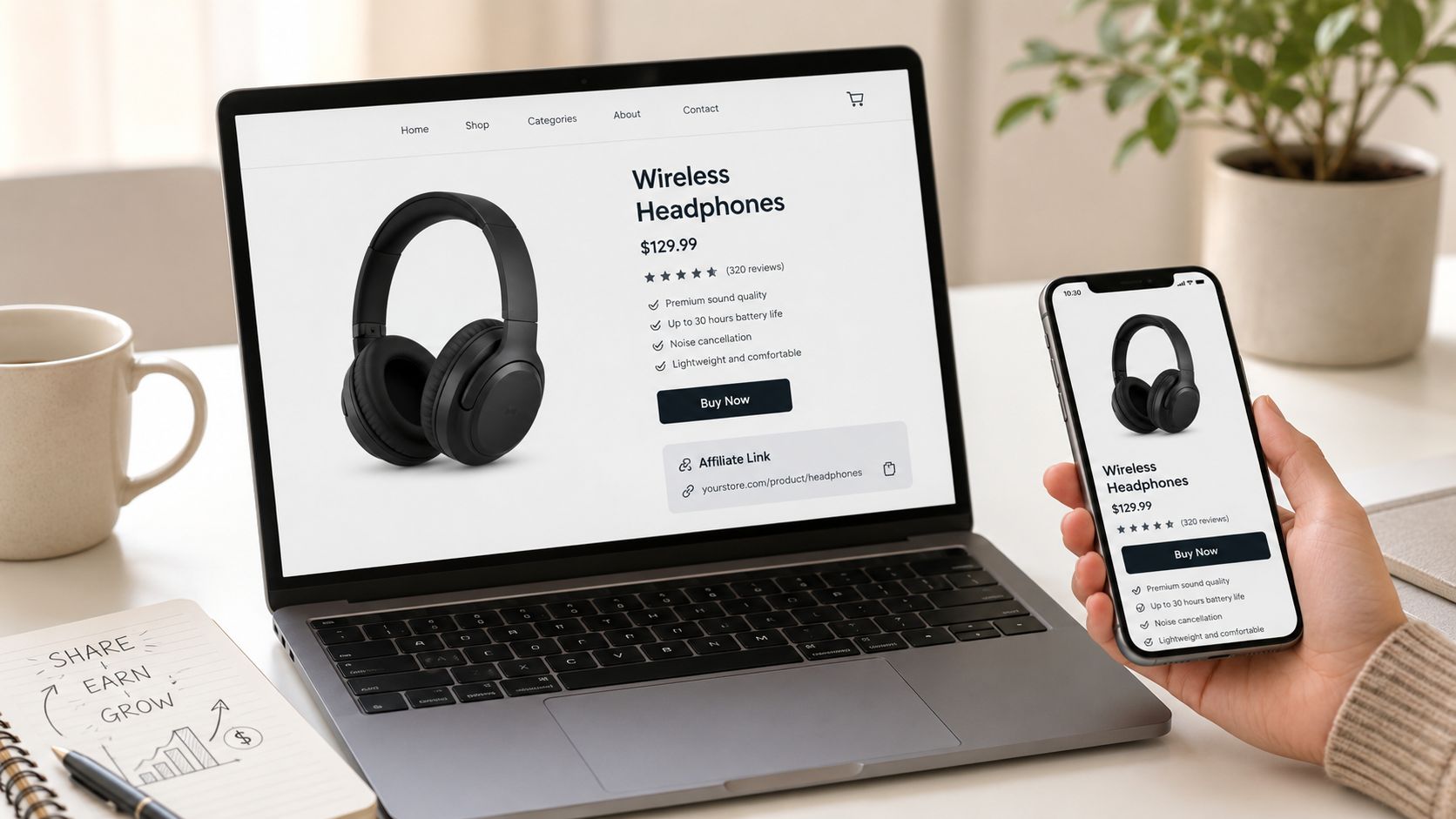
This is often the cleanest answer to “how do you make money from a website” when you don't want to build your own product yet. You can monetize attention first, then decide later whether to launch something of your own.
Why affiliate works for creators
Affiliate offers fit naturally into content. A faceless AI channel can recommend editing tools. A productivity page can recommend software. A niche review site can link to products used in each video or post.
Squarespace notes that affiliate links convert website traffic into revenue by sharing part of the sale price when readers buy through tracked links. That's why creators often start here before building courses or memberships.
What works is relevance. If your video is about automating video production, the description should include the tools used. If your post compares newsletter platforms, your links should point to those platforms.
The playbook that usually converts
- Match the offer to the content: Don't promote random products for the sake of a payout.
- Use visible placements: Put links in descriptions, pinned comments, resource pages, and tool roundups.
- Recommend what you can explain clearly: Buyers convert when the product fits the exact problem.
- Keep disclosures clear: Trust is worth more than one extra click.
Faceless creators should study faceless affiliate marketing strategies because the mechanics are different when your audience trusts your workflow more than your personality.
If you want a direct program example, The SEO Agent affiliate program shows the kind of software partnership that can fit creators who publish SEO, marketing, or business content.
3. Sponsorships and Brand Deals
Sponsorships are where many creators start feeling like they have a real media business. A brand pays you to feature its product, integrate a message, or create a dedicated piece of content. Unlike ad revenue, the payout doesn't depend only on platform systems. It depends on your niche, audience fit, and your ability to present a credible offer.
This works especially well once your audience is specific. A broad entertainment page may pull views, but a niche creator who attracts marketers, founders, editors, or ecommerce operators is often easier for brands to buy from.
What brands actually want
Brands aren't just buying reach. They're buying relevance, trust, and access to a defined audience. That's why faceless creators can still do well here. If your content consistently reaches people interested in AI tools, software, design, finance, or ecommerce, brands care more about that fit than about whether your face is on camera.
A simple sponsor package often includes a dedicated video mention, a description link, one short-form cutdown, and repost rights. Keep your offer easy to understand.
The easier it is for a brand manager to say yes, the more often you'll get the deal.
How to land the first deals
Start with companies that already sponsor creators in your niche. If you make videos about AI workflows, pitch software companies. If you run a productivity channel, pitch app makers, not random consumer brands.
Use a basic media kit with:
- Audience summary: Your niche, platforms, and core viewer profile
- Content examples: A few strong posts that match the sponsor's category
- Offer structure: What the brand gets, where it appears, and how long it stays live
- Contact details: Make replying easy
What doesn't work is waiting for brands to magically arrive. Early on, outbound outreach matters. Smaller brands are often more open, faster to approve, and easier to build case-history with than large household names.
4. Digital Products and Courses
If affiliate marketing monetizes other people's products, digital products monetize your own expertise. This is one of the strongest models because you control the offer, the pricing, the delivery, and the customer relationship.
For creators, digital products usually beat physical products early on. No inventory, no shipping, no packaging mistakes, no warehouse headaches. You create the asset once, then improve it over time.
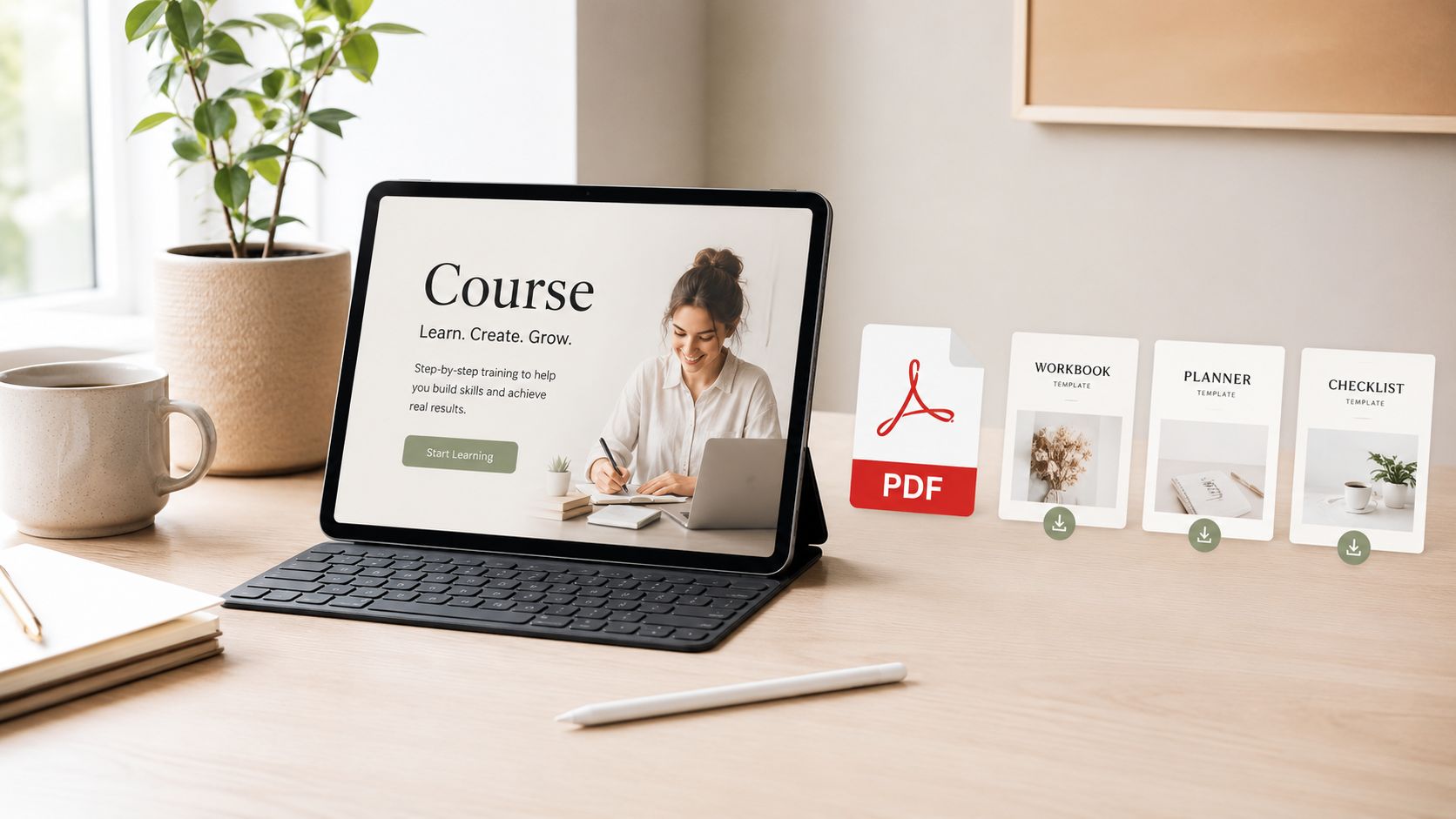
A faceless creator can sell prompt packs, templates, swipe files, script frameworks, editing presets, content calendars, niche research kits, or mini-courses built around a workflow.
Here's the kind of asset that often sells well when it solves a narrow problem.
What actually sells
The mistake is building a giant course too early. Most creators should start with a small, specific product tied to a proven content theme. If a video about writing hooks performs well, build a hook library. If a tutorial on faceless shorts gets traction, package the exact template stack behind it.
Wix's review of website monetization methods highlights premium content, courses and webinars, donations, sponsored posts, banner ads, memberships, and freelancing services in its guide to how to make money from a website. That breadth matters because digital products often become the middle layer between free content and higher-ticket services.
Build the product after demand is obvious
Use comments, replies, and email responses as demand signals. If people keep asking for the template, the prompt, the checklist, or the system, package that first.
- Solve one job well: A focused product often converts better than a broad one.
- Show the workflow: Demonstration sells better than theory.
- Deliver immediately: Instant access reduces friction.
- Refresh over time: Buyers value products that stay current.
A short walkthrough also helps viewers picture the result before they buy.
5. Memberships and Direct Fan Support
Some audiences don't just want content. They want closer access, faster answers, extra resources, or a way to support your work directly. That's where memberships, Patreon, Ko-fi, and channel support options fit.
This model works best when your audience trusts your process and wants more of it. You don't need celebrity energy for this. A faceless creator can offer members-only resources, behind-the-scenes prompts, extra breakdowns, private Discord access, or early access to new templates.
Why recurring support matters
One-off sales are useful, but recurring support changes how stable the business feels. Even a modest member base can soften the swings from platform traffic, ad demand, or seasonality.
Squarespace lists subscriptions, donations, consultation, digital products, content, advertising, and affiliate marketing among the primary website monetization methods in its article on making money from a website. That reflects a broader shift. Creators aren't relying on one revenue source anymore.
A loyal smaller audience often buys more consistently than a large casual one.
What to offer members
Give members tangible reasons to stay. “Support me” can work for some creators, but clear perks work better for most.
- Resource access: Prompt libraries, templates, research notes
- Community access: Private chat, feedback channel, office hours
- Early content: Watch or download before public release
- Direct support: Q&A replies, reviews, or teardown sessions
What usually fails is making the membership too complicated. Start simple. One useful resource library and one community perk is enough to begin. Add more once you see what people use.
6. Email List Monetization and Newsletter Sponsorships
Creators often treat the email list like a backup channel. It's more important than that. Your list is where attention becomes owned, repeatable, and less dependent on search or platform reach.
That matters because distribution now drives monetization as much as the website itself. Guidance from Squarespace, Coursera, and iubenda increasingly points to content, newsletters, and audience engagement beyond the site itself. beehiiv also highlights monetization features such as premium subscriptions, an Ad Network, referral programs, and integrations in its newsletter platform materials. The broader takeaway is simple: websites make more money when they're connected to a distribution engine, not left to stand alone.
The list is where revenue compounds
An email subscriber is easier to reach than someone who watched one video and disappeared. You can send product launches, affiliate recommendations, sponsor placements, or service offers without begging an algorithm for visibility.
For faceless creators, a strong lead magnet is the obvious first step. Offer a template pack, a prompt collection, a checklist, or a short guide related to your best-performing content.
Useful tools for this part of the stack include platforms that help you keep emails landing properly. MailGenius email deliverability tool is one example if you need to monitor inbox placement issues.
What to send after people join
Don't collect subscribers and go silent. Send useful emails tied to the same problem your content solves.
- Weekly insights: Short lessons, tools, or examples from your niche
- Curated offers: Affiliate recommendations that match recent content
- Product launches: Direct links to your own templates, guides, or services
- Sponsor placements: Once the list is engaged, brands may want access
What doesn't work is treating the newsletter as a dump of links. Readers stay subscribed when each send helps them do something better, faster, or with less confusion.
7. Freelance Services and Agency Work
If you need cash flow sooner, services are often the fastest path. You already know how to make content. You already understand hooks, editing, packaging, prompts, distribution, or channel setup. A business will often pay for that before a large audience ever buys from you directly.
Many creators fund the rest of their business through a structured process. The public content builds authority. The website captures leads. The service page closes the deal.
Sell the outcome, not the task
Clients don't really want “ten videos.” They want a content system, better creative output, or help launching and running a channel. Package the work around the problem you solve.
A strong offer might be faceless short-form production, AI-assisted UGC, editing systems for brands, channel setup for founders, or content repurposing for teams with no in-house creator. Show examples. Explain the process. Make it feel operational, not experimental.
Field note: Services are usually less scalable than products, but they reach revenue faster and teach you what customers will later buy in product form.
How to structure the offer
- Starter package: A smaller engagement with clear deliverables
- Retainer package: Ongoing monthly production or strategy
- Premium package: Full system buildout, planning, production, and reporting
- Proof assets: Show your best videos, landing pages, or content frameworks
What doesn't work is vague positioning like “I help with content.” That sounds amateur. “I build faceless short-form systems for software brands” sounds buyable.
Over time, service work can evolve into a small agency. When that happens, your website shifts from portfolio to sales engine.
8. TikTok Shop and Ecommerce Integration
Not every creator should launch a store. But some niches are perfect for ecommerce, especially when the content already drives product curiosity. If people ask where to buy what you show, or if your niche naturally supports tools, accessories, merch, or digital assets, commerce can fit well.
A website doesn't need to sell only content. It can sell products directly, and modern website monetization increasingly includes dropshipping, sponsored posts, banner ads, premium content, donations, and direct sales. Wix highlights that variety in its monetization guidance, and the practical lesson is that website income today is usually portfolio-based rather than tied to one source.

What creators should sell first
Most creators should start narrow. One to three products is enough. Too many options kill clarity and make fulfillment messy.
Print-on-demand is a clean starting point for merch. Digital assets are even easier because there's no shipping. If your audience cares more about tools than apparel, sell templates, assets, or resource packs before shirts and mugs.
Where ecommerce works best
- Niche identity pages: Motivational, fitness, creator, or fandom content
- Tool-driven channels: Sell related kits, presets, or digital resources
- Community-led brands: Audiences that want to signal belonging
- Short-form commerce content: Product demos, proofs, and quick tutorials
If you run a Shopify store or support merchants, proven methods for Shopify merchants can help tighten the conversion side of the funnel after traffic arrives.
What usually fails is trying to force random products onto an audience that only came for entertainment. Content and product have to match.
9. YouTube Shorts and Other Bonus Programs
Short-form platforms sometimes add bonus or incentive programs for creators. These can be useful, but they're unreliable as a primary business model because rules, availability, and eligibility can change.
The smarter move is to treat bonus programs as extra upside on content you'd publish anyway. If your Shorts perform and a platform pays an additional amount, good. If the program changes, your business still stands because the content also feeds affiliate links, digital products, list growth, and sponsorships.
How to use this without depending on it
Faceless creators often do well with high-output short-form because the workflow is repeatable. One strong concept can become multiple variants, hooks, or visual versions. That makes it easier to keep testing without needing constant fresh filming.
The key is to monitor what format holds attention. If one animation style, narrative structure, or voiceover pattern consistently outperforms the rest, build around it.
- Repurpose winners: Turn strong videos into shorts, clips, and alternate edits
- Track retention patterns: Keep the openings that hold viewers
- Keep calls to action light: Push the next click, not a hard sell every time
- Link out wisely: Use descriptions, pinned comments, and profile links
If Shorts are part of your plan, this guide on how to monetize YouTube Shorts gives a practical view of monetization paths beyond just waiting for platform payouts.
The trade-off
Bonus-style income feels exciting because it's fast and visible. But it's still rented revenue. Build around assets you control, then let bonuses sit on top.
10. Licensing and Content Syndication
Licensing is one of the least discussed ways to make money from a website, but it can be strong if your content is reusable. Instead of selling to a viewer once, you license an asset that other businesses, publishers, or producers can use.
This is especially relevant for faceless visuals, explainers, loops, motion backgrounds, AI-generated sequences, educational animations, and generic stock-style assets. If the content isn't tied to your personality, it's easier to repurpose.
What licensing really means
You can package content into stock libraries, downloadable asset stores, private licensing catalogs, or direct-use agreements for brands. Some creators license graphics packs. Others license motion backgrounds, B-roll-style visuals, or niche footage collections.
The value comes from utility. Buyers aren't paying because they follow you. They're paying because the asset saves them time.
Where to focus first
- Evergreen visuals: Avoid trend-heavy assets with short shelf life
- Searchable metadata: Good titles, tags, and descriptions matter
- Collections: Buyers often prefer themed sets over isolated files
- Multi-use formats: Think commercial, educational, and editorial reuse
Guidance from Futurice and Bernard Marr on data monetization points to a larger principle in its discussion of ways to make money with data. The more you package information or assets into usable products, dashboards, subscriptions, or structured access, the more value you create beyond simple pageviews. For creators, that can mean turning content into a licensable library, a paid archive, or an insight product rather than treating every post as one-and-done.
Top 10 Website Monetization Strategies
| Monetization Method | 🔄 Implementation Complexity | ⚡ Resource Requirements | 📊 Expected Outcomes | 💡 Ideal Use Cases | ⭐ Key Advantages |
|---|---|---|---|---|---|
| Ad Revenue Sharing (YouTube Partner Program & TikTok Creator Fund) | Moderate, meet platform thresholds and optimize algorithmically | Continuous content production, editing, analytics | Variable passive income; scales with views; low CPM early | High-volume faceless channels; high-CPM niches (finance, health) | Passive scale via views; multi-platform diversification |
| Affiliate Marketing & Product Recommendations | Low–Moderate, integrate links and disclosures | Minimal production overhead; tracking and relationship management | High-margin per conversion; income varies with conversion rate | Tutorials, tool reviews, SaaS recommendations | High commissions; complements other income streams |
| Sponsorships & Brand Deals | High, pitching, contracts, and negotiated deliverables | Media kit, analytics, negotiation time; occasional legal review | Large lump-sum payments; predictable per-deal revenue | Established channels (50k+); niche audiences with good engagement | Highest per-deal payouts; less algorithm-dependent |
| Digital Products & Courses | High upfront, product creation and launch planning | Significant time to build; hosting and support systems | Scalable, high-margin passive income after launch | Educational creators, template/prompt sellers | Strong margins; builds authority and repeatable revenue |
| Memberships & Direct Fan Support (YouTube Memberships, Patreon & Tips) | Moderate, tier design and ongoing perk delivery | Ongoing community management and perk fulfillment | Recurring predictable revenue; low conversion rates | Engaged communities; creators offering exclusive content | Recurring income and stronger fan loyalty |
| Email List Monetization & Newsletter Sponsorships | Moderate, list building and consistent cadence | Lead magnets, CRM/email platform, segmentation | High engagement; sponsorships scale with list size | Driving product launches, affiliate promotions, sponsors | You own the audience; high ROI per send |
| Freelance Services & Agency Work | Moderate–High, client acquisition and project management | Skilled labor, time investment; systems to scale | Immediate high revenue; non-passive unless scaled | Video production, consulting, retainer services | High hourly rates; predictable retainer income possible |
| TikTok Shop & E‑Commerce Integration | Moderate, shop/setup and supplier coordination | Product design, supplier/customer service, fulfillment | Direct conversions from viral content; lower net margins | Merch, print-on-demand, dropship items tied to trends | Seamless in-app purchases; direct monetization of traffic |
| YouTube Shorts Fund & Bonus Programs | Low–Moderate, meet eligibility and maintain high output | High-volume short-form production and optimization | Bonus payments; irregular and region-limited | Viral short formats; faceless channels optimizing for quantity | Extra payouts beyond standard ads for viral Shorts |
| Licensing & Content Syndication | Low–Moderate, metadata and multi-platform uploads | Build large asset library; tagging and SEO work | Long-term passive royalties; slow to accumulate | Stock footage, evergreen motion graphics, reusable clips | Passive multi-year income; monetizes unused assets |
| (Entry omitted) | |||||
| (Entry omitted) |
From Views to Value
Making money from a website or channel usually gets easier once you stop asking which single method is best. The better question is which stack makes sense for your current stage.
If you're just starting, begin with methods that are simple to launch and close to the content itself. Ad revenue, affiliate links, and light service offers fit that stage well. They don't require a huge backend, and they teach you what your audience responds to. If people click product links, you've found commercial intent. If businesses ask for help, you've found a service angle. If specific tutorials outperform everything else, you may have the seed of a digital product.
Once that's working, add a second layer you control more directly. That usually means an email list, a small digital product, or a membership. At this stage, your business becomes more stable. You're no longer dependent on one platform, one algorithm, or one payout model. The content still attracts attention, but now it feeds assets you own.
That shift matters because modern website monetization is less about the site alone and more about the whole distribution system around it. Your TikTok profile, YouTube channel, newsletter, lead magnet, landing page, and checkout flow all work together. A creator who understands that can make money before a traditional blog ever gets meaningful search traffic.
There are real trade-offs. Ads are easy to start but volatile. Affiliate marketing is efficient but depends on offer fit and trust. Sponsorships can pay well but require outreach and negotiation. Digital products have the best control but take validation and setup. Services bring faster cash but don't scale as cleanly. Memberships can smooth income, but only if the audience has a real reason to stay. Ecommerce can work, but only when product and content align. Licensing is attractive for reusable assets, yet it takes organization and catalog thinking.
The strongest creator businesses usually combine several of these. One video can earn ad revenue, send clicks to an affiliate link, collect emails through a lead magnet, and later support a product launch. That's the mindset to adopt. Don't treat content as a single-use post. Treat it as an asset with multiple monetization paths.
If you're using AI-driven content workflows, this gets even more practical. Faster production only matters if each piece points toward something valuable. A tool like Aicut can help creators produce faceless short-form videos and publish more consistently, but the actual business result comes from connecting that output to offers, email capture, sponsorship opportunities, and products.
So pick one starting point. Don't wait for the perfect stack. If your audience already asks what tools you use, start with affiliate links. If they ask how you make the content, package the workflow into a product. If businesses are noticing your content, put up a service page. If your viewers keep returning, invite them into a membership or newsletter.
That's how you make money from a website now. Not by hoping one page earns everything, but by building a connected system where attention flows into revenue on purpose.
If you're building a faceless content business, Aicut is worth exploring as a practical way to create and schedule short-form videos that can feed your monetization stack across YouTube, TikTok, Instagram, your email list, and your website.