Wondering how to actually grow a YouTube channel fast? There's a proven formula behind the channels that seem to blow up overnight. It comes down to three things: picking a profitable niche, making content with a killer hook and high retention, and consistently uploading videos that are properly optimized.
If you can master these fundamentals, you'll stop seeing slow, painful growth and start building real momentum.
Laying the Groundwork for Rapid YouTube Growth
Before you even think about hitting that record button, the decisions you make right now will dictate how fast your channel can take off. Rapid growth isn't about luck; it's about building a solid foundation from the very beginning. Forget the generic advice—it's time to get strategic.
The first, and most critical, decision is your niche. A broad topic like "gaming" is a surefire way to get lost in the noise. You need to drill down and find a sub-niche that isn't already saturated. Instead of "gaming," think "retro JRPG speedruns." Instead of "cooking," try "30-minute vegan meal prep for busy professionals." The goal is to become the go-to person for a very specific group of people.
If you're stuck for ideas, this guide on YouTube channel ideas for beginners can get the wheels turning.
Define Your Audience and Brand
Once you’ve nailed down your niche, you have to get crystal clear on who your ideal viewer is. Who are these people? What keeps them up at night? What problems can you solve for them? Your entire content plan should be built around answering the questions they’re already typing into the YouTube search bar. This is how you become a reliable resource they can't wait to hear from again.
This whole process is a natural flow: your niche defines your audience, and your audience informs your brand. This simple diagram shows how it all connects.
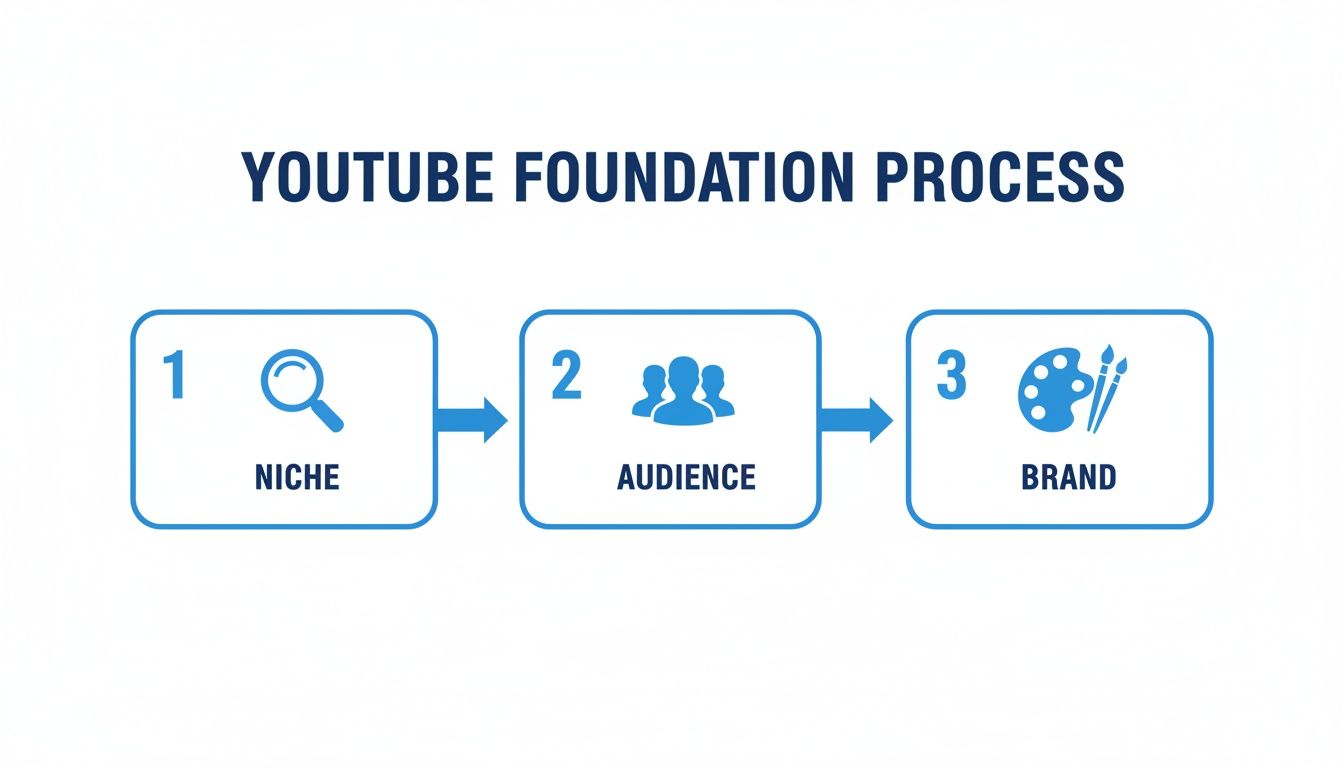
The final piece of this puzzle is your brand's visual identity. Your channel banner, profile picture, and video thumbnails need to look professional and communicate exactly what you're about in a single glance. A strong first impression is often the only thing standing between a casual viewer and a loyal subscriber.
To make sure your content actually connects with the right people, it's a good idea to understand effective YouTube marketing strategies from day one. A solid marketing plan weaves your niche, audience, and branding together for the biggest possible impact.
Consistency Is Your Growth Multiplier
A perfect foundation is useless without consistent effort. Think about it: with over 500 hours of video uploaded to YouTube every single minute, you have to fight to be seen. It's partly a numbers game.
Data from 2019–2025 shows that creators who publish at least 2–3 videos per week see between 30–120% faster growth than those who only post once a month. This steady rhythm trains the YouTube algorithm to pay attention to your channel, seriously boosting your chances of getting discovered.
Creating Videos That Hook and Retain Viewers
If you want to grow fast, you can't just make videos. You have to create content people feel an unstoppable urge to finish. YouTube’s algorithm is smart; it’s built to push videos that keep people watching, a little metric we call audience retention. Get this right, and you've found the cheat code for turning casual viewers into a loyal subscriber base.
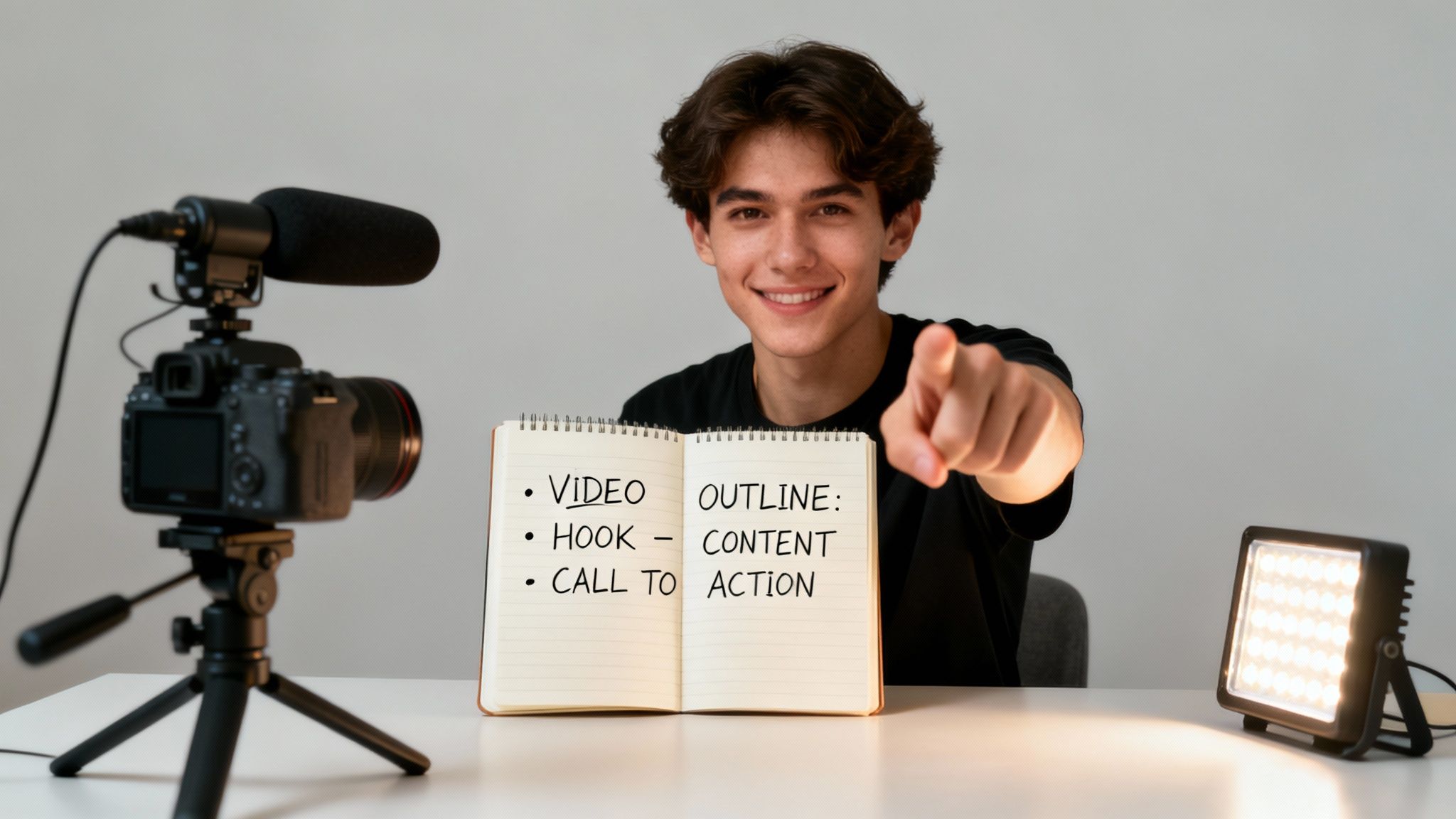
It all hinges on the hook—those first crucial 5 to 15 seconds. This is your only shot to stop someone mid-scroll and convince them your video is worth their time. Blow it here, and they're gone. The algorithm will notice.
Engineering the Perfect Hook
A killer hook isn't just a chipper "Hey guys!" It’s a direct promise of value, a jolt of high-stakes tension, or a question that instantly piques curiosity. Your mission is to shatter the viewer's scrolling hypnosis with something they simply can't ignore.
Here are a few hook formulas I've seen work time and time again:
- The "Cold Open": Forget introductions. Jump straight into the most exciting moment. If you run a DIY channel, show the jaw-dropping final result before you explain the process. For a gaming channel, open with the chaotic final seconds of an impossible boss fight.
- The Provocative Statement: Start with a bold claim that goes against the grain in your niche. A finance creator might kick things off with, "Everyone tells you to save 10% of your income. What if I told you that's the absolute worst advice for building wealth today?"
- The Relatable Problem: Hit a specific pain point your audience knows all too well. A productivity channel could start with, "If you end every day feeling busy but not actually productive, you're making one of these three common mistakes."
The main idea is brutally simple: Give them a compelling reason to stick around, right now. Ditch the long, fancy intros. Get straight to the action or the core promise of your video. The more people who click and the longer they stay, the more YouTube will love you.
Scripting for High Retention
So, you've hooked them. Awesome. Now the real work begins: keeping them there. This is where a smart script makes all the difference. A well-paced script doesn't just ramble; it delivers on the hook's promise while consistently building curiosity and handing out value.
Stop thinking of your script as an essay. Think of it as a story. Even a basic tutorial has a beginning (the problem/hook), a middle (the actionable solution), and an end (the transformation or final result).
To keep eyeballs glued to the screen, constantly mix things up. I'm talking about "pattern interrupts"—quick changes in camera angle, a sudden cut to B-roll footage, on-screen text popping up, or a new sound effect. These little jolts reset the viewer's attention and stop the video from feeling flat. And please, get the audio right. People will forgive shaky video, but they will never, ever forgive bad sound.
Production Value That Screams Quality
You don't need a Hollywood budget, but clean production sends a powerful signal to viewers (and the algorithm) that you take this seriously. Just focus on the basics that deliver the biggest bang for your buck.
| Production Element | Best Practice | Why It Matters for Growth |
|---|---|---|
| Audio Quality | Use an external microphone. Period. | Bad audio sounds amateurish and is the #1 reason people click away, absolutely crushing your retention. |
| Visual Pacing | Add B-roll, text, or a graphic every 5-10 seconds. | It stops your video from becoming a boring slideshow of your face and keeps viewers locked in. |
| Lighting | A simple ring light or three-point setup works wonders. | Good lighting instantly makes you and your video look more professional and credible. |
Nailing these production fundamentals, combined with a magnetic hook and a tight script, creates a powerful formula for viewer retention. If you want to dive deeper, our guide on essential video editing tips for beginners can help you add that final layer of polish. When you obsess over the viewer's experience, you're not just making a video—you're building a growth engine for your channel.
Mastering YouTube SEO for Maximum Discovery
Making a great video is only half the job. If you really want to grow your YouTube channel fast, you have to get good at making your content discoverable. Think of YouTube as more than just a video site—it's the second-biggest search engine on the planet. When you get your optimization right, you're essentially telling the algorithm exactly who needs to see your work, which is how you turn random searches into loyal subscribers.
It all boils down to solid keyword research. The goal is to figure out the exact phrases your ideal viewer is typing into that search bar. A simple but powerful trick is to use YouTube's own search bar. Start typing a broad term from your niche and watch what it suggests. Those aren't guesses; they're some of the most popular searches happening right now. That's your content roadmap right there.

Crafting Clickable Titles and Thumbnails
Your title and thumbnail are your video's one-two punch. They work together to make a promise to a potential viewer, and if that combo is weak, your video will get scrolled past, no matter how good it is. A killer title needs to hint at a benefit, make people curious, and include your main keyword.
The thumbnail is what seals the deal. It's pure visual psychology.
- High Contrast & Bold Text: Use bright, clashing colors and big, clean fonts. Remember, it needs to pop on a tiny phone screen.
- Expressive Faces: We're hardwired to respond to faces. A clear shot of someone looking surprised, excited, or even confused is a proven attention-grabber.
- Keep It Simple: Don't cram it full of text and icons. One strong, clear idea is all you need.
The big idea is to make your video impossible not to click. Your title asks a question or promises a result, and your thumbnail gives a compelling visual sneak peek. A/B testing different thumbnails to boost your click-through rate by even 2–5% is a real, data-backed way to speed up your channel's growth.
Optimizing Descriptions and Tags
Don't sleep on the video description—it's prime SEO real estate. Instead of a single lazy sentence, write a detailed, keyword-rich summary. The first two or three sentences are crucial because they show up before the "Show more" link. Get your main keyword in there, then write a natural-sounding paragraph about what's in the video, sprinkling in related keywords as you go.
This is your chance to give the YouTube algorithm all the context it needs to understand and recommend your video.
Tags are less important than they used to be, but they still have a role to play in helping YouTube categorize your content.
- Make your very first tag your exact primary keyword.
- Follow it up with a mix of broader and more specific tags.
- Peek at the tags on popular videos in your niche for ideas.
For a deeper dive, our comprehensive guide on using YouTube tags to get more views has you covered.
Your YouTube Video Optimization Checklist
Before you hit publish, run through this quick checklist. It's a simple way to make sure you’ve given every video its best shot at getting discovered.
| Optimization Element | Best Practice | Why It Matters |
|---|---|---|
| Title | Includes main keyword, sparks curiosity, 50-70 characters. | This is the primary signal to both users and the algorithm. |
| Thumbnail | High contrast, clear visuals, minimal text, expressive face. | Grabs attention in a crowded feed and drives the click. |
| Description | Main keyword in the first 2-3 sentences, detailed summary. | Provides crucial context for the YouTube algorithm. |
| Tags | Main keyword first, followed by a mix of specific & broad tags. | Helps categorize your video and link it to similar content. |
| Chapters | Use timestamps (e.g., 00:00) to break up the video. | Improves viewer experience and can create "key moments" in Google search. |
| Playlists | Add the video to at least one relevant, themed playlist. | Encourages binge-watching, boosting session watch time. |
Checking these boxes for every upload builds a strong foundation for your channel, telling the algorithm that you’re a creator who knows how to play the game.
Using Chapters and Playlists Strategically
Finally, let's talk about two underused tools: chapters and playlists. Adding timestamps in your description to create chapters doesn't just help viewers find what they need; it also feeds more data to Google. Sometimes, these chapters even show up as "key moments" directly in search results.
Playlists are your secret weapon for boosting session watch time. When one of your videos ends, another from the same playlist queues up automatically. This is how you get viewers to binge-watch your content, which sends a massive positive signal to the algorithm. While YouTube has its own quirks, a solid foundation in general search engine optimization principles will always give you an edge. Grouping related videos into well-named playlists is a simple strategy that pays off big time.
Taking Your Content Beyond YouTube
Don't just upload your video and pray the YouTube algorithm finds you. That's like setting up a shop on a side street and hoping for foot traffic. To really grow, you need to go out and bring people in. The fastest-growing channels build an entire ecosystem around their content, using other platforms to lead new viewers back to their YouTube home base.
Think of your main YouTube video as the feature film. Your job is to create trailers, teasers, and behind-the-scenes clips—Shorts, Reels, tweets, and graphics—and post them where your ideal audience is already hanging out.
Get More Mileage From Every Video
Trying to create brand-new, original content for every single social media platform is a fast track to burnout. The smart play is to slice and dice your core YouTube video into micro-content that feels right at home on other feeds. A single 10-minute video can easily fuel a full week of promotional content.
Let's say you just published a video called "5 Common Mistakes New Gardeners Make." Here’s how you can spin that into gold:
- TikTok & Reels: Create five separate short videos. Each one quickly highlights a single mistake with a punchy visual and maybe a trending sound.
- Instagram Carousel: Design a simple, swipeable post using screenshots or clean graphics to break down all five points.
- X (formerly Twitter): Write a thread detailing each mistake one by one. The final tweet in the thread? A link to your full video for the "deep dive."
- Pinterest: Pull the most helpful tips and turn them into eye-catching quote graphics that people will want to save to their boards.
This approach saves you a ton of time and, more importantly, gives your main video a much longer shelf life. You're creating multiple new doorways for people to find you.
Your YouTube video is the pillar. Everything else you post on other platforms are just signposts pointing back to it. Make them look like they belong there, not like lazy ads.
Speak the Language of Each Platform
A joke that lands on TikTok will probably bomb on LinkedIn. Every platform has its own unwritten rules and distinct culture. If you just copy and paste the same message everywhere, you'll be ignored. To actually get people to click, you have to tailor your content to fit what users expect to see.
| Platform | Best Promotional Format | Why It Works |
|---|---|---|
| TikTok/Instagram Reels | Short, high-energy clips showing a surprising result or a quick "aha!" moment. | These feeds are all about instant gratification. You have to hook them in the first two seconds. |
| Instagram Feed | High-quality carousels, infographics, or a polished 60-second video clip. | Users are there for aesthetics and well-packaged info they can save for later or share. |
| X (formerly Twitter) | Engaging threads that tell a story, direct questions, and links with a juicy hook. | X is built for conversation. Spark curiosity and discussion to drive clicks. |
For example, a tech reviewer could pull a 30-second clip of a new phone's "wildest feature" for Reels. On X, they might start a debate by posting a thread comparing that phone's camera to its biggest rival, ending with a link to the full YouTube review. Same video, different angles, and a much bigger net.
Build a Community, Not Just an Audience
This is a big one. An audience watches. A community participates. When you're just starting out, that distinction is everything. Building a genuine connection with your viewers turns them from passive watchers into true fans who will show up for every video, smash the like button, and tell their friends about you.
Your YouTube comments section is your ground zero. Make it a personal rule to reply to as many comments as you can, especially in the first few hours after you post. End your videos with a question to get the conversation started. It shows you're actually listening.
Once you have a core group of dedicated fans, think about creating a private space for them, like a Discord server. This gives them a place to connect with you—and each other—on a deeper level. They'll feel like insiders, and these superfans will become your most valuable evangelists.
Let Data Drive Your Growth Strategy
Your YouTube Analytics dashboard is your secret weapon. Seriously. It's the most direct feedback you'll ever get from your audience, showing you precisely what's hitting the mark and what's falling flat. But just glancing at views and subs is like only reading the first page of a book—you're missing the whole story.
Good content can feel subjective, but data doesn't lie. When you learn to dig into your analytics, you stop guessing and start making smart, strategic decisions that actually move the needle. Think of it as your channel's roadmap to success.
Decode Your Audience Retention Graph
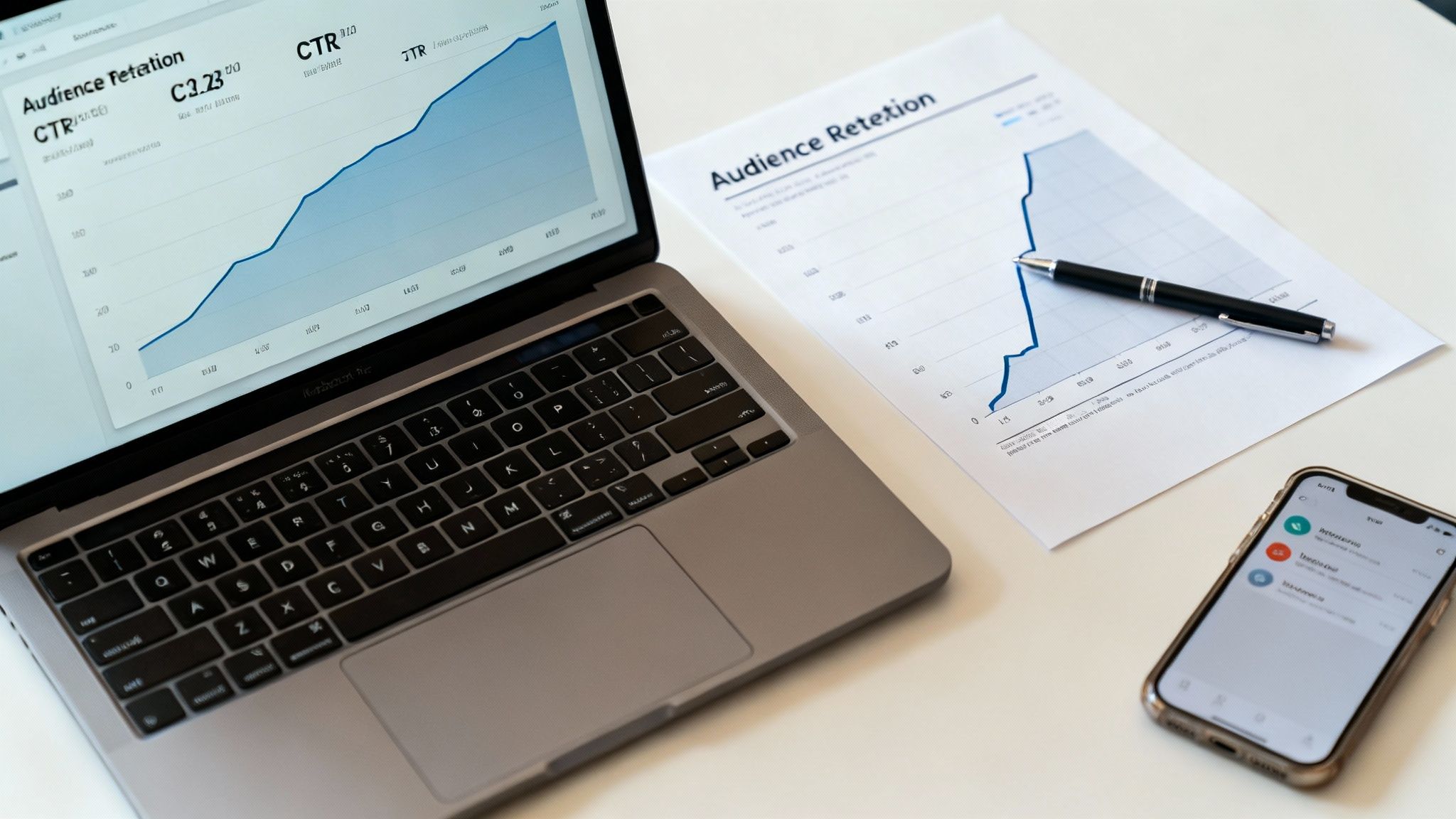
If there's one chart to obsess over, it's Audience Retention. This graph is a second-by-second breakdown of viewer engagement, showing you exactly where people are glued to the screen and where they're bailing. Don't just look at the average percentage; get into the nitty-gritty of the graph itself. You're hunting for spikes and dips.
A spike is gold. It means people are rewinding and re-watching that specific moment. What did you do there? Was it a killer joke, a game-changing tip, or a really important piece of info? Whatever it was, that's a signal to do more of it.
A dip is a warning sign. It's a point where you lost a big chunk of your audience. Was your intro too slow? Did you go off on a tangent? Maybe the explanation got a bit muddy. These dips are free lessons on what to trim from your next video script.
Your goal is a smooth, gentle downward slope, not a steep cliff. Analyzing these graphs helps you perfect your video structure to keep viewers hooked all the way through.
Figure Out How Viewers Are Finding You
Next up, you need to know how people are discovering your videos in the first place. Pop over to the "Reach" tab in your analytics and take a hard look at your Traffic sources. This is a breakdown of where your views are coming from.
- Browse features: This means your video got prime real estate on the YouTube homepage. It's a fantastic sign that the algorithm is a fan of your work.
- Suggested videos: Your content appeared next to another video. The best part? You can click into this report to see exactly which videos are sending you traffic. This is a goldmine for finding your next video topic or even a potential collaborator.
- YouTube search: This reveals the exact keywords people are typing to find you. If one keyword is bringing in a ton of views, that’s your cue to double down and create more content around that specific subject.
This data is all connected to your Click-Through Rate (CTR)—the percentage of people who actually clicked on your video after seeing it. A high CTR (anything over 5% is solid) tells YouTube that your title and thumbnail are doing their job. If it’s low, it’s a clear sign you need to rework your packaging, even if the video itself is your best one yet.
A Simple Way to A/B Test Your Thumbnails
You don’t need any fancy software to start testing what works. Just create two totally different thumbnails for your next video.
Publish the video with Thumbnail A. Wait 24-48 hours and check your CTR in Analytics. Then, simply swap it out for Thumbnail B and give it another 24-48 hours. Now you can compare the results.
Yes, it's a bit of a manual process, but it's the quickest way to learn what grabs your audience's attention. Does a thumbnail with your face in it work better? Does bright yellow text outperform white? Every test gives you a new piece of insight you can apply to all your future videos. This kind of consistent, small improvement is what data-driven growth is all about.
Still Have Questions? Let's Tackle Them
Even with the best playbook, the road to YouTube growth is full of questions. It's totally normal. Every creator I know has hit these same roadblocks. Let's walk through some of the most common ones so you can navigate them with a bit more confidence.
"How Long Does It Really Take to Get 1,000 Subscribers?"
This is the big one, isn't it? The honest, no-fluff answer is: it depends entirely on you. There's no set timeline. I've seen channels hit 1,000 subscribers in a few months, and I've seen others take a year or more.
What makes the difference? It boils down to your niche, how good your videos actually are, your consistency, and whether you’re making content that people are actually looking for.
If you’re in a solid niche and you're cranking out two or three genuinely valuable videos a week, hitting that goal in three to six months is absolutely possible. But if you're in a super crowded space or only post when you feel like it, you're looking at a much longer climb.
Instead of staring at the calendar, focus on the metrics that actually drive subscriber growth:
- Audience Retention: Are people sticking around to watch? This is maybe the most powerful signal you can send to the YouTube algorithm.
- Click-Through Rate (CTR): Your first battle is winning the click. Do your thumbnails and titles spark enough curiosity to get people to even start watching?
- Real Value: Does every single video you post either solve a problem, make someone laugh, or teach them something new?
A little pro-tip: YouTube Shorts can be a massive shortcut for gaining subscribers. The format is designed for discovery and can get a ton of fresh eyes on your channel, fast. The real trick, though, is figuring out how to get those Shorts subscribers to stick around and watch your longer videos—that's where the real community (and monetization) is built.
"Should I Just Pay for Ads to Speed Things Up?"
It's tempting to throw money at the problem with Google Ads, right? While ads can give a video an initial push, they're a tool you need to use carefully, especially when you're just starting out.
Here’s the deal: ads are great for specific goals, like selling a product or getting a few hundred views on a brand new video to kickstart its momentum. But the viewers you get from ads are... different. They didn't seek you out; they were interrupted by you.
This often leads to much lower watch time and engagement. If YouTube sees thousands of ad-driven views but a terrible average view duration, it can actually tell the algorithm your video isn't very engaging, potentially kneecapping its organic reach.
For 99% of new creators, the best path is organic. Nail your YouTube SEO, create content people can't click away from, and build a real, engaged community. Save the ad budget for when you have a video formula that you know works and converts viewers to subscribers organically.
"What are the Biggest Mistakes People Make?"
Sometimes, growing faster is less about doing more and more about stopping what's holding you back. So many channels get stuck not because their ideas are bad, but because they're tripping over the same common hurdles.
Avoid these five growth-killers at all costs:
- A Non-Existent Upload Schedule: The algorithm loves predictability, and so do viewers. If you post randomly, you never build momentum. Pick a schedule you can stick to, and treat it like a real deadline.
- Flying Blind (Ignoring Analytics): Your YouTube Analytics dashboard is a treasure map. It tells you what topics people love, which thumbnails work, and the exact second your viewers get bored and leave. Not checking it is a huge mistake.
- Terrible Audio: This is the cardinal sin of YouTube. People will put up with slightly shaky video, but they will click away instantly if they can't hear you clearly. Bad audio is non-negotiable.
- Trying to Be for Everyone: When you make content for "everyone," you end up connecting with no one. A tight, focused niche makes you the go-to expert for a specific group of people, which is how you build a loyal tribe.
- Weak First Impressions (Thumbnails & Titles): Your thumbnail and title are your billboard. If they're boring or confusing, it doesn't matter if you've made the best video in the world—no one will ever see it.
Ready to stop guessing and start creating more efficiently? Aicut is an AI video platform built for creators who want to move faster. With viral templates, smart AI models, and automated scheduling, you can go from idea to high-quality video in minutes. It's perfect for faceless channels, UGC-style ads, or text-based story videos. Start creating with Aicut today and see what your channel is truly capable of.