
Ever wonder why your social media feed feels like it can read your mind? That’s the algorithm at work. Think of it less as a machine and more like a personal DJ, hand-picking every single piece of content just for you. Instead of a chronological jumble, it’s a custom-built playlist designed to keep you watching, scrolling, and tapping for as long as possible.
What Is a Social Media Algorithm
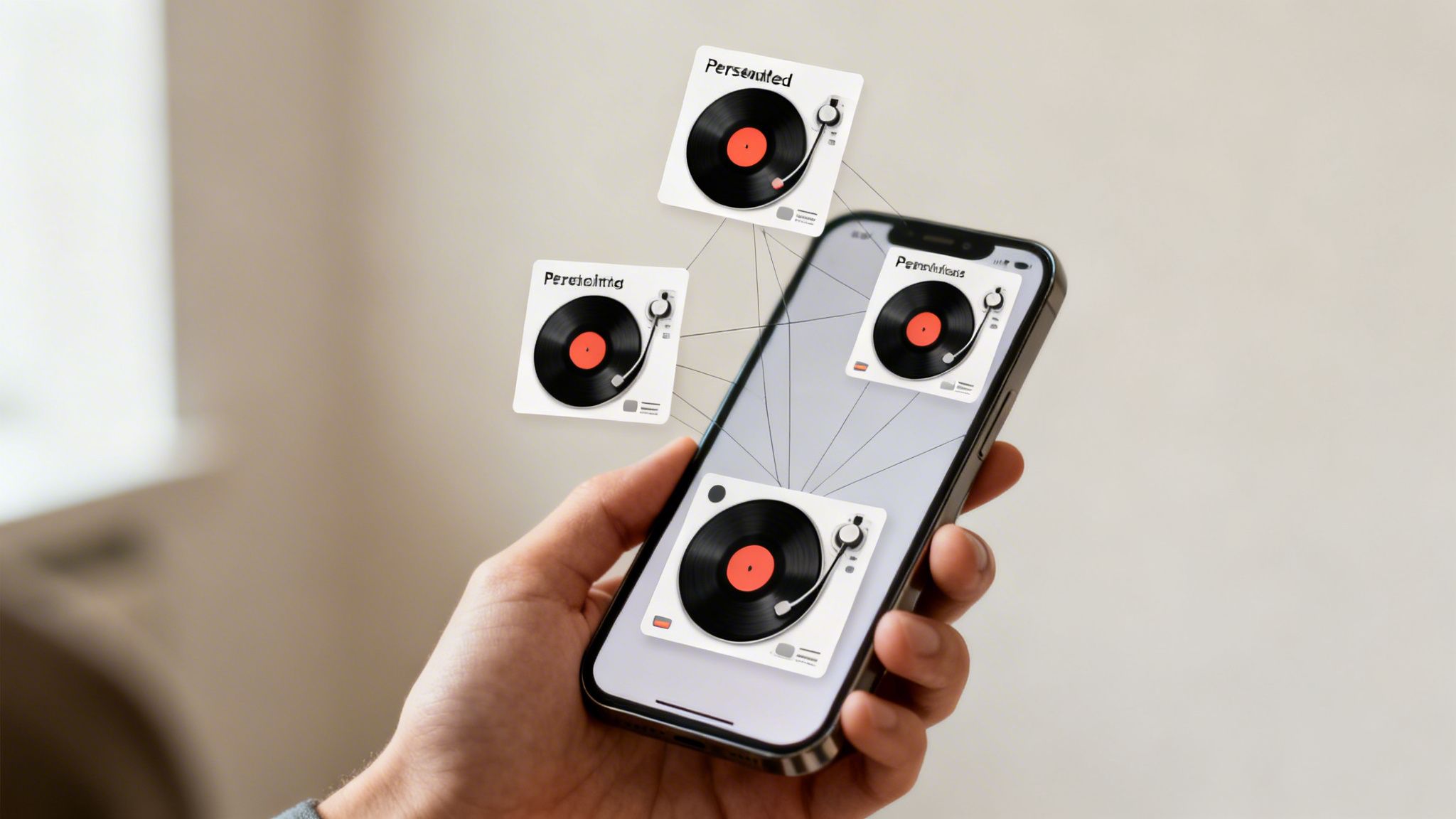
At its heart, a social media algorithm is simply a system that ranks content. Platforms like YouTube, TikTok, and Instagram are constantly analyzing your behavior—every video you finish, every account you follow, every post you linger on for just a few extra seconds. All these actions build a unique profile of your interests.
This profile is then fed into a powerful recommendation engine that serves you an endless, personalized stream of content. The main goal here isn't a secret: it’s all about maximizing your time on the app. The longer you stay, the more ads they can show you, and that’s how these platforms make their money. Every like, share, and comment is a signal that tells the algorithm, "Show me more of this!"
Why This Matters for Creators and Brands
For anyone trying to build an audience, understanding how these algorithms work is a game-changer. It’s the difference between shouting into the void and having your content discovered by thousands of new fans. When you create things the algorithm is built to promote, you’re working with the platform, not fighting against it.
Knowing the rules helps you:
- Get Discovered: Reach people who are genuinely interested in what you have to say.
- Drive Engagement: Make content that people feel compelled to share, save, and talk about.
- Grow Your Following: Build real momentum that leads to more views and better opportunities.
- Work Smarter, Not Harder: Put your energy into content formats that have the best chance of succeeding.
In the world of social media, the algorithm is not your enemy; it's the rulebook. Learning the rules is the first step to winning the game and turning your content into a magnet for the right viewers.
By looking at the platform's goals, we can reverse-engineer a strategy that works. The table below shows how the algorithm's job and your job as a creator can align perfectly.
Algorithm Goals vs. Creator Goals
| Platform Goal (The Algorithm's Job) | Your Strategy (The Creator's Job) |
|---|---|
| Maximize user session time. | Create content that holds attention (high watch time). |
| Show highly engaging content. | Produce videos that earn shares, comments, and saves. |
| Identify and promote relevant topics. | Post consistently within a specific, well-defined niche. |
| Test and validate new content formats. | Adapt to trends and use new platform features quickly. |
When you see it this way, it's clear the algorithm isn't some mysterious force—it's a system with clear objectives. By creating content that helps the platform achieve its goals, you directly help yourself achieve yours. It's a win-win.
Now that you get the basic idea, we'll dive into the specific signals for each major platform. This will help you stop guessing and start creating with purpose, accelerating your growth along the way.
The Old Days: From Simple Timelines to AI Curators
If you want to get a handle on today's social media algorithms, you have to know where they came from. It wasn't always this complicated. Back in the early days, platforms like Facebook and Instagram were basically just digital diaries. They showed you the newest posts first, in a simple reverse-chronological timeline. Success was all about timing.
This was fair, in a way. Every post got its moment at the top of the feed. But as we all started following more people and brands started posting constantly, it created a huge problem: information overload. Our feeds became a firehose of content, and it was impossible to keep up. The best stuff was getting buried.
The platforms quickly saw that showing users everything was making the experience worse, not better. They needed a smarter way to sort all this noise—a way to surface what was actually interesting to you, not just what was posted two minutes ago.
From "Newest" to "Most Relevant"
This is where the chronological feed began its slow death. Facebook led the charge way back in 2009 when it introduced the first personalized, algorithm-based feed. Instead of just looking at the timestamp, it started paying attention to signals like likes, shares, and comments to guess what you’d want to see.
They even gave it a name: EdgeRank, which rolled out in 2011. It was Facebook's first real algorithm, and it scored every post based on three simple things:
- Affinity: How connected are you to the person or page who posted?
- Weight: How engaging is this type of post? (A video was worth more than a plain text update, for example).
- Time Decay: How old is the post?
This changed everything. While the old timeline gave everyone a fair shot, the new algorithm-driven world was brutal for many. Historical data shows that by 2014, organic reach for business pages had plummeted by over 60%. Creators and brands had no choice but to get smarter and focus on genuine engagement. You can dig deeper into this major shift in how social media evolved on ResoInsights.
The Core Idea Never Really Changed
Even though today's algorithms are way more sophisticated, the basic logic from over a decade ago is still the same. The goal has always been to measure and reward what people actually care about. Likes, comments, shares, and now watch time—that’s the currency of social media. It always has been.
Think of it like this: the old chronological feed was like a library that only sorted books by the date they were published. The algorithmic feed is like having a personal librarian who knows your favorite authors and hands you a book they know you'll love the second you walk in the door.
Understanding this history is so important for anyone creating content today. When you're trying to figure out the "social media algorithm explained," you realize it's not about secret tricks. It’s about human behavior. The things that work now—making valuable content, building a real community, and creating stuff people want to share—are the same things that have always worked.
Viral content isn't some random accident. It’s the result of applying these time-tested rules of engagement on modern platforms. The past gives you a surprisingly clear map for what will work in the future.
How the Instagram and YouTube Algorithms Work
Every social media platform uses an algorithm, but they don't all play by the same rules. To really get how these systems work, you have to look under the hood of the video giants: Instagram and YouTube. They might both be all about video, but what they look for in your content is surprisingly different.
The big shift happened when platforms moved away from showing you things in the order they were posted. It was a total game-changer, moving from simple timelines to complex AI that tries to guess what you want to see next.
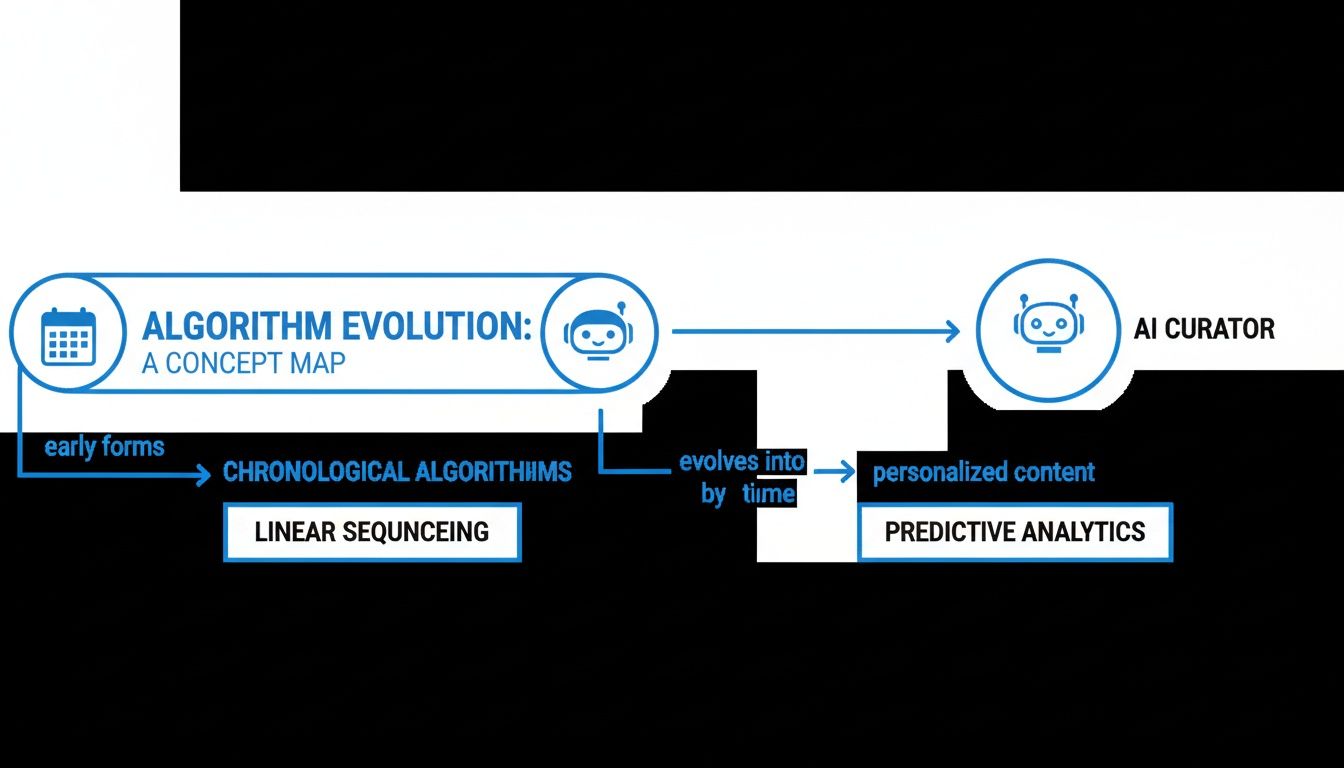
As you can see, this wasn't just about showing newer content; it was about predicting what would keep you on the app. For creators, that meant we had to completely rethink our approach.
Mastering the Instagram Algorithm
First off, Instagram doesn't have one algorithm. It has several. It uses different logic for Reels, Stories, and your main feed because each one serves a different purpose for the user. What works for Reels won't necessarily work for a feed post.
The turning point was 2016. That's when the "latest first" model died and the "best for you first" era began. Instagram dropped its chronological feed and brought in an algorithm that cared most about relationships (30-50% of ranking), followed by relevance (25%) and how recent the post was (15%). Almost overnight, organic reach for businesses plummeted to less than 10%. Creators had to learn the 3-second hook to survive—a skill that TikTok would later make famous.
Here’s how to approach each part of the app:
For Reels: It's all about entertainment and discovery. The algorithm is looking for watch time, re-watches, shares, and saves. Your goal is to create short, captivating videos that people either watch on a loop or feel compelled to send to a friend. If you need some specific tactics, our guide on how to get more views on Instagram Reels has you covered.
For Feed Posts & Carousels: This is where engagement signals are everything. The algorithm gives more weight to comments, shares, and saves than it does to simple likes. Carousels are gold here because getting someone to swipe through all your slides tells the algorithm they're genuinely interested.
For Stories: Stories are built for your closest connections. The algorithm prioritizes showing Stories from accounts you interact with the most—think DMs, replies, and reactions. Tossing in interactive stickers like polls or quizzes is a great way to jump to the front of your followers' Story queues.
The Holy Trinity of the YouTube Algorithm
YouTube has one main objective: keep people watching for as long as possible. Its recommendation engine is an absolute beast, driving over 70% of all time spent on the platform. If you want to get discovered, you have to please the algorithm by mastering what I call the "holy trinity" of YouTube metrics.
Think of YouTube like a first date. Your thumbnail and title are the first impression (CTR). The video itself is the compelling conversation that makes them want to stay (AVD). And if the date goes really well, they'll want to see you again soon (Session Time).
Let's break down those three pillars:
Click-Through Rate (CTR): This is simple. When YouTube shows your video's thumbnail and title to someone, do they click on it? A low CTR is a red flag to the algorithm that your packaging isn't working, and it'll stop promoting your video. A high CTR, on the other hand, signals massive interest.
Average View Duration (AVD): This is arguably the most important metric. How long do people actually watch your video? A high AVD proves your content delivers on the promise made by your title and thumbnail. Back in 2016, YouTube followed Instagram's lead and started prioritizing watch time over raw views, giving a huge boost to videos that could keep over 50% retention in the first 30 seconds.
Session Time: This is the total time a viewer spends on YouTube after watching your video. If your video sends them down a rabbit hole of watching more videos (yours or even someone else's), the algorithm sees you as a valuable partner. Using end screens and playlists to point viewers to your other content is the best way to improve this.
Ultimately, winning on YouTube is about creating a positive feedback loop. A great thumbnail earns the click, a great video holds attention, and a smart strategy keeps viewers on the platform. If you're serious about gaining traction, it's worth learning more about optimizing videos for YouTube.
Decoding the TikTok Algorithm for Viral Growth
While other platforms have algorithms with a dozen different goals, TikTok’s is brutally simple and incredibly powerful. Its whole world spins around a single, all-important feed: the ‘For You Page’ (FYP). This isn't just a feed; it’s a finely tuned discovery engine built to serve you an endless, addictive stream of videos it knows you'll love.
The best way to think about the TikTok algorithm is like a massive, ongoing talent show. Every single video you post, no matter who you are, gets a small audition. It doesn't matter if you have ten followers or ten million. Your video is shown to a small test audience, and its entire future is decided in those first few interactions.
If that initial group is hooked, the algorithm rewards you by pushing the video to a bigger audience. And if they love it, it goes to an even bigger one. This is the secret sauce behind TikTok's magic—a truly merit-based system where literally anyone can go viral overnight.
The Key Signals That Fuel the FYP
So, how does the algorithm decide if your "audition" was a success? It’s not about just getting views. It’s about proving your content is genuinely captivating, and it measures this with a few signals that matter more than anything else.
Here’s what the algorithm is really looking for:
- Watch Completion Rate: This is the big one. Did they watch your entire video? A high completion rate is the strongest signal you can send that your content is worth watching.
- Re-watches: Even better than watching it once is watching it twice. A re-watch tells the algorithm your video had something special—a great punchline, a shocking twist, or valuable information people needed to see again.
- Shares: This is the holy grail. When someone hits that share button, they’re putting their own reputation on the line to recommend your content. The algorithm sees this as a massive vote of confidence.
- Comments: A video that sparks a conversation is a video that’s building a community. Comments show your content was interesting enough to make people stop and type, which keeps them on the platform longer.
Look closely at that list. What’s missing? Follower count and likes are nowhere near the top. While they certainly don't hurt, they are far less important than the raw, in-the-moment performance of the video itself. This is a complete game-changer compared to older platforms where your existing audience size is often your ceiling.
The launch of TikTok in 2016 marked the pinnacle of recommendation-based social media. Its For You Page, where users spend an incredible 90% of their time, is powered by an engine that analyzes thousands of signals to deliver hyper-personalized content, often from accounts they don't even follow.
How to Create for the TikTok Algorithm
Unlike Instagram's model, which is built around who you follow, TikTok gives every single video a shot at stardom. When you post, it’s shown to that tiny test group, and if it hits the right engagement notes, it can quickly scale to millions. It’s this explosive model that helped TikTok hit 1 billion users by 2018, with videos seeing engagement rates 700% higher than on Instagram. You can dive deeper into the mechanics of this on YouTube to see how TikTok's interest-predicting algorithm works.
To consistently pass that initial test, you have to create content specifically designed for how the algorithm thinks. Your number one job is to maximize watch time. Start with an irresistible hook in the first three seconds—that’s non-negotiable. Use fast edits, ask a burning question, or create a "wait for it" moment that keeps people glued to their screen.
Another huge lever you can pull is trending audio. Think of it as a cheat code. When you use a popular sound, you’re telling the algorithm exactly how to categorize your video and who to show it to: people who have already shown interest in that trend. It’s a shortcut to getting in front of the right audience.
When you focus on these fundamentals—a strong hook, great retention, and genuine engagement—you're not just hoping to get on the FYP; you're building content that deserves to be there. For more specific strategies and ideas, be sure to check out our complete guide on how to go viral on TikTok.
Actionable Strategies to Master the Algorithms
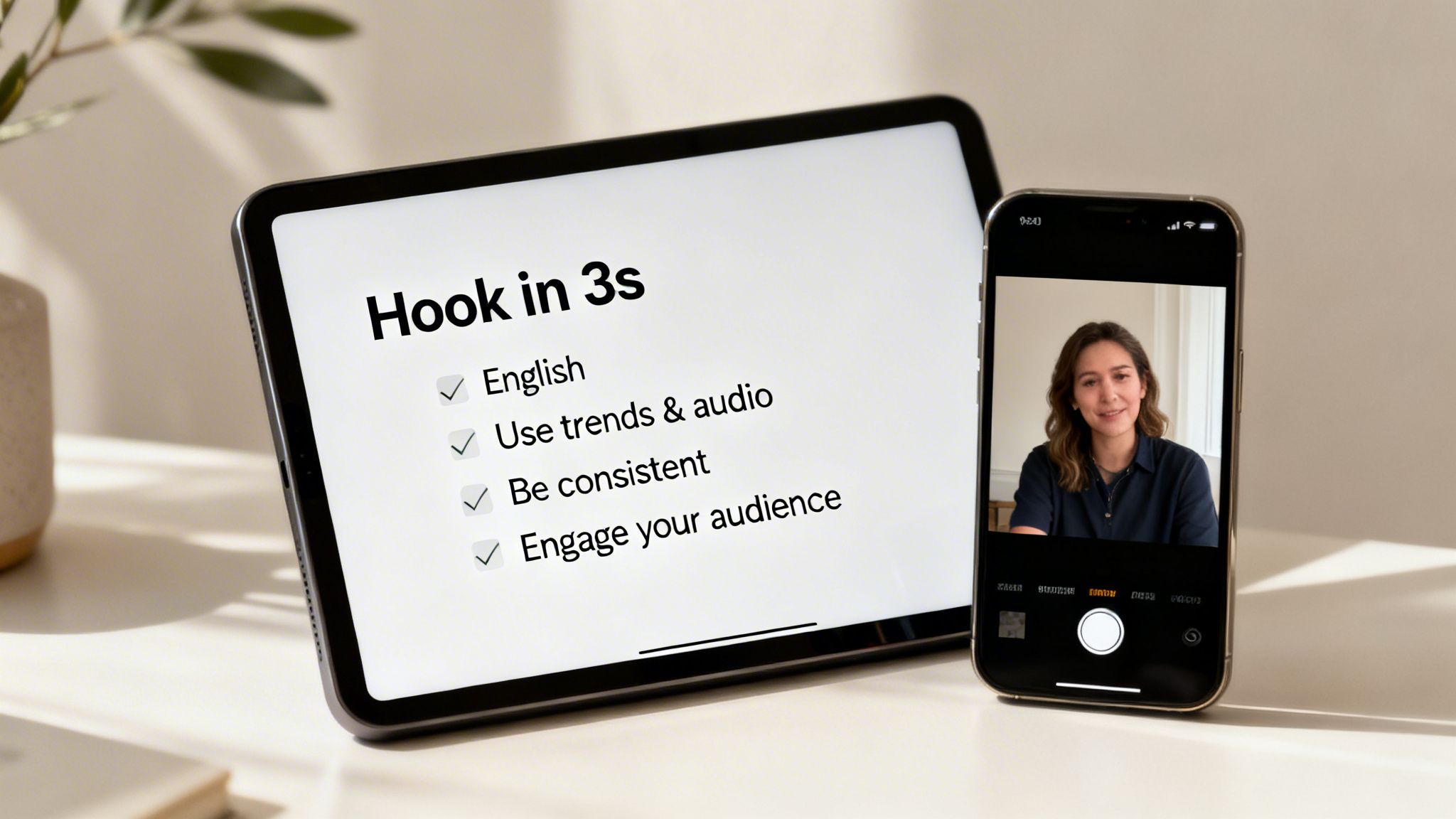
It's one thing to understand the theory behind social media algorithms, but it's another thing entirely to put that knowledge to work. So, let’s get practical. Here's a playbook of repeatable strategies you can start using right now to create content that algorithms actually want to show people.
The real goal isn't just to score a single viral hit. It's about building a system for consistent growth that doesn't lead to burnout. Having a solid plan is half the battle, and a good social media marketing checklist can really help keep your efforts on track.
Hook Viewers in the First Three Seconds
In an ocean of content, you have just a moment to make someone stop scrolling. Your first three seconds are the most valuable real estate you have. If you can’t grab a viewer's attention instantly, they'll swipe away, which tells the algorithm your content isn't very interesting.
This is especially true for TikTok and Instagram Reels. A low initial watch time can kill a video’s reach before it ever gets a chance. A strong hook isn't a "nice to have"—it's a must.
Here are a few proven ways to nail the opening:
- Ask a burning question: Start with something your ideal viewer is dying to know. Think, "Are you making this one critical mistake in your videos?"
- Create a curiosity gap: Kick things off with an unexpected visual or a "wait for it" moment that makes people need to see the payoff.
- Make a bold claim: Hit them with a surprising stat or an opinion that goes against the grain.
When you front-load the most interesting part of your video, you give yourself the best possible chance to hold someone's attention. This directly feeds into watch time and completion rate, two of the most important signals for almost every video algorithm.
Leverage Trends and Trending Audio
Trends aren't just for fun—they're a massive opportunity for discovery. When you use a trending sound or participate in a popular format, you’re tapping into a conversation that's already happening. The algorithm knows exactly who likes that kind of content and can quickly push your video to a ready-made audience.
Think of it as a shortcut. Instead of asking the algorithm to find a new audience for you from scratch, you're saying, "Hey, show this to all the people who already love this sound!"
Using trending audio gives your content a built-in distribution list. The algorithm has already identified an audience that responds to that specific sound or format, giving your video an immediate advantage in reaching interested viewers.
Keep an eye on your "For You" page and notice which sounds keep popping up. You don't have to jump on every single trend, but weaving in a few that fit your niche can give you a serious visibility boost and introduce your profile to a wave of new people.
Maintain a Consistent Posting Cadence
Algorithms on platforms like YouTube, Instagram, and TikTok all favor consistency. Sticking to a predictable schedule accomplishes two things: it trains your audience on when to expect new content, and it gives the algorithm a steady flow of data to better understand what you're all about.
This doesn't mean you need to post five times a day. Far from it. Quality will always trump quantity. One great video posted twice a week is infinitely more powerful than five mediocre ones.
The trick is to find a rhythm you can stick to without your quality dropping off. Consistency shows the algorithm you're a reliable creator who's serious about the platform, which can earn you more favorable placement in the feed over time.
Actively Engage Your Community
Social media is a two-way street. The algorithms don’t just watch how people react to your content; they also look at how you interact with them. Responding to comments, answering questions, and just being part of the conversation are huge signals that you're building a healthy community.
Meaningful interactions—especially within the first hour of posting—can be a powerful trigger for algorithmic reach.
- Spark conversations: End your captions with a question to get people talking.
- Respond thoughtfully: Don’t just reply with an emoji. Ask follow-up questions and keep the dialogue going.
- Encourage DMs and saves: Create content people will want to reference later, like a checklist or a tutorial. A simple "Save this for later!" can do wonders for that metric.
By building a real community, you create a loyal base that engages with your content right away. For more ideas, our guide on how to increase social media engagement goes into even more detail. That early flood of activity signals to the algorithm that your post is a winner, encouraging it to push it out to a much wider audience.
Your Top Questions About Social Media Algorithms, Answered
Even when you think you have a handle on how algorithms work, the ground always feels like it's shifting beneath your feet. It’s easy to get tangled up in myths and outdated advice.
Let's cut through the noise. Here are some straight, simple answers to the questions I hear most often from creators and brands.
How Often Do Social Media Algorithms Change?
The short answer? Constantly. Platforms like TikTok and Instagram are running countless small tests every single day, making tiny tweaks you'll never even notice. Then, a few times a year, they'll roll out a bigger, more significant update that might get a public announcement.
But here’s the secret: the core of what these platforms want almost never changes. Don't get distracted trying to chase every little rumor.
Algorithms will always, always reward content that does three things well:
- It grabs people’s attention and keeps them watching.
- It gets people talking, sharing, and saving.
- It keeps users happily scrolling on the platform for longer.
If you focus on making genuinely good stuff for your audience, you're already playing the long game. A solid content strategy is your best defense against any algorithm change because you're already giving the platform exactly what it wants.
Is It Better to Post Daily or a Few Times a Week?
This is the classic debate, but the answer is surprisingly simple: quality and consistency beat frequency every single time. The algorithm doesn't hand out bonus points just because you showed up every day.
Think about it from your audience's perspective. A fantastic video twice a week is way more valuable than a mediocre video every single day. Forcing yourself to post daily is a quick recipe for burnout, and when your quality drops, your engagement will too.
The right posting schedule is the one you can actually stick to without your content quality taking a nosedive. Find your rhythm, whether it's three times a week or once a day, and own it. You're training both your audience and the algorithm what to expect from you.
Does Deleting a Poorly Performing Post Hurt My Account?
Nope. There's zero concrete evidence that deleting a flop will get you penalized by the algorithm. The platforms care about the overall health and performance of your account, not one post that didn't land.
In fact, on a platform like TikTok, it's a pretty common move for creators to delete a video and re-upload it a few hours later. It’s like giving the content a fresh start with a new test audience, and sometimes, it actually works. Don't sweat the duds; just focus on your next post.
Do Hashtags Still Matter for Algorithm Visibility?
Yes, they absolutely do, but how we use them has completely changed. The old method of "hashtag stuffing"—just dumping 30 generic tags like #fyp or #viral at the end of your caption—is dead. Today, it’s all about being precise.
Think of hashtags as road signs. They help the algorithm instantly figure out what your content is about and who it should show it to.
For the best results, stick to a handful of super-relevant tags:
- Use around 3-5 specific hashtags that nail down your video's topic.
- Mix it up with one or two broad tags (like #VideoEditing) and a few niche ones (like #CapCutTips).
- Remember that keywords matter everywhere—in your caption, the text on screen, and even what you say out loud.
Targeted hashtags give the algorithm clarity. They aren't a magic wand for going viral, but they make sure your content finds the right home.
Ready to stop fighting the algorithm and start making content that it loves? Aicut helps you create high-quality, algorithm-friendly videos consistently. With proven templates, AI-powered creation, and easy scheduling, you can turn your ideas into content that grabs attention and grows your audience. Start creating with Aicut today and see the difference.