
Using AI to create social media content is all about working smarter, not harder. It helps you brainstorm, draft, and publish posts, letting you scale up your output without hitting a wall. This isn't about replacing human creativity; it's about amplifying it by turning the tedious, time-sucking parts of the job into smooth, automated workflows.
Why AI Is Your New Social Media Copilot

Let's be real: managing social media channels has become a whole new ballgame. What was once a niche experiment—using AI for content—is now a core part of any serious marketing strategy. But this isn't about letting bots run your accounts. It’s about giving social media managers some much-needed superpowers.
The fundamental challenge hasn't changed. You still need to produce a constant stream of high-quality, engaging content that doesn't drain your team or your budget. AI provides a real, practical answer to this age-old problem. It helps teams manage the entire content lifecycle, from the first spark of an idea to the final scheduled post, with way more speed and efficiency.
The biggest win? It hands marketers back their most valuable asset: time. Those hours once lost to repetitive tasks can now be invested in big-picture strategy, genuine community engagement, and creative thinking.
The Tangible Impact of AI on Social Strategy
This isn't just hype; the numbers back it up. The global market for AI in social media is on track to hit around $11.99 billion by 2031. That kind of explosive growth happens for a reason—it delivers real, measurable benefits.
Right now, 61% of organizations say their main reason for adopting AI is to reduce their team's workload, while 38% are focused on boosting efficiency. Even better, businesses using AI to generate content are seeing engagement rates climb by an average of 15-25%.
"Think of AI not as a replacement for your marketing team, but as a tireless assistant that handles the grunt work. It generates drafts, resizes images, and suggests headlines, so your team can focus on the human element—strategy, storytelling, and building relationships."
How AI Enhances Your Workflow
Bringing AI into your social media process is about more than just doing things faster. It fundamentally changes how you develop and deploy content. For a deeper dive into how artificial intelligence fits into the bigger picture, check out these insights from an AI Digital Marketing Expert.
Let's break down the advantages of adding an AI-powered system to your social media efforts.
Key Benefits of an AI-Powered Social Workflow
Integrating AI into your daily tasks brings a host of benefits that go beyond just saving time. Here’s a clear look at what you stand to gain.
| Benefit | Description | Example Impact |
|---|---|---|
| Overcome Creative Blocks | Instantly generate dozens of post ideas, captions, and hooks from a simple prompt, kicking writer's block to the curb. | A fashion brand gets 50 new Instagram Reel ideas in 5 minutes for its summer collection launch. |
| Maintain Brand Consistency | Train the AI on your brand’s unique voice, ensuring every piece of content sounds like it came from you. | A B2B tech company maintains its professional, witty tone across 100+ LinkedIn posts a month. |
| Scale Content Production | Turn a single approved idea into multiple formats tailored for different platforms—a tweet, an Instagram story, and more. | A single blog post summary is repurposed into 5 tweets, 3 LinkedIn posts, and a video script in under 10 minutes. |
| Data-Informed Creativity | Analyze performance data to see what resonates with your audience, taking the guesswork out of your content strategy. | The AI identifies that question-based posts drive 30% more comments, guiding the next month's content plan. |
Ultimately, these benefits work together to create a more agile and effective social media machine, freeing your team to focus on what humans do best: connecting with other humans.
Building Your AI-Powered Content Engine
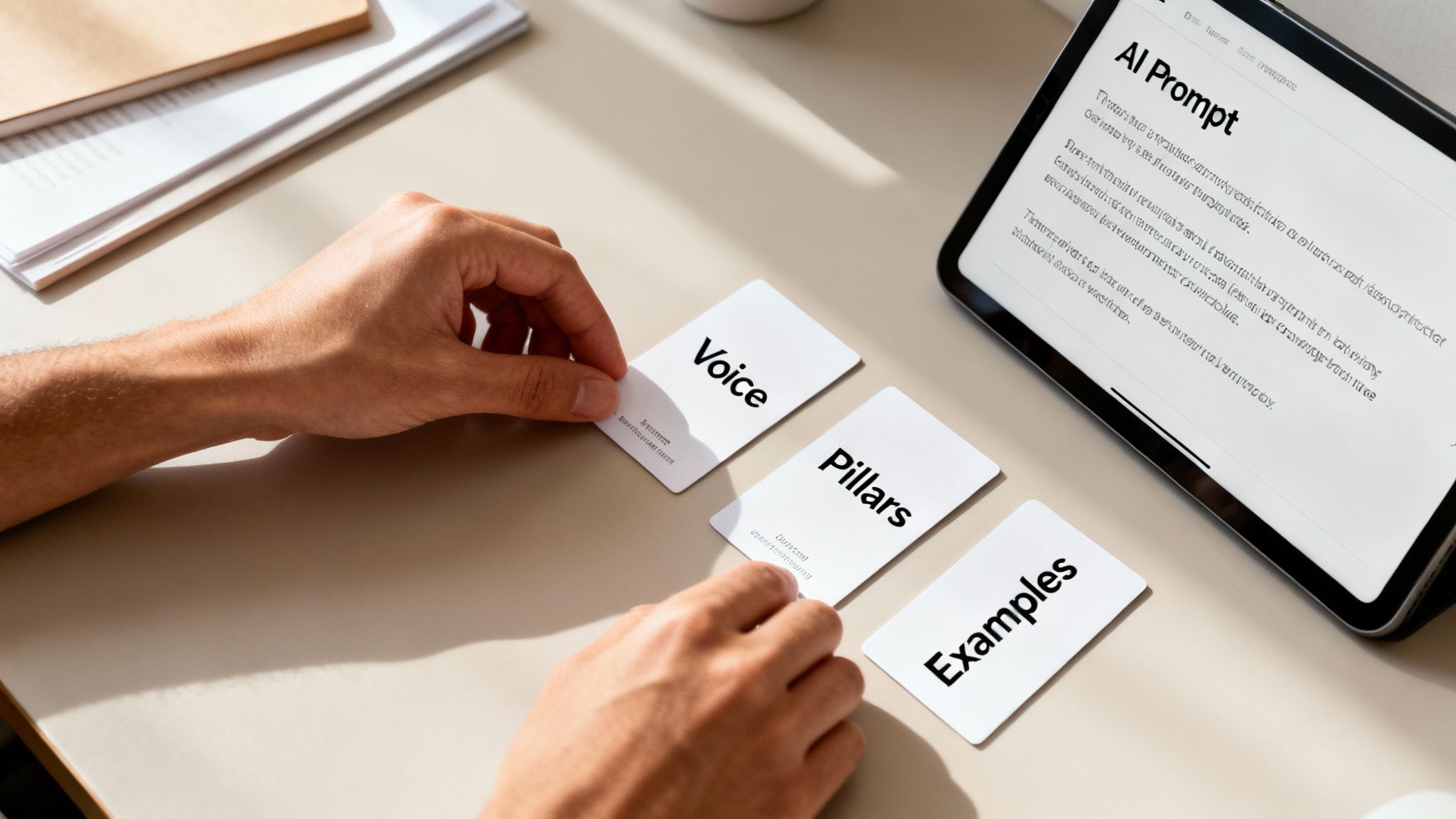
Before you can fire off a single AI-generated post, you need to build the machine that creates them. A smart AI content strategy isn't about just picking a cool tool; it's about creating a solid, repeatable system. This foundation is what ensures every piece of content feels consistent, stays on-brand, and actually works toward your goals.
At the heart of this system is one critical task: teaching your AI to think like you. AI tools are incredibly capable, but they aren't mind readers. You have to give them clear instructions, solid examples, and a deep understanding of your core themes—or content pillars—that define your social media game.
Getting this initial setup right is what separates generic, robotic posts from content that genuinely connects with your audience. The idea is to build a framework where the AI becomes a natural extension of your marketing team, making every campaign from here on out faster and way more effective.
Translating Your Brand Voice for AI
Your brand voice is so much more than a vague tone. It’s the specific words you choose, the phrases you repeat, even the way you use emojis. To get anything close to consistent results from an AI, you have to translate these quirks into crystal-clear instructions. Think of it as creating a "brand bible" just for your AI assistant.
Start by jotting down your key characteristics. Are you witty and informal? Or more professional and authoritative? Maybe you're empathetic and supportive. Document these traits, but don't stop there—show, don't just tell.
For example, instead of telling the AI to be "friendly," give it before-and-after examples. Show it a generic sentence and then rewrite it exactly how you would. This process of "fine-tuning" the AI with your own content is the secret to getting authentic-sounding results.
By feeding the AI a library of your best-performing posts, you’re not just giving it instructions; you're handing it a blueprint for success. It learns what clicks with your specific audience, so future content is modeled after proven winners.
Establishing Your Core Content Pillars
Content pillars are simply the main topics you talk about over and over again. They give your content calendar structure and make sure you're always delivering value on the subjects your audience cares about. You absolutely need to define these before letting AI take the wheel.
Your pillars should be a direct line between what your audience wants and what your business offers. For a fitness brand, the pillars might look something like this:
- Workout Tutorials: Short, actionable video guides and tips.
- Nutrition Advice: Simple recipes and myth-busting facts.
- Motivational Stories: User-generated content and success stories.
- Product Spotlights: Creative ways to use the brand's products.
Once you have these pillars nailed down, you can create specific prompt templates for each one. This makes generating content with AI incredibly efficient. You just pick a pillar, grab its template, and let the AI spin up a bunch of on-topic ideas and drafts in seconds.
Selecting the Right Tools for the Job
With your brand voice and content pillars sorted, it's time to pick your toolkit. The market is flooded with options, from massive all-in-one platforms to highly specialized tools for text, images, or video. To build your content engine right, it pays to explore the best AI tools for content creators and see what fits your workflow.
The right choice really comes down to your team's specific needs.
- All-in-One Platforms: Think tools like Hootsuite or Sprinklr. They combine content creation with scheduling, analytics, and team collaboration. They’re great for larger teams that need everything in one place.
- Specialized Text Generators: Tools like Jasper and Copy.ai are masters of the written word. They excel at everything from social captions to ad copy and usually have powerful brand voice features built-in.
- Visual and Video Generators: A new wave of platforms can create stunning visuals and short-form videos from simple text prompts. These are perfect if you need a high volume of content for Instagram, TikTok, or Pinterest. To see these in action, take a look at our guide on the best AI tools for creators: https://www.aicut.pro/blog/best-ai-tools-for-content-creators
From my experience, the best setup is often a hybrid one. You might use a central platform to manage everything but bring in specialized tools to fill the gaps. This gives you a flexible and seriously powerful content engine that's perfectly suited to what your brand needs.
Your AI Workflow: From a Spark of an Idea to a Published Post
Alright, let's get down to business and move from theory to a real-world, practical workflow. This is how you take a social media campaign from a blank page to a live post using AI as your creative partner. This isn't about just hitting a "generate" button and hoping for the best; it's about building a smart, strategic process.
The whole point is to create a repeatable system that not only saves you a ton of time but actually elevates the quality of your content. We'll start with the fun part—brainstorming—then move into creating the assets themselves (captions, scripts, visuals), and wrap it up with the most important step: the human touch.
Kicking Things Off With AI-Powered Brainstorming
Every great post begins with a solid idea. We've all been there, staring at a blank content calendar, feeling completely uninspired. This is precisely where AI can step in and feel like a creative superpower.
The trick is to be specific with your prompts. Vague requests get vague results. Think of yourself as a director guiding an actor—the more context and direction you give, the better the performance.
Here are a few prompt templates I use to get the ball rolling:
- For a Monthly Content Calendar: "I need a 30-day Instagram content calendar for a sustainable fashion brand. Our main content pillars are behind-the-scenes production, customer spotlights, and styling tips. Give me a mix of Reels, carousels, and single-image posts, all with an inspiring and educational tone."
- For Finding Unique Angles: "We're a B2B SaaS company selling project management software. Give me 10 creative angles for a LinkedIn post about our new 'automated reporting' feature. I don't want a boring list of benefits. Focus on the pain points marketing managers face with manual reporting."
- For a TikTok Series: "Brainstorm a 5-part TikTok series for a local coffee shop trying to increase foot traffic. The vibe should be funny and feature our baristas. Can you also suggest a trending audio for each video idea?"
This first step alone fills your content pipeline with high-potential concepts, saving you from that daily creative grind.
Generating Your Core Content Assets
Once you've got a bank of ideas you're excited about, it's time to actually create the content. This is where specialized AI tools can slash your production time. It's not just a future trend, either—it's happening now. By 2025, an estimated 77% of marketers will be using AI to write social media copy, while 70% already use it for brainstorming, according to data from Talkwalker.com.
For visual platforms like Instagram, you can use AI to whip up incredible images or even draft initial video concepts. Tools like Aicut are a game-changer here, letting you generate photorealistic clips or UGC-style product videos from a simple text description. If you're looking for high-volume visual content, this is a lifesaver. You can actually learn more about how to generate AI video from text in our dedicated guide.
Here's a quick peek at how you can use an AI video platform to generate viral niche templates, POV-style videos, and so much more.
This interface shows just how simple it can be. You use text prompts and pre-built templates to create high-quality video content designed specifically for platforms like TikTok and YouTube.
The big takeaway here is that you can produce a wide variety of platform-specific content in a fraction of the time it would take to do it all by hand.
Pro Tip: Create a swipe file of your best-performing posts and feed them to your AI tool. You're essentially training the AI on what resonates with your audience, which means future generations will be modeled after what's already proven to work.
The Human-in-the-Loop Review: Your Most Crucial Step
This final part of the process is non-negotiable. It's what separates truly great AI-assisted content from the generic, robotic posts that everyone scrolls past. Think of AI as your incredibly fast and creative first-draft writer; you are the editor-in-chief who provides the final polish and strategic sign-off.
Your review should always hit these key points:
- Brand Voice Check: Does this sound like you? AI is great at mimicking tone, but it often misses the little quirks, inside jokes, and specific emotional nuances that make your brand unique. Tweak the wording until it feels authentic.
- Fact-Checking: Never trust, always verify. AI models can sometimes "hallucinate" or pull outdated information. Double-check any stats, claims, or data points before you hit publish.
- Strategic Alignment: Does this post have a purpose? Whether your goal is to drive traffic, boost engagement, or get leads, make sure the final version—especially the call-to-action—is perfectly aligned with your objective.
- Cultural Context: This is a big one. AI has no real-world awareness. It won't know about a breaking news story or a sensitive cultural event that could make a post seem tone-deaf. This human filter is absolutely essential for protecting your brand.
By weaving this simple workflow—brainstorm, generate, review—into your routine, you create an incredibly powerful content engine. It gives you the speed of AI combined with the strategic, creative intuition that only a human expert can bring to the table.
Using AI To Optimize And Automate Distribution
Making great content is a huge win, but it's only half the job. The other, and arguably more critical, half is getting that content in front of the right people. This is where AI stops being just a creative helper and becomes your strategic distribution powerhouse, making sure your hard work actually gets seen.
The whole point is to stop guessing and start making decisions based on real data. Forget posting whenever it feels right. AI tools can dig through mountains of information to find the exact moments your audience is scrolling and ready to engage on each platform.
This isn't just about scheduling; it’s about turning your content calendar into a high-performance delivery system that squeezes the most reach and engagement out of every single post.
Pinpointing The Perfect Posting Times
Every social network has its own vibe, and every audience has its own schedule. A post that crushes it on LinkedIn at 9 AM on a Tuesday will completely flop with your TikTok crowd on a Friday night. AI-powered scheduling tools take all the mystery out of this.
These systems look at your past engagement, your followers' activity patterns, and even what your competitors are doing to find your unique "golden hours" on each network. So you’re not just posting at times that are generally popular; you’re posting when your specific audience is most likely to see and interact with your stuff.
For example, an AI tool might find that your North American Instagram followers are most active between 7 PM and 9 PM EST, while your audience in Europe is engaging most around 1 PM GMT. Trying to track that manually would be a nightmare. AI handles it without breaking a sweat. If you want to go deeper on this, check out our guide to unlock the best times to post on TikTok for maximum engagement.
AI scheduling is about precision, not just automation. It ditches the old 'spray and pray' method for a laser-focused approach, giving every post the best possible chance to make an impact right out of the gate.
Adapting Content For Every Platform
One great piece of content can have many different lives if you tailor it correctly. A detailed LinkedIn article can be sliced into a punchy X (formerly Twitter) thread, a beautiful Instagram carousel, and a quick-hitting TikTok video. The only problem? Reformatting that content for each platform by hand takes forever.
This is another spot where AI content creation for social media is a game-changer. Modern AI tools can take one core piece of content and instantly spin up versions that feel native to each platform.
- For X (Twitter): It can chop a long blog post into a series of sharp, 280-character tweets, adding the right hashtags and a hook to grab attention.
- For Instagram: The AI can pull out key quotes and stats to design eye-catching carousel slides or even write a script for a Reel.
- For LinkedIn: It can give the content a more professional tone, adding business-focused bullet points and a clear call-to-action.
This process makes sure your message is perfectly suited for the audience and format of every network, which massively boosts its reach and impact without you having to do all the extra work.
This infographic shows a simple AI-powered workflow, from the initial idea all the way to generation and the final review.
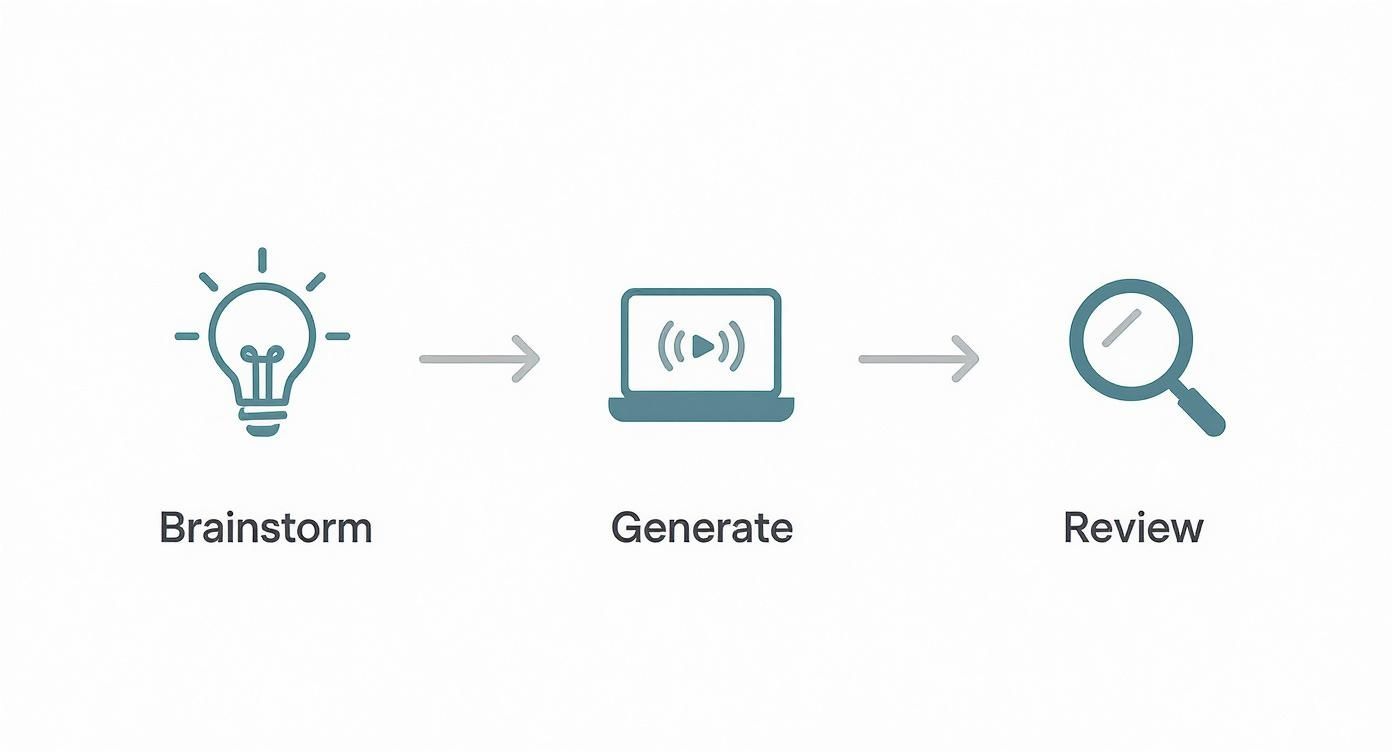
As you can see, the AI workflow is designed to be seamless, with each step feeding into the next to get content out the door faster.
Improving Performance With A/B Testing
Is that headline really the best one you could have written? Would a different image get more clicks? In the past, finding out meant running manual A/B tests, which were slow and a pain to manage. Now, AI can automate that whole feedback loop.
You can give an AI tool a few different headlines, images, or calls-to-action for a single post. The tool can then predict which combination will likely perform best or even run tiny, live tests to get real-world data quickly.
This creates a powerful cycle of constant improvement. Every post becomes a learning opportunity, sending data back to the system to make your next piece of content even stronger. The results are pretty staggering. Statistics show that 27% of marketers using AI can run campaigns in two weeks or less—a speed that marketers without AI just can't match. On top of that, teams using AI report that their campaigns perform 66% better. You can see more stats like these on social media marketing performance.
When you bring AI into your distribution, you’re not just scheduling posts. You’re building an intelligent system that constantly learns and sharpens your strategy for better and better results.
Advanced AI Techniques For Deeper Engagement
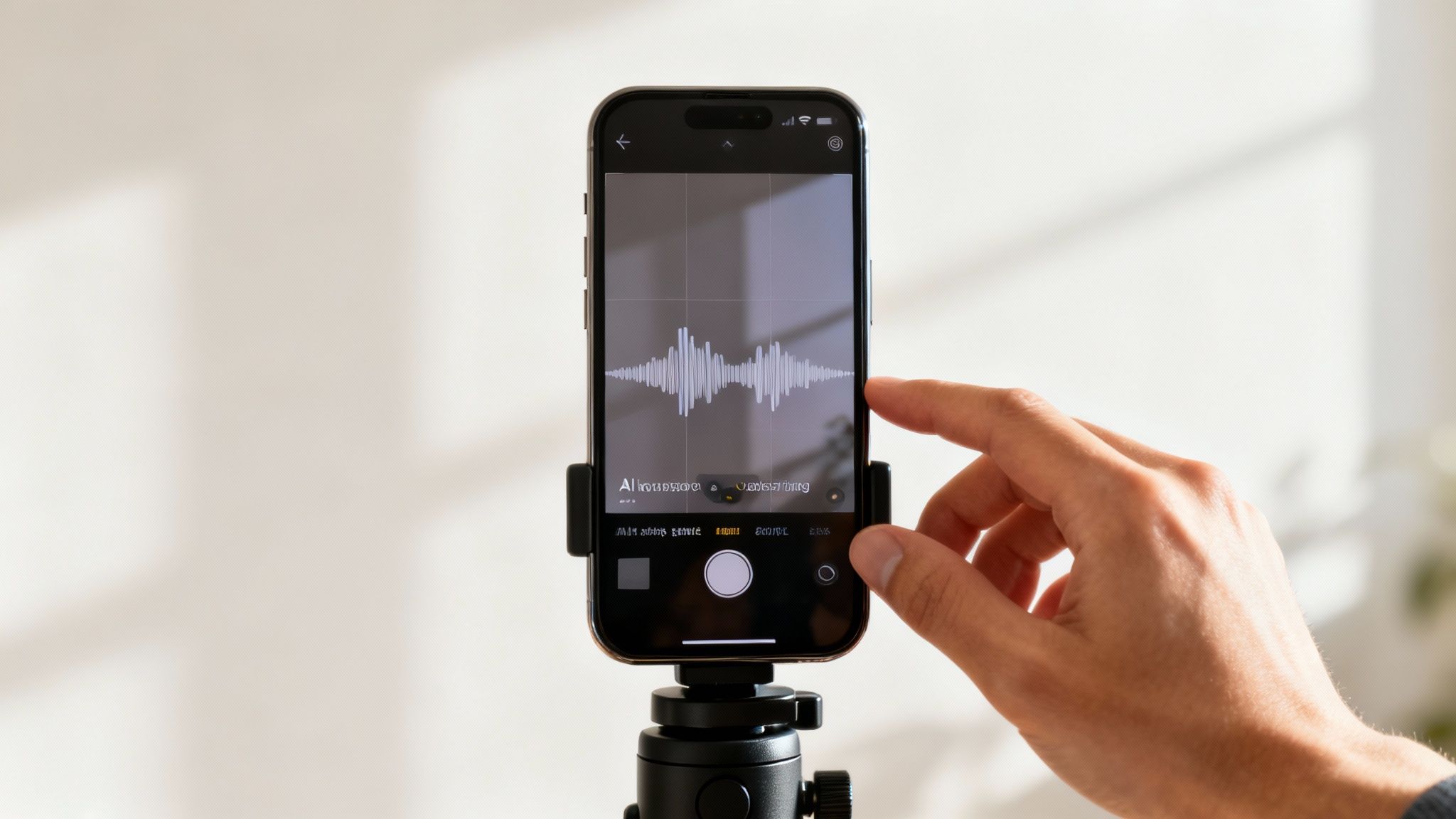
Alright, you’ve got a solid workflow down for creating and publishing content. Now it’s time to really start turning heads. To stand out in a feed that’s more crowded than ever, you need to go beyond the basics of text and static images. Let's get into the more advanced ways you can use AI content creation for social media to build a brand that people actually remember.
This is the point where AI stops being just a time-saver and becomes a real creative partner. We’re talking about producing dynamic content that, until recently, would have required a ton of specialized skill or a hefty budget. The goal here is to stop just posting and start creating experiences that stick with your audience.
Crafting Engaging Short-Form Videos
Let's be real: short-form video isn't just a trend anymore. For platforms like TikTok and Instagram, it's the main event. But keeping up with the demand for high-quality, engaging videos is a massive time-suck. This is where AI video tools like Aicut can be a total game-changer.
Instead of blocking out hours to film and edit, you can literally create polished, eye-catching video clips from a few lines of text. Think about it—you could generate a slick product demo or a whole series of user-generated-style testimonials without ever touching a camera.
With these tools, you can:
- Generate Photorealistic Clips: Create visuals that look so real and high-quality, they're perfect for ad campaigns or showcasing your products.
- Jump on Viral Formats: Instantly create videos in popular styles, like those POV shots or Reddit story videos that are all over everyone's feed.
- Animate Static Images: Bring a boring photo to life by turning it into an animated character or a moving graphic. It’s an easy way to add some flair to your feed.
This isn't about replacing your entire video strategy, but it allows you to experiment and produce content at a scale you couldn't before, keeping your feed fresh and preventing burnout.
Social Listening And Trend Spotting
The best content always feels like it’s right on time. AI can be your secret weapon here, constantly scanning social media to spot what's about to blow up—from emerging memes and viral sounds to important conversations happening in your industry.
Forget spending hours doomscrolling for "inspiration." An AI tool can sift through mountains of data in moments. It can flag a new meme format that's starting to take off or notice a specific customer complaint that keeps popping up. This lets you get in on the action early, making your content feel relevant and part of the cultural zeitgeist.
When you use AI for social listening, you're no longer just reacting to trends—you’re getting ahead of them. Your brand becomes part of the conversation, not just another voice shouting from the sidelines.
Hyper-Personalization At Scale
Nobody likes generic, one-size-fits-all content. Your audience expects you to know them and talk to them like you do. Personalizing your content for every single follower sounds like an impossible task, but AI makes it totally doable.
AI can quickly analyze your audience data, sorting followers into different groups based on their demographics, online behavior, or how they’ve interacted with you in the past. Then, you can use generative AI to write specific messages for each of those groups.
For example, you could easily create two different versions of a promotional post:
- One designed for new followers that warmly introduces your brand and what you stand for.
- Another for your loyal customers that gets right to the point, highlighting a new feature they’ve been asking for.
This kind of targeted messaging makes your followers feel seen and valued, which is huge for building genuine brand loyalty. Your social media account transforms from a megaphone into a place for real, meaningful conversations.
The Future: Community Management And Influencers
Looking ahead, AI is poised to completely change how we handle community management. AI-powered chatbots are getting smarter by the day. Soon, they'll be able to handle common customer questions, welcome new members to your community, and even help moderate comments to keep the vibes positive.
We're also seeing the wild rise of virtual influencers—personalities created entirely by AI who have their own massive followings. Brands are already starting to collaborate with these digital characters for campaigns. It's a fresh way to reach new audiences without the usual headaches of traditional influencer marketing. While it’s still early days, these trends show how AI content creation for social media is weaving its way into every single part of how we connect with our audience online.
Got Questions About Using AI for Your Content? Let's Clear Things Up.
Jumping into AI for your social media content can feel like stepping into a whole new world. And with anything new, there are always a ton of questions. I get it. You're wondering about authenticity, how to even begin, and whether your account will get flagged. Let's tackle those head-on.
The number one fear I hear is, "Won't my content just sound like a robot wrote it?" It’s a fair point. We've all seen that generic, soulless AI text. But here’s the secret: the AI is only as good as the instructions you give it.
You have to teach it to be you. This means feeding it your best-performing posts, giving it your brand style guide, and getting really specific with your prompts. When you show the AI what your brand's unique wit, empathy, or authority sounds like, it starts to mimic that—not some generic template.
Will Using AI Get My Account Penalized?
This is a big one, but let's bust this myth right now. Social media platforms don't care if an AI helped you. They care about quality and whether people are actually engaging with your content.
Think about it from their perspective. Their algorithms are built to promote content that keeps users on the platform longer. If your AI-assisted posts are getting likes, comments, and shares, the algorithm just sees great content and shows it to more people. It’s that simple.
The real danger isn’t using AI; it’s using it poorly. If you publish low-effort, unedited, or off-brand content, your performance will suffer—no matter who or what created it. Always focus on adding value for your audience.
What's the Best Way to Get Started?
You don't need a massive budget or a data science degree to start using AI. The key is to avoid getting overwhelmed. Just start small and pick one, single pain point in your current workflow to solve.
Here are a few ideas:
- Stuck on ideas? Use an AI just for brainstorming. Ask it for a list of 50 post ideas for your niche and see what it comes up with.
- Hate writing captions? Have an AI crank out the first draft. All you have to do is come in at the end, polish it up, and add your personality.
- Need better visuals? Play around with an AI image or video generator. You can create some seriously eye-catching stuff without needing a design team.
By tackling one small task first, you can learn how these tools work without blowing up your entire process. It builds confidence and you see the results fast, which makes it much easier to bring AI into other parts of your strategy later on.
Seriously, How Much Is This Going to Cost?
The price for AI tools is all over the map, but you can definitely find great options for any budget. Many platforms, including Aicut, have free trials or different pricing tiers, so you can dip your toes in the water without a huge financial commitment.
You can find basic AI caption writers for a few bucks a month, while the more powerful, all-in-one platforms with video creation and scheduling will obviously cost more. The trick is to match the tool to your actual needs right now. Don't pay for a massive enterprise suite if all you need is a little help with writer's block. Find something affordable that solves your immediate problem, and you can always upgrade as you grow.
Ready to stop guessing and start creating? With Aicut, you can generate viral, on-brand videos for TikTok, Instagram, and YouTube in minutes. Explore our viral templates and start creating for free!