If you want to create social media content that actually gets noticed, you have to stop throwing things at the wall and hoping they stick. It's time to get intentional. This means really digging into what your audience struggles with, using formats the algorithms love, and, most importantly, showing up consistently. This isn't about luck; it's about building a content machine that works for you.
The Modern Framework for Scroll-Stopping Content
We’ve all been there: staring at a blank content calendar, the pressure mounting to come up with something new and exciting. It's frustrating, especially when your best efforts get you nothing but a handful of likes. The old advice to "just post great content" is pretty useless when everyone is fighting for the same sliver of attention.
So, what's the secret to creating content that genuinely connects with people? It comes down to a modern, four-part framework that blends smart strategy with efficient, real-world execution. This is the system I've seen work time and again, whether you're a faceless creator growing a niche audience or a brand trying to make ads that don't feel like ads.
This whole approach is built on four core ideas:
- Rapid Ideation: Building a system to find proven content ideas on demand, so you're never waiting for a lightning bolt of inspiration.
- AI-Assisted Production: Using smart tools to pump out high-quality videos and visuals without needing a film crew or a fancy studio.
- Platform Optimization: Tweaking your content to fit the unique vibe and algorithm of each social media platform.
- Data-Driven Iteration: Paying close attention to what works and, you guessed it, doing more of that.
Once you get these pillars down, content creation stops feeling like a chore and starts becoming a reliable way to grow your audience and your business.
The Four Pillars of Modern Content Creation
This system is all about working smarter, not just grinding harder. The goal is to find a winning formula that connects with your audience and then create different versions of it. For instance, before you even think about the main part of your video, you need a hook that stops the scroll in the first 3 seconds. We've actually got a whole guide on crafting the best hooks for TikTok and Instagram videos if you want to dive deeper.
This visual shows how these four essential pillars come together.
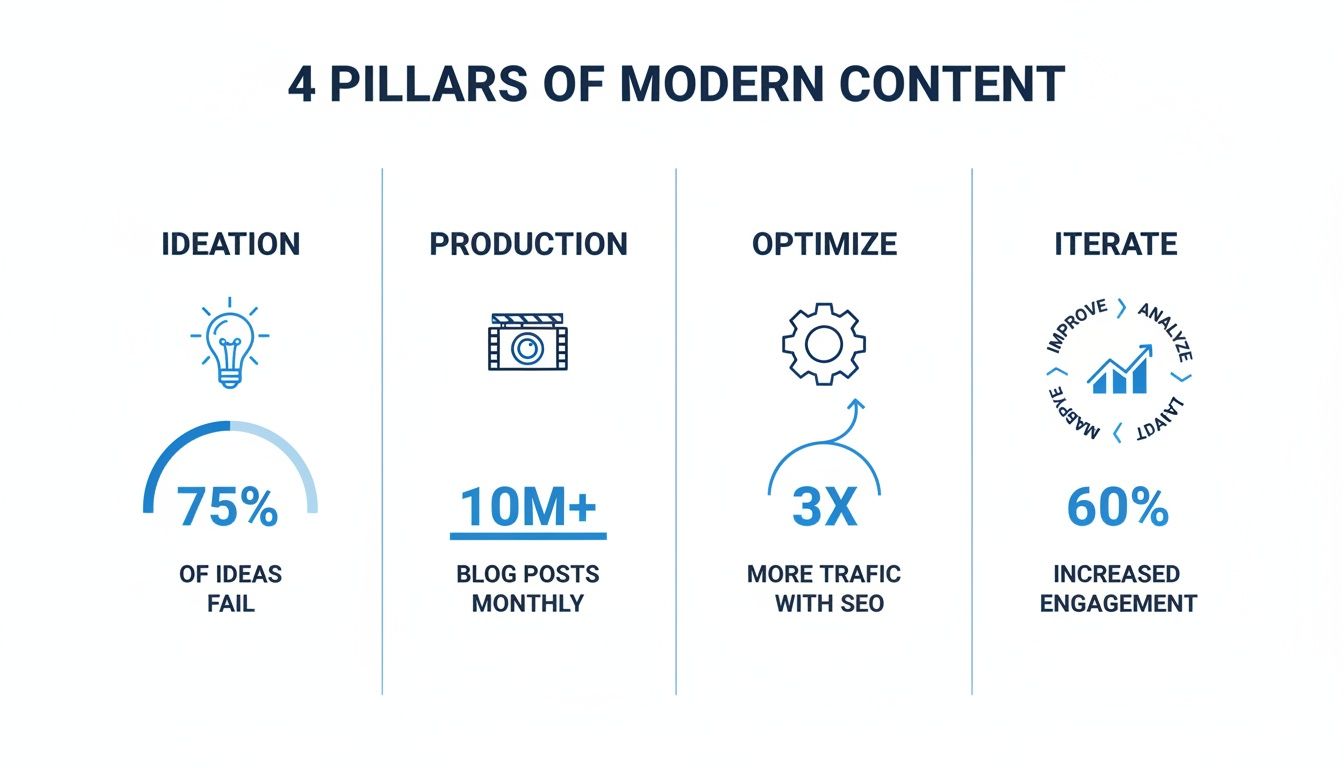
As you can see, success isn't about mastering just one of these. It's about how they all work together. Great ideas lead to great production, which gets optimized for platforms, and the data from that performance feeds right back into your next great idea. It’s a powerful cycle.
Prioritizing Your Efforts with Platform Data
Let's be real: not all social media platforms are the same. Where you decide to spend your time and energy will make a huge difference in your results. Understanding the typical engagement rate for each platform helps you manage your expectations and decide where to go all-in.
A huge mistake I see people make is trying to be everywhere at once, posting the exact same thing across the board. Real engagement comes from respecting the culture of each platform. A raw, off-the-cuff video might blow up on TikTok but would feel completely out of place on a polished LinkedIn feed.
Knowing the lay of the land is your first step. The table below gives you a quick snapshot of what to expect from the major players.
Platform Engagement Snapshot
| Platform | Average Engagement Rate | Best for... |
|---|---|---|
| TikTok | 4.2% - 5.5% | Short-form video, trends, authentic/raw content, reaching younger audiences. |
| Instagram (Reels) | 1.5% - 2.5% | Visually-driven content, lifestyle, e-commerce, and community building. |
| YouTube (Shorts) | 1.0% - 2.0% | Educational content, storytelling, and driving traffic to longer videos. |
| Facebook (Video) | 0.5% - 1.0% | Broader demographics, community groups, and local business marketing. |
| 2.0% - 3.0% | B2B, professional networking, thought leadership, and career-focused content. |
Use these numbers as a starting point to guide your strategy, but remember that your own data is king. Always test to see what works for your specific audience. This data-informed approach is how you start building a content strategy that actually delivers growth and helps you stand out from the noise.
Generating an Endless Supply of Content Ideas
Great content starts with a great idea. We all know that. But here’s the thing: waiting for a flash of inspiration to hit is a terrible strategy. If you want to create engaging social media content consistently, you need a system for finding concepts that are already proven to work.
Forget staring at a blank screen. Your goal should be to build a backlog of killer ideas you can pull from anytime. This approach takes the guesswork out of creation by focusing on what's already getting people to stop scrolling, watch, and share. You’re not inventing topics out of thin air; you’re tapping into existing conversations and trends, which gives you a much better shot at success right from the start.

Find What Is Already Working
Honestly, the fastest way to get good ideas is to study what’s already blowing up. I'm not talking about copying. This is about spotting the patterns—the formats, emotions, and hooks that make a piece of content connect with people.
Start by just spending time on the platforms where your audience lives. I’ve found that paying close attention to these three areas is incredibly effective:
- Trending Audio on TikTok and Reels: Sound is a massive driver of virality on these platforms. As you scroll your "For You" page, notice which sounds keep popping up on videos with high engagement. Every trending audio clip is basically a pre-made content template just waiting for your unique take.
- Competitor Analysis: Check out what your direct and indirect competitors are doing. Specifically, look at their best-performing videos from the last 30 days. Don't just glance at the topic. Dig deeper. What was the hook? How was it edited? What was the call-to-action? What questions are they answering for their audience?
- Niche Reddit Communities: Subreddits are absolute goldmines for raw, unfiltered story ideas. Find communities related to your niche (think r/personalfinance or r/skincareaddiction) and hunt for posts with tons of upvotes and comments. These threads show you the exact pain points, struggles, and success stories your audience cares about.
If you're looking for more ways to keep the ideas flowing, a lot of the classic techniques for how to come up with blog post ideas translate perfectly to video content, too.
Leverage AI for Rapid Ideation
Once you’ve got a general direction, this is where AI can really speed things up. You can use it to multiply your ideas and even flesh them out into scripts that are ready to go. A tool like Aicut can take a single keyword or theme and spit out dozens of video concepts in minutes. It's a huge time-saver.
The trick is to be specific with your prompts. Just asking for "video ideas" is going to get you generic, uninspired junk. You need to give the AI enough context so it can generate something that feels intentional and tailored to your brand.
Your prompts are the blueprint for your content. A vague prompt like "make a video about marketing" will give you generic results. A specific prompt like "write a 30-second POV script about a common challenge for new social media managers" gives the AI the constraints it needs to be truly creative.
Here are a few powerful scripting prompts you can try right inside Aicut’s prompt libraries. Feel free to adapt them to your own niche:
- The POV Challenge Prompt: "Create a 30-second POV-style video script about overcoming a common [industry] challenge. The tone should be relatable and inspiring, ending with a quick tip."
- The Reddit Narration Prompt: "Write a script for a 60-second Reddit narration based on the theme of an unexpected workplace story. Use a conversational and slightly dramatic tone, building suspense throughout."
- The Explainer Prompt: "Generate a script for a short video that debunks a common myth about [your topic]. Structure it with a strong hook, three quick counterpoints, and a clear call-to-action."
By combining real-world research with smart, AI-powered brainstorming, you completely sidestep the hardest part of content creation. You go from a blank slate to a list of validated, scripted ideas, which frees you up to focus your energy on what really matters: production and getting your content out there.
Bringing Your Content to Life with AI
Alright, you've got your ideas lined up. Now comes the part where most people get bogged down: production. Many creators think they need a professional camera, a fancy studio, or deep expertise in complex editing software.
That’s just not true anymore.
With the right AI tools, you can crank out a full week's worth of diverse, high-quality social media content in just a couple of hours. And the best part? No camera is required. This is all about working smarter, not harder.
Instead of sinking days into a single video, you can build a varied content pipeline that keeps your audience hooked and your posting calendar full. Tools like Aicut let you go from a simple script to a polished video in minutes, completely changing the game for content creation at scale.
Let's dive into four powerful, AI-driven formats that are absolutely crushing it on platforms like TikTok, Reels, and YouTube Shorts right now.
Create Cinematic Stories with Photorealistic Clips
Imagine producing stunning, high-definition video clips without ever picking up a camera. That's the reality with generative AI video. By just describing a scene in a text prompt, you can create gorgeous, photorealistic footage that looks like it was shot by a pro.
A travel creator, for instance, could use a prompt like, "Drone shot flying over a misty jungle canopy at sunrise." The AI generates the breathtaking visuals, adding a layer of professionalism that used to cost a fortune and take days to capture. It's a total game-changer.
Build Relatable "Faceless" Content with POV Formats
Point-of-view (POV) and selfie-style videos are huge for a reason—they feel personal and real. They drop the viewer right into the middle of the action, creating an instant connection. AI can now generate these formats, which is a massive win for faceless creators who want to produce relatable content without being on camera.
Think about these scenarios:
- A "day in the life" video: Generate clips showing a first-person view of someone typing on a laptop, pouring coffee, or staring out a rain-streaked window.
- A reaction video: Create a selfie-style clip of an AI avatar reacting with shock or laughter to something happening on screen.
- A product unboxing: Produce a POV shot of hands eagerly opening a package and revealing a new gadget.
These formats work so well because they mimic the native feel of social media, making your content feel authentic rather than like a stuffy, polished ad.
Make High-Retention Animated Text Stories
You’ve seen these everywhere. Videos that look like a text message exchange or a social media thread, telling a story one piece at a time. This format is ridiculously good at holding attention because it taps into our natural curiosity. We just have to see the next message to find out what happens.
With AI, spinning up these animated text stories is incredibly easy. You can generate entire conversations that keep viewers glued to their screens until the very end. This is a brilliant strategy for boosting your watch time—a critical metric that algorithms on TikTok and YouTube Shorts love to see.
For a deeper dive, our guide on how to create AI videos breaks down the process with even more detail and creative ideas.
Tap into Proven Narratives with Reddit Stories
Reddit is an absolute goldmine of raw, compelling human stories that are practically begging to be turned into video content. AI-powered narration channels have exploded in popularity by doing just that: turning top Reddit posts into short, addictive videos. You can use AI to do it all—generate a natural-sounding voiceover and pair it with engaging background footage.
The real magic here is that the story has already been audience-tested. A post with thousands of upvotes isn't a guess; it's a proven winner. You're not hoping people will care about the topic—you already know they do.
The Power of AI-Generated UGC for Brands
For businesses, one of the most exciting applications is creating authentic-looking User-Generated Content (UGC) with AI avatars. This solves a huge problem: the constant need for a stream of trustworthy, relatable content for ads and product features.
The data doesn't lie. Authentic formats consistently outperform standard branded posts. In fact, UGC can pull in 4x higher click-through rates and is seen as 2.4x more authentic than traditional marketing content. That’s a massive edge.
By putting these AI production methods to work, you can build a powerful content machine. But remember, the final step is to humanize AI content for better engagement, ensuring your videos connect with viewers on an emotional level and don't come across as robotic.
Optimizing and Automating Your Content Distribution
Making a fantastic video is a huge win, but let's be real—that’s just half the battle. The real magic happens when you get that content in front of the right audience at the perfect moment. This is where a smart distribution and optimization strategy separates the amateurs from the pros.
Every platform, whether it's TikTok, Instagram Reels, or YouTube Shorts, plays by its own set of rules. A video that blows up on one can easily fall flat on another if you just copy and paste it. Success comes from respecting these small but powerful differences.
Mastering Platform-Specific Nuances
Think of each social media app as its own little world with a unique culture. To fit in, you have to speak the local language. For creators, that means tweaking your content to match the format and user habits of each platform.
Take TikTok, for instance. It's a powerhouse for organic reach, especially if you're just starting out. Its algorithm is incredibly good at pushing new content to fresh eyes. In fact, smaller creators (under 100,000 followers) often see engagement rates around 7.5%. That's more than double the 3.65% you’d find on Instagram for accounts of a similar size. This makes it the perfect place to experiment with AI-generated or faceless videos.
To make your content feel native everywhere, you have to get the details right:
- Aspect Ratios and Safe Zones: While a 9:16 vertical format is the standard, the on-screen buttons, captions, and usernames are in different spots. Always keep your most important visuals and text near the center so nothing gets awkwardly cropped out.
- Caption Length and Style: TikTok allows for longer, story-driven captions that can double as a tool for SEO. On the other hand, Instagram Reels captions perform best when they're short and punchy. For YouTube Shorts, the description is your best friend for search discovery.
- Trending Audio: Hopping on a trending sound can give your video a serious boost on TikTok or Reels. But a sound that's hot on one app might be yesterday's news on another, so always check what's popular directly within each platform before you post.
A classic mistake I see all the time is creators uploading a video with the TikTok watermark still on it directly to Reels. It just looks sloppy. Worse, Instagram's algorithm is known to penalize content that's so obviously repurposed from a competitor. Always start with a clean video file for each platform.
Automating Your Publishing for Maximum Consistency
The real secret to growth is consistency. But trying to manually post multiple times a day across several platforms is a fast track to burnout. This is where automation becomes your secret weapon.
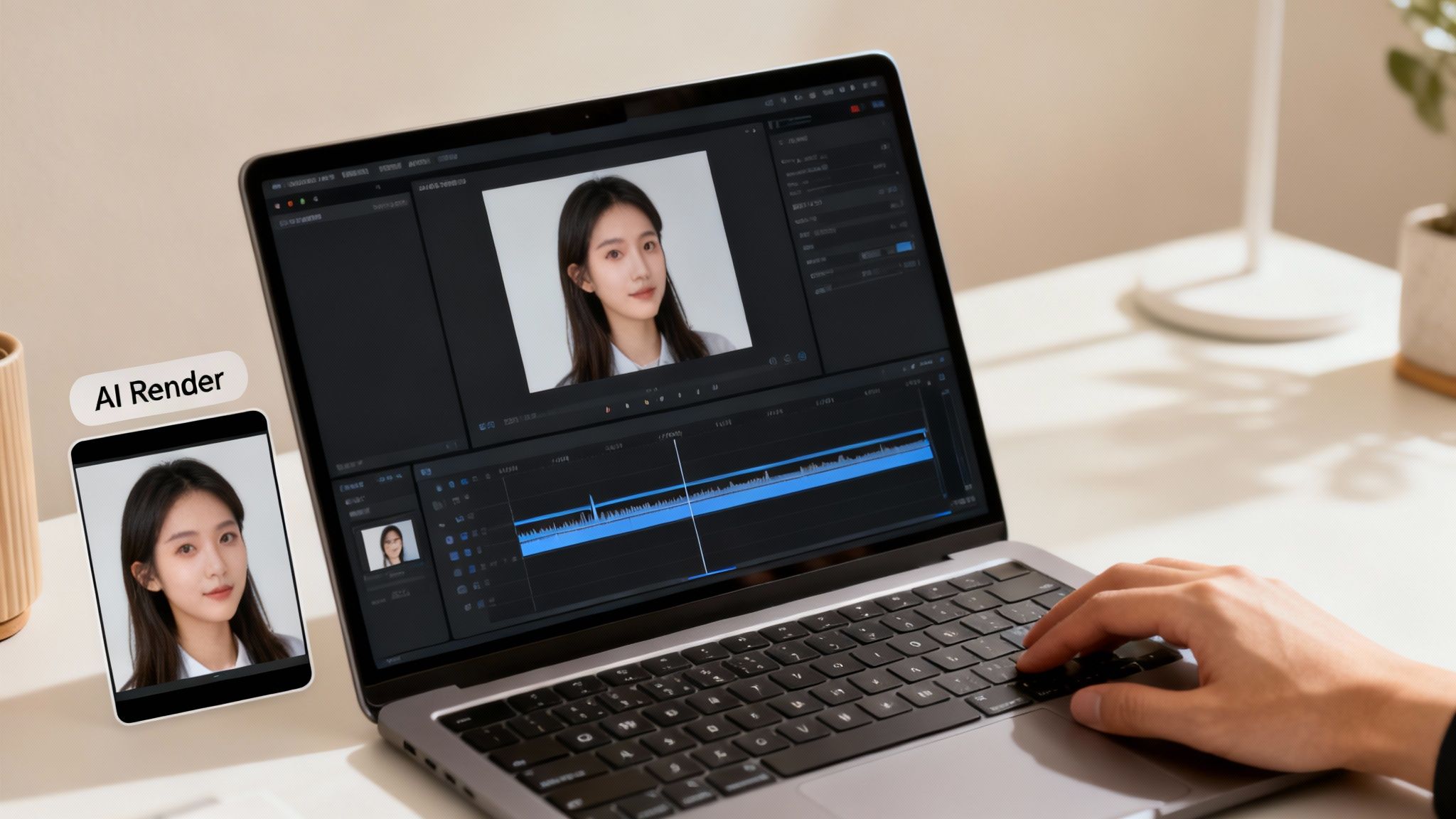
A game-changing workflow is to batch-create an entire week's worth of content in one sitting with a tool like Aicut, then schedule it all to post automatically. This frees you from the daily upload grind so you can focus on what actually grows your channel: analyzing your data and talking to your community. Our guide on how to automate social media posts walks you through this exact process.
Building a Smart Distribution Workflow
For faceless channels and brands, a system like this isn't just nice to have—it's essential. It allows you to maintain a high-volume posting schedule without letting quality slide or losing your mind. Imagine having your whole week's content calendar locked and loaded by Monday morning.
Here's what that looks like in practice:
- Batch Production: Block out some time and knock out 7-10 short videos in Aicut.
- Platform Optimization: Make quick tweaks to the captions, hashtags, and sounds for each platform.
- Scheduled Publishing: Use a built-in scheduler to set the exact date and time for each post to go live on YouTube, TikTok, and Instagram.
By tailoring your content for each platform and putting your distribution on autopilot, you build a content engine you can rely on. It's a systematic approach that not only saves you countless hours but also dramatically boosts your chances of connecting with your audience and achieving real, sustainable growth.
Turning Analytics into Your Next Viral Hit
Getting your content created and scheduled is a huge win, but that's really just the beginning. The real magic happens when you start using data to decide what to do next. If you skip this part, you're essentially just throwing ideas at the wall and hoping something sticks. That's the slowest way to grow.
Think of your analytics as a direct conversation with your audience. They're telling you exactly what they loved, what bored them, and what made them smash the share button. Learning to read these signals is how you move from one-off viral hits to building a reliable system for creating content people genuinely want to see.
Moving Beyond Vanity Metrics
It's easy to get caught up in likes and follower counts. They feel great, right? But these are what we call vanity metrics. They look impressive on the surface but don't really tell you much about what's actually connecting with people. A video can rack up thousands of likes but have a terrible watch time, which means most viewers bailed after just a few seconds.
To get the real story, you have to dig deeper into the metrics that signal true engagement—the numbers the algorithms actually care about.
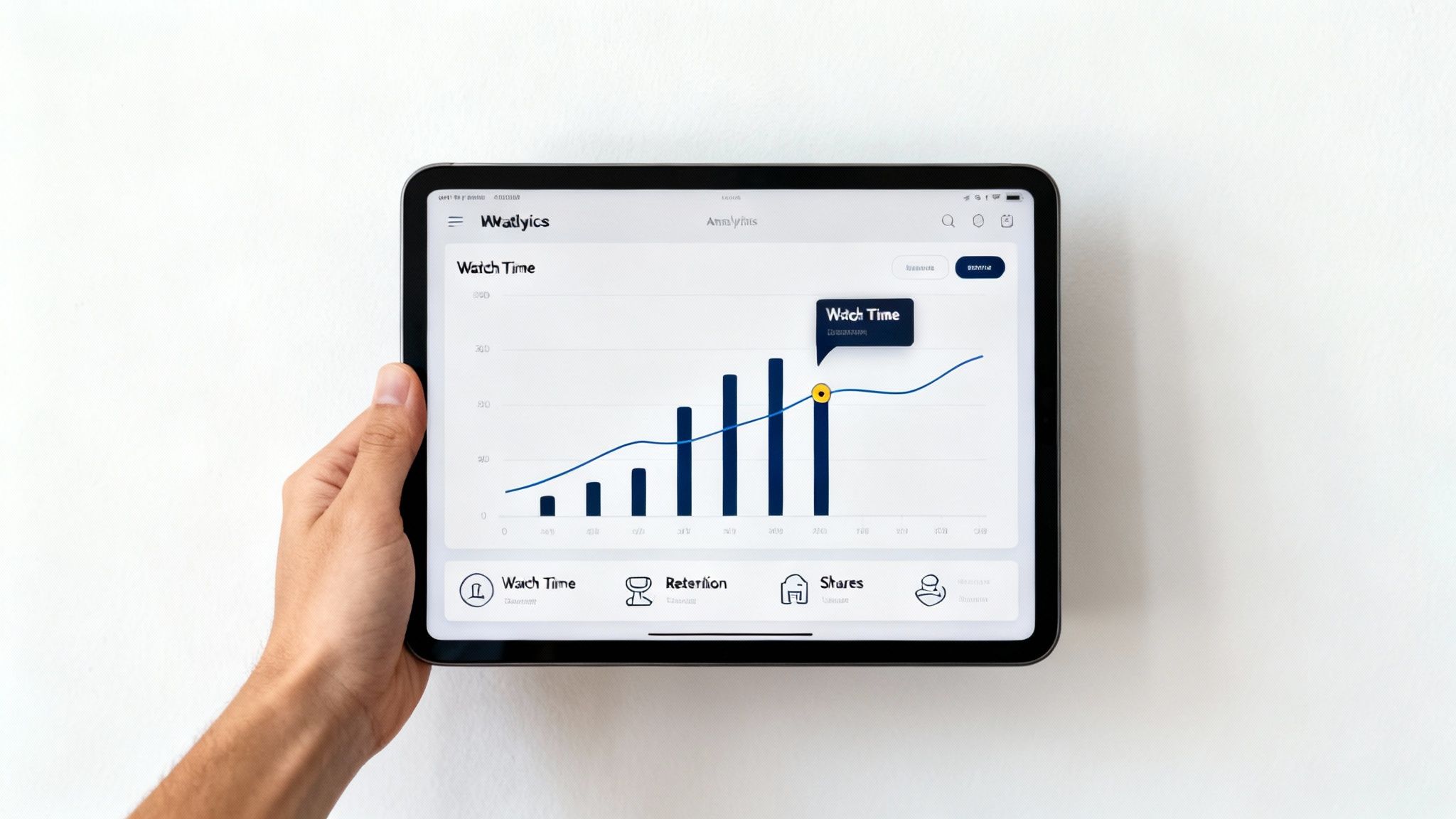
- Watch Time and Audience Retention: This is arguably the most important metric of all. It tells you exactly how long people are sticking around. High audience retention sends a powerful signal to the platforms that your content is valuable and worth showing to more people.
- Shares: A share is the ultimate stamp of approval. Someone liked your content so much they were willing to put their own reputation on the line by sending it to their friends or posting it on their own profile.
- Saves: When someone saves your post, it means they see it as a valuable resource they want to come back to later. This is a huge indicator that you're creating high-quality, genuinely useful content.
- Comments: Comments mean your content started a conversation. It was compelling enough to make someone stop scrolling, think, and actually type out a response.
By focusing on these metrics, you get a much clearer picture of what your audience truly cares about, which helps you make smarter decisions for your next batch of content.
Deconstructing Your Top Performers
So, you've identified a few posts that did really well based on those key engagement metrics. Awesome. Now it's time to put on your detective hat. Don't just celebrate the win—figure out why it worked.
Pull up the analytics for your top two or three videos from the last month and ask yourself a few simple questions:
- What was the hook? What did I do in the first three seconds to grab attention? Was it a bold statement, a weird visual, or a question they just had to know the answer to?
- What was the format? Was it a selfie-style POV video, a text-based story, or maybe a Reddit narration? Different formats resonate differently depending on the topic.
- What was the topic? Did I tap into a current trend, solve a common problem, or tell a really emotional story?
The point isn't to just remake the exact same video. It's to pinpoint the core elements that worked—like a certain storytelling style or a type of hook—and figure out how to weave those successful ingredients into new ideas.
This process of breaking down what works is essential. While everyone is focused on video, recent data shows a surprising comeback for static images. On Instagram, image posts are pulling in a 6.2% engagement rate—a whopping 77% higher than the 3.5% for Reels. This doesn't mean you should ditch video, but it does show why analyzing all your content is crucial to finding what truly grabs your audience. You can see more insights in the full 2025 social media engagement report on zoomsphere.com.
Creating Your Simple Feedback Loop
The most successful creators I know all operate on a simple but incredibly powerful feedback loop: Analyze, Learn, Iterate. They don't just post and pray. Every piece of content is a chance to learn something new and get a little bit better.
All it takes is 30 minutes a week. Block out some time to look at your analytics, identify your winners and losers, and just jot down a few key takeaways. This simple habit is what separates the creators who guess from the ones who grow, turning cold data into your next viral hit.
Your Questions, Answered
Jumping into AI-driven content creation can feel like a whole new world, and it's natural to have questions. I've gathered some of the most common ones I hear from other creators and laid out some straightforward answers to help you get started with confidence.
How Can I Make AI-Generated Content Feel Authentic?
This is a big one. The key to authenticity isn't about hiding the AI; it's about grounding your content in genuine human experiences. The tech is just a tool—it's the story you tell that matters.
Focus your scripts on relatable problems, emotions, and situations that your audience actually goes through. When you're using a tool like Aicut, lean into formats that already feel personal, like POV or selfie-style clips. These inherently feel more like a real person sharing an experience and less like a slick, polished advertisement.
If you're making UGC-style ads with AI avatars, write their dialogue how people actually talk. Keep it conversational and have them share what sounds like an honest opinion. The goal isn't to fool anyone. It's to use AI to tell compelling, human-centric stories more efficiently.
I’ve found that one of the most powerful ways to create authenticity is by pairing AI visuals with a real, human story. Find a great narrative on Reddit, then use AI to create the voiceover and b-roll. You're starting with a story that's already proven to hook people.
What Is the Best Platform for a Beginner to Start On?
If you're just starting out, especially with faceless content, my advice is almost always TikTok. Its algorithm is a game-changer for new accounts because it gives everyone a fair shot at getting discovered. That initial traction is a massive confidence boost when you're building from zero.
You'll also notice that engagement rates for small accounts are just way higher on TikTok compared to other platforms. This gives you a fantastic testing ground. You can throw ideas at the wall, get instant feedback from a real audience, and figure out what works without needing a huge following first.
Once you hit on a video style or topic that takes off on TikTok, you've got a proven winner. From there, it’s a simple process to take that successful formula and adapt it for Instagram Reels and YouTube Shorts.
How Often Should I Post for Maximum Engagement?
It's easy to get obsessed with finding the perfect number, but honestly, consistency beats frequency every time. The best schedule is the one you can actually stick to without burning out or letting your quality slide.
For fast-moving platforms like TikTok and Instagram Reels, a good starting point is 1-3 high-quality posts per day. On YouTube, 3-5 Shorts per week is a much more sustainable and effective rhythm. Automation is your best friend here.
Use a scheduling tool to get your posts lined up in advance. It removes the daily pressure and keeps your channel active. And always, always watch your analytics. If you ramp up your posting and notice engagement per video is dropping, it’s a clear signal that your quality is taking a hit.
Can I Monetize a Channel with Only AI-Generated Content?
You absolutely can. Monetizing a channel built entirely with AI content isn't just a hypothetical—it's happening right now. The catch is that your content has to provide real value and play by the platform's rules.
YouTube, for instance, is totally fine with AI content in its Partner Program, as long as it's transformative and not just spammy, low-effort junk. Think about all the successful faceless channels out there: animated Reddit stories, educational explainers with AI visuals, or cool data visualizations. They're all monetizing in multiple ways:
- Ad Revenue: Through programs like the YouTube Partner Program.
- Affiliate Marketing: Dropping relevant product links in their descriptions.
- Brand Sponsorships: Working with companies that fit their niche.
At the end of the day, platforms just want content that keeps people watching. If your AI-generated videos are creative, engaging, and hold an audience's attention, you'll find plenty of open doors to monetization.
Ready to stop guessing and start creating? With Aicut, you can generate an entire week's worth of scroll-stopping videos in just a few hours. Explore our viral templates and AI tools to build your content engine today at https://www.aicut.pro.